
A blower door test in the United States costs $200 to $500 standalone and averages about $350. Bundled into a full home energy audit, the test averages $437 and includes thermal imaging plus a written report. Roughly one in three U.S. households can get that whole package free through their utility, which is why most homeowners shouldn’t pay for one out of pocket.
The articles ranking for this keyword still talk about the $150 federal tax credit. That credit died on December 31, 2025 when the One Big Beautiful Bill Act took effect. The actual 2026 cost-cutters are different, and the test itself is more useful when you know what to do with the number it produces.
Why most homeowners shouldn’t pay full price
Call your utility before you call a contractor. Mass Save covers Massachusetts at zero cost. NYSERDA does the same in New York through approved contractors who run the full diagnostic. Energy Trust of Oregon offers a Home Performance with ENERGY STAR assessment at three to four hours of equipment-driven walkthrough — the same scope a private auditor would charge $500 for. ConEd, ComEd, PG&E, Eversource, Duke, Xcel, and National Grid all operate parallel programs in their territories.
About 34 percent of U.S. households are eligible regardless of income. The list isn’t perfect. Coverage varies by state energy mandate, fuel type, sometimes by whether your address sits inside city limits. But the fastest test is searching your utility’s name plus “home energy assessment.” If they offer one, take it. The diagnostic is identical to what a private contractor performs.
Income-qualified households have a stronger option. The federal Weatherization Assistance Program, run through state energy offices, provides a free audit plus $600 to $8,000 of actual weatherization work (air sealing, attic insulation, sometimes furnace tune-ups) at no cost. Eligibility is generally 200 percent of federal poverty level or below; SSI recipients qualify automatically and most states extend that to SNAP and TANF. Wait lists run several months but the value is genuinely substantial.
The IRA also funded two rebate streams that are now reaching homeowners through state energy offices. HOMES rebates pay for whole-home retrofit projects based on modeled or measured energy savings. HEAR rebates cover heat pumps, heat pump water heaters, electric panel upgrades, and wiring for income-qualified households. Colorado launched HEAR in November 2025; Hawaii rolled out both pathways early 2026; Oregon, California, Illinois, and North Carolina are in various stages of deployment. Both pathways generally require a certified energy audit as part of the application package, which means the audit you’d otherwise pay $437 for becomes a gateway to several thousand dollars in retrofit money. Your state energy office is the right place to check current status.
What “near me” pricing looks like when you do pay
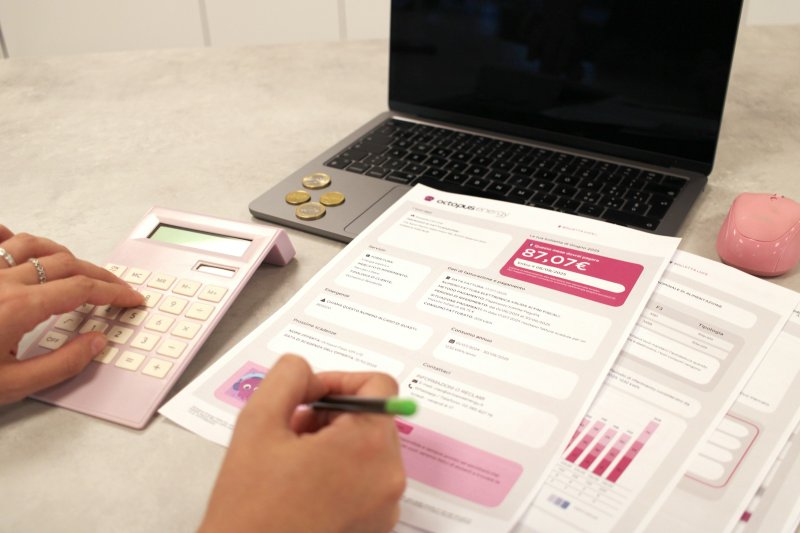
National pricing converges across HomeGuide , Pearl Score 2026 statistics, and contractor pricing pages.
| Service | Typical range | Average |
|---|---|---|
| Standalone blower door test | $200–$500 | $350 |
| Basic visual energy audit (no testing) | $100–$200 | $165 |
| Standard audit with blower door + thermal imaging | $200–$700 | $437 |
| Advanced diagnostic audit (full RESNET/HERS workup) | $400–$1,000 | $685 |
| Thermal imaging add-on (separate purchase) | $150–$200 | — |
| Per-square-foot pricing on audits | $0.17–$0.25/sq ft | — |
Home size scales the bill. A 1,500-square-foot ranch averages $345; a 2,500-square-foot two-story averages $570; anything over 3,000 square feet runs $595 and up. Multi-story homes cost more because they take longer to walk and have more thermal-imaging surface area, not because the blower door does more work. Duplexes are tested as two units and run roughly $600 together.
Regional pricing follows labor rates. The Northeast and West Coast price 25 to 40 percent above the national average; the rural Midwest and Southeast trend below. A Boston audit at $550 and a rural Indiana audit at $300 are doing the same work to the same standard.
What you actually get for $437
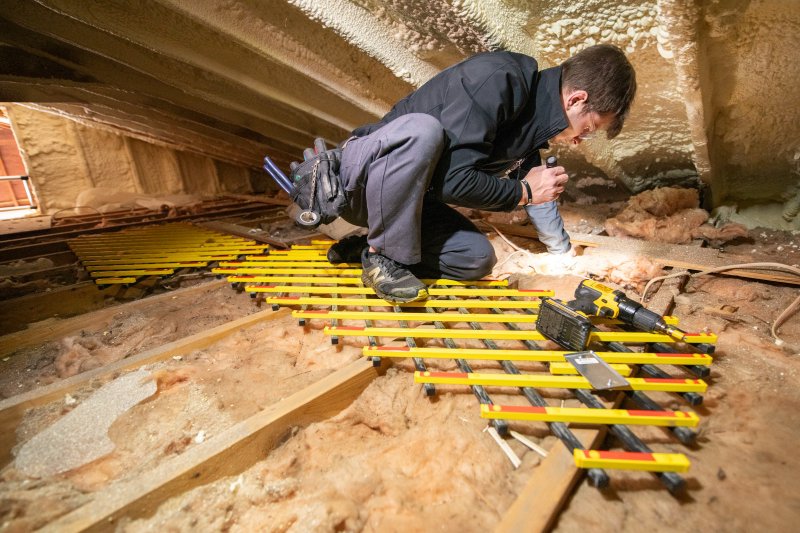
A real audit takes two to four hours and produces a written report. The work breaks into four parts:
- Visual walkthrough. The auditor inspects insulation in the attic and accessible walls, checks combustion appliances for backdrafting risk, and notes obvious leakage at the usual suspects: window trim, recessed lights, attic hatch, rim joists.
- The blower door itself. A calibrated fan, usually a Retrotec or Minneapolis Energy Conservatory unit, mounts in an exterior doorway with a red fabric panel. The fan depressurizes the house to negative 50 pascals — wind pressure equivalent to a steady 20 mph breeze on every wall. Software measures cubic feet of air per minute escaping into the house at that pressure, then converts the number to ACH50 (air changes per hour at 50 pascals).
- Thermal imaging walkthrough. With the fan running, the auditor walks the interior with an infrared camera. Cold air pulled through gaps shows up as dark blue streaks against warmer wall and ceiling temperatures. This is where the diagnostic earns its money: a number tells you a house is leaky; a thermal image tells you the leaks come from the attic hatch, the basement rim joist, and the recessed light over the kitchen island.
- Written report. Required for any utility rebate or state HOMES/HEAR application. The report identifies the most cost-effective improvements and estimates energy and cost savings, signed by the auditor with their certification ID.
The standalone test skips parts 1, 3, and 4. You get a number and a recommendation to “seal up the leaks.” That is a fine deliverable if a building inspector needs it for a code-compliance certificate. It is the wrong product for a homeowner who actually wants to know where to spend money.
Reading your ACH50 result
| ACH50 | What it means | Where you’d see it |
|---|---|---|
| 0.6 | Passive House standard | High-end ultra-tight new builds |
| 1.5–2.0 | DOE Zero Energy Ready in cold climates | Net-zero new construction |
| 3.0 | Tight new construction | Modern energy code in many zones |
| 5.0 | 2021 IECC max for climate zones 1–2 | Florida, Texas Gulf Coast new builds |
| 7.0 | Older 2009/2012 IECC pass | Pre-2021 code minimum, still on books in some states |
| 12–19 | Typical untouched older home | Pre-2000 construction, no air sealing |
The Resi Report number is the one that sticks: a typical American home tests at 12 to 19 ACH50, equivalent to leaving a window open all day. Air leakage accounts for 25 to 40 percent of total residential energy use. If your home tests in that band, sealing the worst leaks identified during the thermal walkthrough can cut total energy use by 30 percent or more in aggressive cases — which is why the audit typically pays back in well under a year for most leaky homes.
One gotcha that auditors flag on the report: a tight retrofit can drop the home below the natural infiltration rate that supplies fresh air. ASHRAE 62.2 (the residential ventilation standard most code bodies reference) prescribes a calculated mechanical ventilation rate that scales with how tight the envelope is, and at roughly 3 to 5 ACH50 the math says natural infiltration alone no longer covers code-minimum fresh air. A continuous bath fan or a balanced HRV/ERV closes the gap. Seal aggressively without a ventilation plan and you’ve traded an energy-loss problem for an indoor-air-quality problem.
How to find a real one
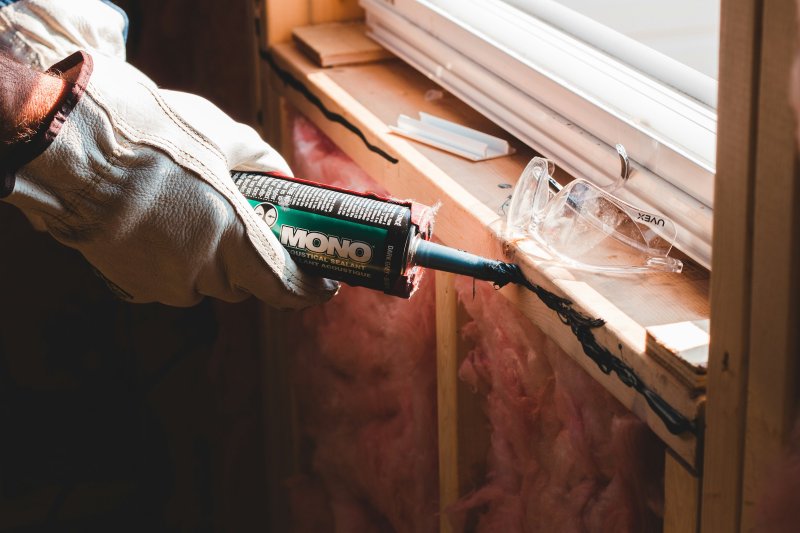
Two filters separate audit companies that earn their fee from the ones running insulation-sales pipelines.
Certification. The auditor walking your house should be BPI- or RESNET-certified. The honest answer when you ask is “BPI Building Analyst, certificate number 5-whatever.” A vague reference to twenty years of experience may also be true, but state HOMES and HEAR rebate paperwork won’t accept it. Most utilities only reimburse audits performed by their approved contractor list, and the certification is what gets a contractor on that list. Check BPI or RESNET public lookups before booking.
Equipment. Ask which blower door brand they run. The two real answers are Retrotec and Minneapolis Energy Conservatory. Both calibrate annually and produce defensible test data. A no-name fan or a “just a regular fan” answer means the test data won’t be repeatable for code or rebate purposes.
The harder question, the one that distinguishes a good audit from a mediocre one, is whether the auditor uses thermal imaging during depressurization. Without infrared, the test produces a number but not a map. With infrared, you get specific locations to seal, ranked by leakage volume. If the company quotes the same price either way, the thermal walkthrough is included; if it’s an upsell, decline the company. A 2026 audit without infrared is not worth $437.
For broader context on the rebate landscape, see our home energy hub .
When you don’t actually need one
A few situations where the audit math doesn’t work:
- You already know exactly what you’re sealing. If you can see daylight under the attic hatch and around the rim joist, paying $437 to confirm it is wasted money. Buy a $20 case of foam-and-caulk and start at the obvious points.
- You’re moving within a year. Buyers don’t pay extra for an audit report. Insulation, sealing, and mechanical work move resale value, but you won’t recoup the project cost on a sub-12-month hold.
- The home is brand-new construction with a HERS index already on file. New builds since 2015 in most states have already passed depressurization testing as part of the certificate of occupancy. Ask the builder for the HERS report before paying for a duplicate.
- Tiny electric-heated unit. Annual heating bills on a 600-square-foot studio are small enough that a 30-percent saving doesn’t justify a $437 diagnostic. Caulk and weatherstrip the obvious gaps and call it done.
For everyone else with an older home, an unexplored attic, or HVAC that runs constantly without keeping the house comfortable, the audit is the cheapest single diagnostic in residential energy work — and the only one that gives a defensible roadmap of what to fix first. Just check your utility before you write the check.