AC compressor repair runs $1,300 to $2,500 for a warranty-covered swap and $1,800 to $2,800 if the part is out of warranty in 2026. The catch is that many “compressor” diagnoses are not actually compressor failures. A bad capacitor ($250 to $400 installed), a pitted contactor ($150 to $350), or a marginal compressor that needs a $100 to $270 hard-start kit can each mimic the same no-cool symptoms. The right repair is often a tenth the price of the wrong one.
The other catch is timing. On a 12-year-old 3-ton system running R-410A, even a correct compressor diagnosis usually loses the repair-vs-replace contest once you stack a 2026 manufacturer rebate against a new install. The numbers below cover the part-by-part repair pricing, the capacitor-and-contactor test that should come first, and the year-ten line where the math flips.
What an AC repair call should cost
Most service calls fall into one of these failure modes. Pricing comes from HomeGuide’s 2026 HVAC repair data, cross-checked against Angi and the contractor surveys behind the HVAC system repair guide .
| Repair | Typical cost | Diagnostic time on site |
|---|---|---|
| Service call / diagnostic (daytime) | $75–$200 | 0.5–1 hr |
| Service call / diagnostic (after-hours, hourly) | $140–$210 | 0.5–1 hr |
| Capacitor replacement (start, run, or dual) | $250–$400 | 0.5–1 hr |
| Contactor replacement | $150–$350 | 0.5–1 hr |
| Capacitor + contactor combined | $300–$500 | 1 hr |
| Hard-start kit installed | $100–$270 | 0.5 hr |
| Condenser fan motor | $200–$700 | 1–2 hr |
| Refrigerant recharge (R-410A, by leak severity) | $100–$600 | 1–2 hr |
| Refrigerant leak repair (accessible, with recharge) | $200–$1,500 | 2–4 hr |
| Compressor replacement (under warranty for the part) | $1,300–$2,500 | 4–6 hr |
| Compressor replacement (out of warranty) | $1,800–$2,800 | 4–6 hr |
| AC condenser unit replacement (out of warranty) | $1,200–$4,200 | 4–8 hr |
| Evaporator coil replacement (out of warranty) | $1,000–$2,500 | 3–6 hr |
| Hard-start kit (part only, DIY) | $30–$80 | n/a |
Sources: HomeGuide HVAC repair , HomeGuide AC capacitor replacement , Angi 2026, contractor survey data harmonized with the central air conditioner installation guide .
A regional pattern shapes the upper bound. Coastal high-cost metros from the Northeast through the Pacific Northwest run 30 to 50 percent above national midpoints. The Southeast and rural Midwest run 15 to 25 percent below. Same labor; rent and licensing burden differ.
Daytime versus after-hours is the other quiet 50-percent variable on the bill. The same capacitor swap that runs $250 at midday on a weekday can land at $400 on a weekend evening — identical part, identical labor, different clock.
The capacitor-and-contactor test that should happen first
The single most-abused diagnosis in residential AC is “your compressor is bad.” Much of the time the actual fault is the capacitor that drives it or the contactor that switches it on. A reputable technician runs four tests before they quote a compressor.
Capacitance check
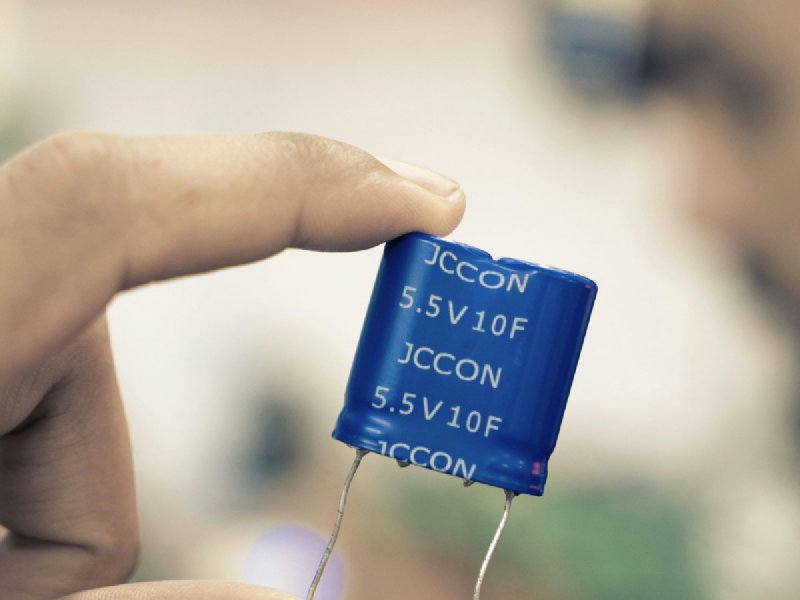
The technician puts a capacitance meter on the start and run capacitors (or the single dual-run capacitor on most modern units). A capacitor rated at 45 microfarads should read within 6 percent of label, so 42.3 µF or higher. Anything below that is failing. AC capacitors carry a typical 10 to 20 year design life but heat-stress fail far earlier in hot climates, which is why nearly all capacitor calls happen in July and August. Replacement is $250 to $400 installed, and the part itself is $15 to $80.
Contactor inspection
Open the disconnect, kill power at the breaker, and pull the contactor. The contacts are two small flat pads that close when the thermostat calls for cooling. After 5 to 8 years they pit or weld shut. A pitted contactor will not pass enough current to start the compressor, and a welded one keeps the compressor running after the call ends. Replacement is $150 to $350 installed with a $20 part. Combined with a capacitor swap on the same call, the combo runs $300 to $500.
Locked-rotor amperage test
The technician clamps an amp meter on the compressor common wire while the unit tries to start. Compressors have a nameplate locked-rotor amp (LRA) rating, typically 60 to 130 amps depending on tonnage. A reading at or near the LRA spec means the compressor is mechanically sound but starting hard. That is when a hard-start kit ($100 to $270 installed on a $30 to $80 part) earns its keep — usually one or two more cooling seasons before the compressor is finally finished.
Compressor megger or windings test
A megohmmeter measures resistance from each compressor winding to ground. A reading below 1 megohm per winding means the compressor is internally shorted and a kit will not save it. Resistance between the compressor pin pairs should also match the manufacturer’s published values within roughly 10 percent. A technician who quotes a compressor without doing these two electrical tests is selling, not diagnosing.
If the technician skips this sequence and goes straight to “you need a new compressor,” the right move is to thank them for the diagnostic fee and call somebody else.
When the compressor really is dead
A compressor that fails the megger or LRA test, has internally shorted windings, has lost its mechanical seal and is dumping oil, or has seized and trips the breaker the moment power is applied is a real replacement. The job is genuinely involved.
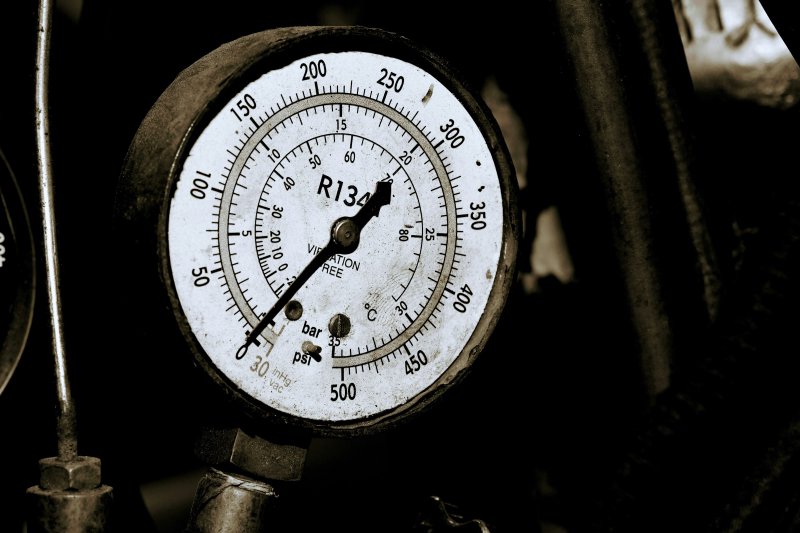
Recovery comes first. EPA Section 608 makes venting refrigerant illegal at any charge level, and the technician has to recover the existing refrigerant into a DOT-rated cylinder before opening the system. Then comes brazing — cutting the suction and discharge lines, fitting the new compressor, and brazing copper-to-copper joints under nitrogen flow to prevent oxidation. After the compressor is in, the system gets evacuated to a deep vacuum, typically 500 microns or below, held for at least 30 minutes to confirm the seal, and then recharged. The whole process takes 4 to 6 hours of skilled labor, which is why labor accounts for 60 to 70 percent of the total bill.
The part itself is $600 to $1,200 at distributor cost for a residential 3-ton scroll compressor; warranty-covered exchanges are free or discounted. Total with labor: $1,300 to $2,500 under warranty, $1,800 to $2,800 out of warranty.
A few items routinely show up as line-item upsells on compressor-replacement quotes that deserve scrutiny:
- Liquid-line filter drier. Legitimately required on every compressor swap because old desiccant becomes contaminated. Should run $50 to $100 installed, not $300.
- Service valves. Sometimes corroded enough to need replacement, sometimes not. Demand a visual or photo before authorizing.
- TXV or metering device. If the original failed open or closed it gets replaced, but a “preventive” TXV swap on a working valve is padding. The valve itself is $100 to $250; installed is $300 to $600.
- Suction line accumulator. Required only on heat-pump systems and some specific compressor models. Ask why before signing.
- Full refrigerant recharge billed at retail per pound. The technician evacuated and reused most of the original charge if the compressor failure was internal. A “full new charge” line that bills 8 to 12 pounds at $200 a pound is double-charging unless the recovered refrigerant was contaminated, in which case the contamination test result should be on the invoice.
The 50-percent rule applied to AC
The trade rule of thumb is: if the repair quote is more than half the cost of a new install, replace. The math is sharper on AC than it looks because of how 2026 rebates land.
A new 3-ton split system installs at $5,500 to $12,500 in 2026 on existing ductwork, with the national midpoint near $8,500. Manufacturer spring rebates on matched systems pay another $900 to $2,100 off — Carrier Cool Cash up to $2,100, Lennox up to $1,800, Trane up to $900 plus 60-month 0-percent financing. State and utility rebates layer on top in high-incentive markets across the Northeast and West Coast. After incentives, a typical net-replacement cost lands $5,000 to $10,500.
That makes the practical replacement trigger lower than the headline quote suggests. A $2,800 out-of-warranty compressor on a 12-year-old system is already 32 percent of an $8,500 install, climbing to 56 percent of a low-end $5,000 install. Add the next likely failure — fan motor at $200 to $700, capacitor at $250 to $400, or worse, an evaporator coil leak at $1,000 to $2,500 — and the second repair within two seasons makes the replacement math obvious.
The decision rule for compressor failures specifically:
- System under 8 years AND compressor is under parts warranty → repair, full stop. The part is free or heavily discounted, labor is $500 to $1,500, and the rest of the system has years of life.
- System 8 to 10 years AND R-410A → repair if the compressor is still under warranty; lean toward replacement if it is not. The R-410A refrigerant supply is contracting, recharge prices have roughly doubled since 2023, and a 2026 R-454B install dodges that whole headache.
- System 10 to 12 years AND any compressor failure → replace. The 50-percent rule is met or close, and the next major failure on a system this old is rarely far behind.
- System past 12 years AND any major repair → replace. Never put a $2,000-plus repair into a system that is already past its expected lifespan.
- Any age, R-22 system → replace, regardless of repair quote. R-22 production stopped in 2020 and per-pound prices run $90 to $250 retail (with 2026 reports of $400-plus where available). A full 6 to 12 pound recharge alone clears $1,500.
R-410A is gone from new equipment
R-410A manufacturing ended January 1, 2025 under the AIM Act. New central AC sold in 2026 uses R-454B (most ducted systems) or R-32 (most ductless). Both are A2L-classified, meaning mildly flammable under specific conditions, and the EPA now requires factory-installed leak-detection sensors and sealed electrical connections on new equipment.
For a homeowner facing a compressor decision, the refrigerant transition matters in three ways.
A compressor-only repair on an R-410A system locks the homeowner into R-410A refrigerant prices. Cylinder spot prices have roughly quadrupled since 2021, and per-pound retail to homeowners now runs $100 to $200. A 2-pound topup that ran $80 wholesale in 2022 runs $300-plus today. Every future leak gets more expensive than the last.
The existing R-410A line set is usually compatible with R-454B operating pressures, but most manufacturers require a sealed flare connection and a deeper micron count on the vacuum pull. Older or corroded line sets get replaced at $200 to $650. That is the only hidden cost in switching refrigerants on a system that already has copper run between the indoor and outdoor units.
R-454B equipment costs about 5 to 10 percent more than R-410A did, or roughly $350 to $700 on a $7,000 install. That premium is already built into the 2026 install ranges above; it is not a surprise charge on a replacement.
If your existing R-410A system runs well and the compressor is fine, do not panic-replace. The system will keep working. The decision sharpens only when the compressor or coil actually fails, because that is when the per-pound recharge math starts hitting the bill.
Picking an AC contractor for the compressor decision
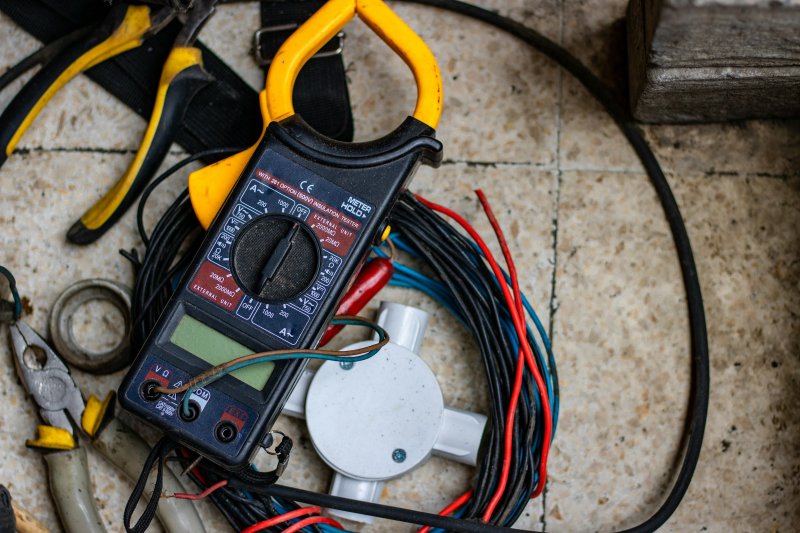
Four questions to ask any technician quoting compressor replacement.
- “Did you test the capacitor and contactor first, and what did they read?” A real diagnosis names microfarad readings on the capacitors and the visual condition of the contactor. “Looked at it, the compressor is bad” is not a diagnosis.
- “Is the original compressor under the manufacturer’s parts warranty?” Carrier, Lennox, Trane, and most majors run 10-year limited parts warranties on registered systems, 5 years unregistered. A warranty-covered compressor swap should bill labor only and run $500 to $1,500. If the technician quotes the full $1,800 to $2,800 without checking warranty status, get the model and serial off the nameplate and call the manufacturer’s homeowner-warranty line yourself.
- “Are you EPA Section 608 certified, and what type?” Type II certification covers high-pressure residential AC compressors. Anyone handling refrigerant on your system needs current Section 608 credentials. The certification does not expire, but new requirements for A2L (R-454B, R-32) handling do require updated training, which not every legacy crew has.
- “What rebates are you registered to file?” If you are leaning toward replacement, the contractor should be enrolled with the relevant manufacturer’s spring promotion for the rebate, and with your local utility’s rebate program for the matched-system kicker. Contractors who are not in the rebate networks cost you the $900 to $2,100 in foregone incentives, which is more than the difference between two competing quotes.
Ask whether the technician holds NATE certification — independent third-party testing on diagnosis and repair. A NATE-certified tech is the one who can distinguish a stuck contactor from a failing start capacitor on a compressor that hums but won’t run.
For broader heating and cooling cost guidance and the full 2026 install picture, see the HVAC cost guides hub.