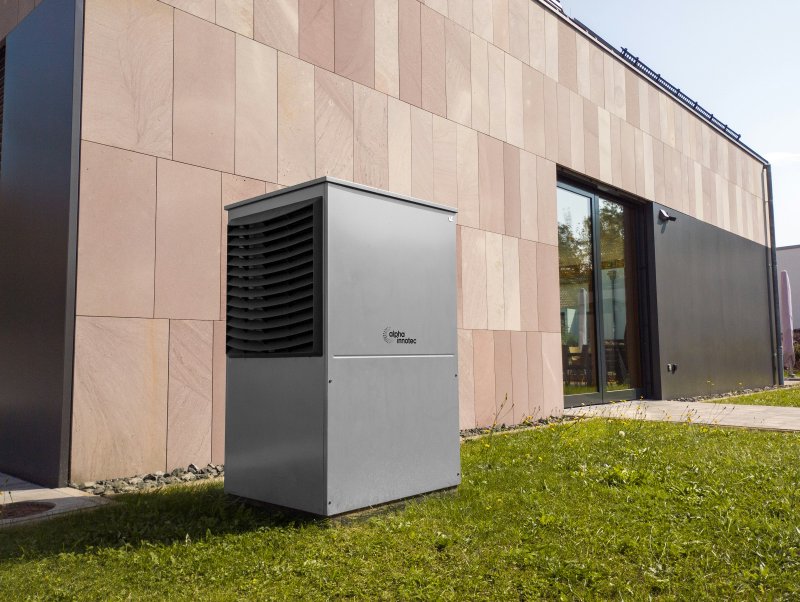
Central air conditioner installation costs $5,500 to $12,500 for a typical replacement on existing ductwork in 2026, with the national midpoint landing around $8,500. Add new ducts and the total runs $7,500 to $20,000. Strip the job to a condenser swap and it drops to $2,500–$5,500. The number you actually pay turns on three things most quotes hide: whether your system was sized correctly, whether your installer has the new A2L refrigerant equipment certified and on hand, and whether the new outdoor unit is AHRI-matched to the indoor coil it’s connecting to.
One more thing changed in 2026 that most installation pages haven’t caught up to. The federal 25C tax credit, which paid up to $600 on qualifying central AC and $2,000 on heat pumps, expired December 31, 2025. The rebate game now lives below the federal level — state programs, utility incentive networks, manufacturer spring promos — and that mix pays more attention than the federal version ever did.
What’s in a $5,500–$12,500 install
Standard quotes on existing ductwork bundle equipment, labor, basic line set, refrigerant charge, electrical disconnect, permit, thermostat, and old-unit haul-away. The typical 2026 breakdown for a 3-ton split system on existing ducts:
| Line item | Typical range | Notes |
|---|---|---|
| Outdoor condenser (3-ton, 14.3–17 SEER2) | $1,800–$4,200 | Premium variable-speed: $4,500–$7,000 |
| Indoor evaporator coil or air handler | $700–$2,200 | Must be AHRI-matched to condenser |
| Labor (installation crew, 1–2 days) | $1,500–$3,500 | $75–$150/hr crew rate, 8–16 labor hours |
| Refrigerant line set (50 ft, copper, insulated) | $300–$800 | New install or replacement when corroded |
| Electrical disconnect + whip | $150–$400 | Required by code; sometimes a sub-permit |
| Concrete or composite pad | $50–$200 | Composite pads are now standard |
| Permit + inspection | $100–$500 | Up to $1,000 if a panel upgrade is involved |
| Old equipment disposal | $0–$200 | Usually folded into the labor line |
| New programmable thermostat | $100–$350 | Smart thermostats: $200–$600 installed |
Sources: HomeGuide, Angi, Homewyse (Jan 2026), Bryant published pricing.
That’s a typical job. Pricing leaves the typical band fast in three directions. Variable-speed inverter equipment from Carrier Infinity, Lennox SL series, or Bryant Evolution lines runs 40 to 70% above standard. Putting ducts into a home that has none — common in older homes with hydronic heat or window-unit history — adds $2,000 to $7,500 for sheet metal and plenum fabrication. Coastal markets (Gulf, Atlantic, anywhere within a mile of salt air) tack on a corrosion-coating premium of $200 to $500.
In the other direction, contractors who buy direct from a distributor and skip the manufacturer’s preferred-dealer markup come in $800 to $1,500 below the typical band on a comparable spec.
The sizing rule everyone gets wrong
Most contractors size central AC the same way they did in 1985: one ton of cooling per 400–600 square feet of conditioned floor area. It’s quick, it’s wrong, and it’s how most homes end up with systems 30–50% oversized.
Allison Bailes published 40 real Manual J load calculations on the ACCA blog . The average came out to 1,431 square feet per ton. The lowest of the forty was 624, still above the high end of the rule-of-thumb range. Zero out of forty would have been correctly sized by the 500-sq-ft rule.
Oversized AC produces a counterintuitive comfort failure. The system hits the thermostat setpoint quickly, then shuts off before it can pull humidity out of the air. Your house registers 72°F on the wall but feels clammy at 68% relative humidity. The compressor short-cycles, kicking on for six minutes and off for fifteen, which destroys it years before its rated lifespan.
Manual J is the ACCA-published heat-load standard that a competent contractor runs before they spec your equipment. It accounts for window area and orientation, insulation R-value, infiltration, internal heat gains, and zone-by-zone room loads. Done right, it produces a printed report you can keep with your purchase paperwork. Ask for that report before you sign. A contractor who refuses to run Manual J, or runs one and won’t give you the printout, is sizing by intuition. Intuition has a 30% oversize bias built in.
One caveat. Manual J itself oversizes 15–40% according to the engineers who teach the standard. The honest move is to take the Manual J number and let the installer drop a half-ton from the recommendation if the building envelope is genuinely tight. That conversation only happens with a contractor who actually ran the math.
SEER2, the rating change still tripping up rebate paperwork
In 2023, the DOE replaced SEER with SEER2, and the new test protocol is roughly 4 to 5% more stringent. A 16 SEER unit under the old test rates about 15.2 SEER2 under the new one. That matters because a lot of consumer pages, and some installer brochures, still quote pre-2023 numbers.
Where things actually sit in 2026:
- Federal minimum (North): 13.4 SEER2
- Federal minimum (South under 45,000 BTU): 14.3 SEER2
- Federal minimum (South 45,000+ BTU): 13.8 SEER2
- ENERGY STAR split-system threshold: 17.0 SEER2 with EER2 of at least 12.0
Below the federal minimum, the unit is illegal to install. Below the ENERGY STAR threshold, you’re locked out of nearly every state and utility rebate. That second floor matters more in 2026 than it ever has, because rebate dollars are now where the real savings sit.
The 2026 rebate stack — federal is dead, state is alive
The federal 25C Energy Efficient Home Improvement Credit was terminated by the One Big Beautiful Bill Act (Public Law 119-21, signed July 4, 2025). Equipment placed in service after December 31, 2025 gets nothing from the IRS on a central AC or heat pump install. If a contractor’s quote still pencils in a federal credit for a 2026 install, that quote is wrong and probably so is their parts pricing.
What’s still alive, by tier.
Manufacturer spring rebates
These are the most predictable layer. They run roughly March through June every year, and they apply to most homeowners regardless of income. For 2026: Carrier’s Cool Cash promotion offers up to $2,100 on qualifying heating-and-cooling systems installed by June 30. Lennox is paying up to $1,800 on a matched Ultimate Comfort System — meaning a qualifying indoor unit paired with an outdoor unit plus a registered thermostat — installed by June 19. Trane’s spring instant rebate caps at $900 with a 60-month 0% APR financing alternative. These stack on top of utility rebates in most states, but only at participating dealers and only on matched systems.
State and utility programs
State and utility incentives vary wildly and reward heat pumps far more than straight AC. The 2026 numbers worth knowing:
- Mass Save (Massachusetts) pays $2,650 per ton for a whole-home air-source heat pump install, capped at $8,500 per home. Partial-home installs get $1,125 per ton against the same cap. R-410A heat pumps were dropped from the qualified products list for 2026, so the equipment must run on a newer A2L refrigerant. Install Jan 1–Dec 31, 2026; claims due Feb 28, 2027.
- NY Clean Heat (New York) restructured to flat-rate-per-project for 2026. Standard whole-home air-source heat pump rebates run up to $12,000 depending on utility territory. EmPower+ adds up to $24,000 for income-eligible households. The 2026 rule change requires removing the previous heating source from service — meaning it’s a heat-pump conversion incentive, not an AC replacement one.
- Energy Trust of Oregon’s 2026 ducted heat pump rebate runs $1,000 for an owner-occupied single-family install and $2,000 to $3,000 on rental, attached-residence, or Savings Within Reach projects; the Extended Capacity (CEE Tier 1 Path A) tier is $1,000 to $2,000. The Oregon HP3 program stacks up to $2,000 more per install when funded.
- Most municipal utilities (BGE in Maryland, ConEd in NYC, PG&E in California) layer their own $300–$1,500 rebates on ENERGY STAR-listed equipment that’s installed by an enrolled contractor. Always check the issuer of your electric bill before signing.
HEAR — the federal money the states actually administer
The IRA’s Home Electrification and Appliance Rebate funds are capped at $8,000 for a heat pump install for income-qualified households (under 150% of area median income). Rollout is the catch in 2026. California’s HEEHRA single-family program ran out of money in February 2026 and is waitlist-only. Colorado’s Front Range HEAR closed in April 2026; the rest of the state is still funded. Pennsylvania is awaiting final DOE approval as of early 2026. Washington and Minnesota launched in 2026 with full funding. Your state energy office or the DSIRE database is the only reliable place to check current status before you sign anything.
The practical move in 2026 is to ask the contractor to bid the matched system using ENERGY STAR-listed components. Then run three lookups before signing — the manufacturer spring rebate (their dealer should know), the utility rebate (the issuer of your electric bill posts these online), and state HEAR if your household qualifies. Stacking those layers on a $9,000 install commonly runs $2,000 to $4,000 off, and on a heat-pump conversion in Massachusetts or New York the stack can crack five figures.
R-410A is over
R-410A manufacturing ended January 1, 2025 under the AIM Act. New central AC sold in 2026 uses R-454B (most ducted systems) or R-32 (most ductless mini-splits). Both are A2L-classified, meaning mildly flammable under specific conditions, and the EPA now mandates leak-detection sensors plus sealed electrical connections on the equipment.
What this does to your install:
- Equipment cost: about 5–10% premium over what an R-410A unit cost two years ago, or roughly $350 to $700 extra on a $7,000 job.
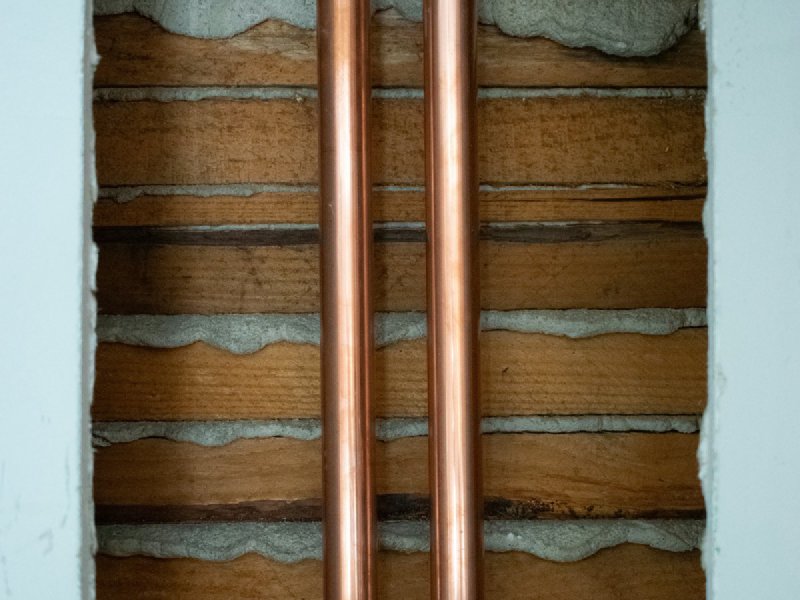
- Line set: existing copper line sets are usually compatible with R-454B operating pressures, but most manufacturers require a new sealed flare connection and want the system pulled to a deeper micron count. Older or corroded line sets get replaced, which is a $300 to $800 add.
- Refrigerant supply chain: R-454B cylinder prices have roughly quadrupled since 2021, which has created install delays in tight markets. Ask your contractor what’s actually on their truck before you book the date.
- Servicing the new gear requires updated EPA Section 608 certification on A2L handling, which not every legacy crew has yet.
If you have an existing R-410A system that still runs well, don’t panic-replace it. It will keep working. The sting comes when it leaks: R-410A recharge costs have roughly doubled since 2023 as supply contracts, and they’ll keep climbing as remaining inventory gets bought up.
Condenser-only swap vs. full system
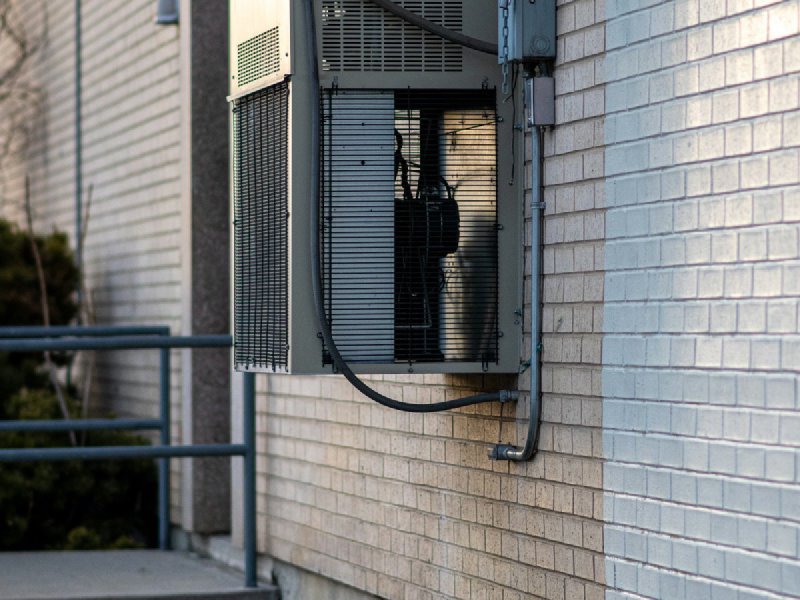
When the outdoor unit dies, the temptation is to replace just the condenser and keep the indoor coil. Your installer might even encourage it because the labor is cleaner and parts cost less. The catch is AHRI matching.
AHRI certifies condenser-coil-blower combinations as tested matched systems. A mismatched system loses 10 to 20% efficiency in typical cases, up to 40% in pathological ones. It also disqualifies the install from most utility rebates and manufacturer warranty registration, because both require the AHRI Certificate of Product Ratings, and that document doesn’t exist for a mismatched pair.
Condenser-only swap makes sense when three conditions all hold: the indoor coil is under five years old and AHRI-matched against a current-production condenser, you’re staying on R-410A inventory that the matched coil is still listed against, and the total cost gap to a full matched install is genuinely $3,000 or more. Miss any one of those conditions and the math swings the other way.
It stops making sense quickly when:
- The indoor coil is 10+ years old (the coil is usually the next part to fail anyway)
- You’re moving from R-410A to R-454B, and almost no R-454B condensers AHRI-match against pre-2025 indoor coils
- The coil sits in a sealed plenum that wasn’t built for service access
- Your installer can’t produce the AHRI certificate number for the proposed pairing
On any system past about year ten, paying the $3,000 to $4,000 gap to do the matched system is cheaper over a five-year horizon than replacing both halves separately as each fails.
Where the quote gets padded
Four line items where contractors routinely mark up well beyond their underlying cost. Refrigerant overage is the first to watch. The first 25 feet of factory pre-charge are included in the equipment price; anything past that, additional R-454B is billed at the cylinder spot price plus 200 to 300%. If your line set runs over 50 feet, ask for the per-pound add price in writing before signing.
Hard-start kits and surge protectors are the second. A $40 hard-start capacitor kit shows up on quotes as a $250 to $400 line item. It’s a useful part in hot-start climates, but it’s a 15-minute install on a part with a 600% margin. Negotiate.
Extended labor warranties are the third. Manufacturer parts warranties already run 10 years on registered systems. Dealer-branded “lifetime labor” warranties cost $400 to $1,200 at install and pay out at the dealer’s discretion. Most homeowners would do better banking that money against the inevitable post-warranty repair.
UV light and “indoor air quality” packages get tacked on as a $400 to $1,000 add. They’re genuinely useful in humid southern climates with chronic evaporator-coil mold. Outside that narrow case, marketing.
When to install vs. repair
The 5,000-rule is the contractor shorthand: multiply repair cost by system age in years; replace if the answer is over 5,000. A 12-year-old system needing a $500 capacitor-and-contactor job comes out at 6,000, which says replace. The same repair on a 6-year-old system comes out at 3,000. Fix it.
It’s a starting point, not gospel. Two more questions on top:
- Is the system on R-410A and out of warranty? Replacement gets stronger as the refrigerant gets scarcer.
- Is the home humidity-comfortable in summer? An undersized or tired system can’t dehumidify; replacing fixes the comfort issue, repair doesn’t.
Coastal homeowners with salt corrosion typically replace at year 8 to 10 regardless of repair cost. Our HVAC maintenance guide covers why coastal lifespan runs short.
Vetting the installer
Four questions to ask before you sign any quote:
- “Will you provide a written Manual J load calculation report?” Yes is the only acceptable answer. A response about sizing by square footage is your cue to book another quote.
- “What’s the AHRI certificate number for the matched system you’re proposing?” They should produce it from the AHRI directory or pull it on request. Verify the number on ahridirectory.org before signing.
- “Is your tech EPA Section 608 certified for A2L refrigerant handling?” R-454B and R-32 require updated EPA compliance, and most manufacturers now require A2L-specific training for warranty registration. Ask to see the cert.
- “What rebates are you registered to file for the homeowner?” Mass Save, NY Clean Heat, Energy Trust of Oregon, and most utility programs require an enrolled-contractor filing. If they’re not in the network, you’re either filing yourself with a much smaller form or losing the rebate entirely.
For the bigger picture on HVAC pricing across service plans and the repair-vs-replace math at every age, see our HVAC cost guides hub.