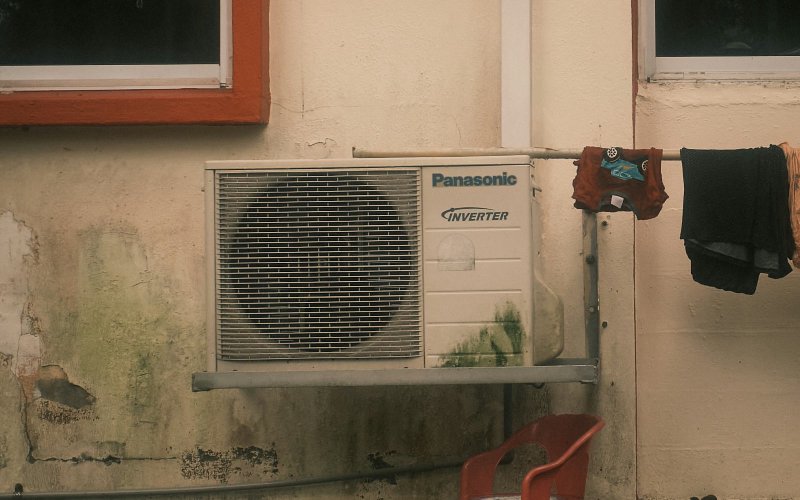
AC refrigerant leak repair runs $400 to $1,500 for an accessible leak at a service valve, fitting, or copper line, and $1,500 to $3,500 if the leak is in the evaporator or condenser coil. The national-average headline of $800 is just the rough midpoint of those two very different jobs. Which one you have changes everything about whether repair makes sense, and on systems past year 10, or on any system still running R-22, the right move is usually not to repair at all.
The articles ranking for this keyword tend to give you one number and call it good. The harder question is what that number actually buys, and at what point the smart play is to walk away from the repair quote entirely.
Symptoms that point to refrigerant loss
The diagnostic picture almost always contains the same cluster. Warm air from the supply vents on a hot afternoon while the outdoor unit is clearly running. Ice forming on the copper line set or the indoor coil itself; counterintuitive, but a low charge drops evaporator pressure below the dew point and the coil freezes over. A hissing or bubbling sound near the indoor air handler or outdoor condenser, especially when the unit cycles off.
Bills creeping up across June and July without a heat-wave explanation is the slow-roll version. So is a system that used to hold 72°F at noon now needing to run continuously to hold 76°F. Refrigerant doesn’t get “used up.” Every pound that escaped the closed loop is a pound somebody has to replace.
What this article is not about: water dripping from the indoor unit. That is almost always a clogged condensate drain ($75 to $200 to flush) or a cracked drain pan ($150 to $400). Different problem, different cost band, different urgency.
Detection before anyone fixes anything
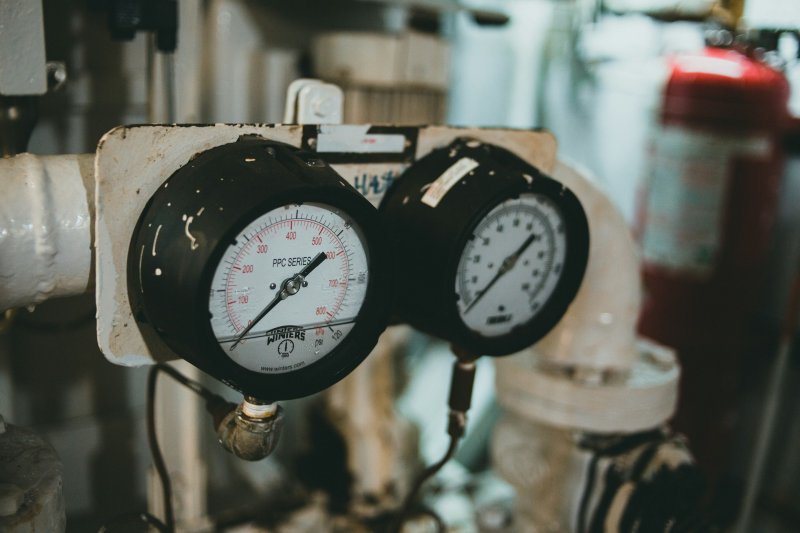
A real shop quotes detection separately. The price moves with how hard the leak is to corner:
| Method | What it does | Typical cost | When it’s used |
|---|---|---|---|
| Electronic leak detector | Sniffs for refrigerant gas at fittings, joints, and along coil tubing | $100–$200 | Default first pass; works on a charged system |
| UV dye trace | Dye injected into refrigerant, returns 24–48 hr later with UV lamp | $150–$300 | Hard-to-reach leaks, intermittent leaks |
| Nitrogen pressure test | System evacuated and pressurized with dry nitrogen; pressure drop or hiss locates leak | $200–$330 | Coil-suspected leaks, leaks below charged-system detection threshold |
Sources: Angi 2026, Season Control HVAC, HomeGuide.
The cheap-looking electronic-detector pass misses two failure modes that matter. Coil leaks small enough to lose a few ounces a year often don’t release enough refrigerant near the sniffer to trip it, especially with the air handler running. And formicary-corrosion pinholes (described below) sometimes only open up under positive pressure, which is why a serious diagnosis ends with a nitrogen test if the first two passes come back inconclusive.
A flat-fee “diagnostic” of $89 to $150 advertised in spring promotions is the service-call portion only. It gets the tech to the house and onto the system. It does not include a full leak hunt. If the tech says “you have a leak somewhere” and quotes a repair without first locating it, what you’re paying for is a guess plus a recharge. The refrigerant will be gone by August.
The two repair jobs and why they price so differently
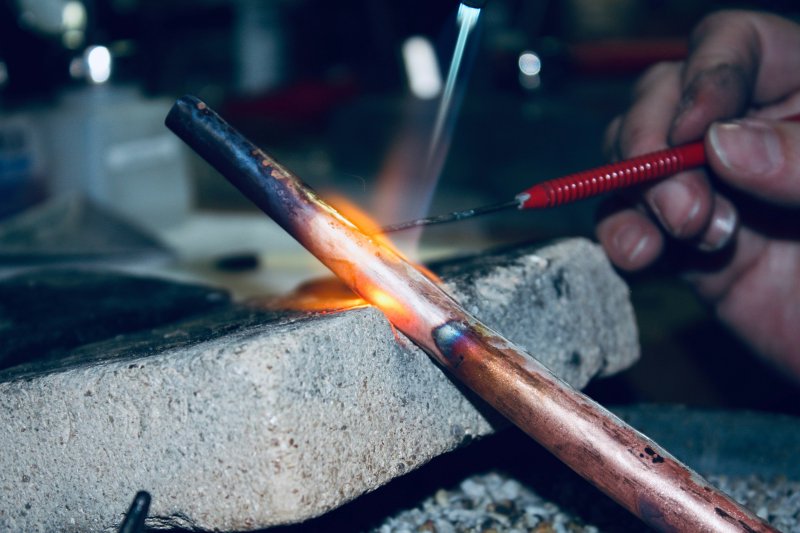
Refrigerant leaks split cleanly into two scopes. The repair number sits in different orders of magnitude depending on which one you have.
Accessible leaks. Schrader valve cores (the same valve type as a tire), brazed joints at the service valves, line-set fittings, copper line-set rub-throughs from poor isolation against framing. The repair is mechanical: replace the valve core ($5 part, 10 minutes of labor), re-braze the joint, or splice the line set. Total all-in including detection, repair, recovery of any remaining refrigerant, and recharge: $400 to $1,500 on R-410A, with the Schrader-valve scenario sitting at the floor and a full re-braze plus 8-pound recharge near the ceiling.
Watkins Heating & Cooling and several trade-press writeups put the share of refrigerant leaks that occur in evaporator-coil tubing at “9 times out of 10.” Most of those, however, are the slow seepage of formicary corrosion in older systems. Among leaks discovered fast enough that a homeowner notices, the accessible category is well represented and is the better repair candidate.
Coil leaks. Pinholes through the copper tubing of the evaporator coil (indoors, above the furnace or in the air handler) or condenser coil (outside, the larger heat exchanger in the outdoor unit). The leak itself is unrepairable in any practical sense. A coil is hundreds of feet of tubing folded into thin fins, and patching one pinhole guarantees another forms within a season. Coil replacement is the only real fix.
| Coil replacement scope | Parts | Labor | Refrigerant | Total |
|---|---|---|---|---|
| Evaporator coil, in-warranty (parts covered) | $0 | $500–$1,500 | $200–$900 | $700–$2,400 |
| Evaporator coil, out of warranty | $600–$2,000 | $500–$1,500 | $200–$900 | $1,300–$4,400 |
| Condenser coil (outdoor), out of warranty | $800–$2,400 | $400–$1,000 | $200–$900 | $1,400–$4,300 |
| Cased vs uncased evaporator (uncased adds sheet-metal work) | +$200 | +$150 | — | +$350 |
Sources: HomeGuide 2026, Today’s Homeowner ($1,900–$3,000 typical band, $2,450 average), This Old House ($627–$2,700 range, $1,350 average including refrigerant). The wide spread comes from warranty status, which moves the bill more than any other line item on a coil job.
A 3- to 4-ton residential coil takes 2 to 4 hours to swap on a clean install and twice that in attic or crawl-space access, where Today’s Homeowner pegs the access premium at $150 to $450. Brazing requires nitrogen purge, the system needs a deep vacuum (500 microns minimum), and the recharge has to be by weight, not pressure. None of this is DIY territory: the work requires EPA Section 608 certification by federal law, along with a recovery machine, a micron gauge, and a brazing setup most homeowners don’t own.
The repair-vs-replace verdict that most articles dodge
Top search results almost always tell you “consider replacement if the system is over 10 years old.” That’s not wrong. It’s just not specific enough to act on. An honest contractor’s actual decision matrix looks like this:
| System age | Refrigerant | Leak location | Verdict |
|---|---|---|---|
| 0–8 years | R-410A | Accessible (valve, joint, line) | Repair. Always. |
| 0–8 years | R-410A | Coil, in warranty | Repair. Pay only labor and refrigerant. |
| 0–8 years | R-410A | Coil, out of warranty | Repair if you’re keeping the home; replace if planning to move within 3 years. |
| 9–12 years | R-410A | Accessible | Repair, but plan a replacement budget for the next 2–3 years. |
| 9–12 years | R-410A | Coil | Replace. A $2,500 coil on a system 75% through its rated life is the worst spot on the curve. |
| 13+ years | R-410A | Any | Replace. |
| Any age | R-22 | Any | Replace. R-22 is uneconomical to recharge in 2026. |
| 7+ years | R-410A | Any, coastal | Replace. Salt air shortens AC lifespan to 7–12 years; the coil is rarely the only failing part. |
Three numbers anchor that table. A coil replacement on an out-of-warranty R-410A system runs $1,300 to $4,400. A full system replacement runs $5,500 to $12,500 on existing ductwork (see the central air conditioner installation cost guide ). And the manufacturer rebate stack on a new R-454B system runs $900 to $2,100 in 2026: Carrier Cool Cash up to $2,100, Lennox up to $1,800, Trane up to $900 plus 60-month 0% APR. State and utility rebates layer on top of that where available.
That math shifts the threshold. A 12-year-old system facing a $3,000 coil quote sits at 55% of the lower bound for full replacement ($5,500). Net a $1,500 mid-stack rebate, the additional money to upgrade to a new R-454B system lands roughly in the $3,000 to $4,500 band on a typical mid-range install ($7,500 to $9,000). For most homeowners, paying the gap to reset the lifespan clock on equipment that runs about 5 to 8% more efficient than R-410A is the better move than buying two or three more years on a system already past its half-life.
Why coils on premium systems fail at year 6, not year 15
This is the part trade press knows and consumer cost guides skip. Modern evaporator coils have a corrosion problem that the industry calls formicary corrosion — Latin for “ant-nest.” Indoor air pollutants, especially formaldehyde off-gassing from furniture, cabinets, paint, and household cleaners, dissolve into the condensation that forms on the cold evaporator coil during every cooling cycle. The dissolved organics break down into formic acid and acetic acid. Those acids etch microscopic tunnels through the copper tubing.
The 2007 federal SEER 13 minimum forced manufacturers to thin coil tubing to improve heat-transfer efficiency. Thinner walls mean less metal to corrode through before a pinhole opens. ACHR News and other trade publications have documented coils failing in 5 to 10 years in homes with elevated indoor VOC concentrations, particularly in newer construction with limited fresh-air exchange.
Three things that accelerate it: a household with new furniture or cabinetry installed in the last two years; finished basements with paint, polyurethane, or off-gassing carpet; and homes with airtight envelopes that don’t dilute indoor air with outside air exchange. None of these are something the homeowner did wrong. They are interactions between modern building practices and modern coil construction.
There is no homeowner-side prevention except an HRV or ERV system to keep VOC concentrations low, which is a $2,000 to $4,000 retrofit on its own. Coil-coating treatments offered as add-ons exist but their effectiveness against formicary corrosion specifically is not well-supported — most coatings target salt corrosion. The honest answer when a 7-year-old coil leaks is that it is a known design weakness, not a maintenance failure, and a warranty claim if you have one is the right next step before any repair quote.
Refrigerant by the pound is where the quote gets ugly
Whatever the repair scope, the recharge dominates the bill on anything beyond a Schrader-valve fix. Per-pound pricing as of 2026:
| Refrigerant | Per pound | Typical 3-ton recharge (6–12 lb) |
|---|---|---|
| R-22 (HCFC, phased out) | $400+ where available | $2,400–$5,000+ |
| R-410A (HFC, post-2025 manufacturing ban) | $199–$250 | $1,194–$3,000 |
| R-32 (A2L, common in ductless) | $275–$300 | $1,650–$3,600 |
| R-454B (A2L, ducted standard) | $345–$375 | $2,070–$4,500 |
Source: Quality Comfort 2026 pricing data.
R-22 is the killer. Production stopped in 2020 under the Montreal Protocol. Distributors stocked up before the cutoff and have been working off that supply for six years. Spot pricing has climbed from around $125 a pound mid-decade to $400-plus in 2026 — and the supply is genuinely running out. A homeowner with an R-22 system facing any leak repair is staring at a $2,500-to-$5,000 recharge bill on top of the labor, on a system that the EPA has structured to be unsupportable by 2030. That is the math that flips R-22 from “repair candidate” to “replace today” regardless of age.
The newer A2L refrigerants (R-32 and R-454B) are mildly flammable, which is why post-2025 systems have factory leak detectors and require new line-set joints rated for the higher pressures. If your system is R-410A and you switch to R-454B equipment as part of a replacement, the line set may or may not be reusable depending on age, condition, and the manufacturer’s spec — figure another $300 to $800 if not.
A clean leak-repair invoice should break out detection, repair labor, refrigerant recovery (federally required, $50 to $150), and new refrigerant by the pound separately. If the quote is one bundled number, ask for the split. The $300 to $600 of unexplained margin is almost always sitting in the refrigerant or recovery line.
Three questions before signing the repair work order
Three things, in this order. First, did you locate the leak? A repair quote without a confirmed leak location is a refrigerant top-off dressed up as a fix. The right answer cites a specific component — “Schrader valve at the suction line,” “evaporator coil, indications of formicary pinholing on circuit 3,” “line-set rub at the framing penetration.” If the answer is “somewhere in the system,” walk away.
Second, what’s the refrigerant, what’s the per-pound price, and how much weight goes back in? Recharge by weight is correct technique; recharge by gauge pressure (“topping off until it reads right”) is how a partially leaking system gets sent home to leak again next month. A real recharge starts with a 500-micron vacuum, then weighs in the manufacturer’s specified charge for that exact equipment.
Third, what is the warranty status of the failed component? Carrier, Lennox, and Trane all run 10-year parts warranties on coils for original-owner registered systems, which means the $600-to-$2,000 coil cost may be zero if the registration was filed at install. Most homeowners don’t know whether registration was filed; the contractor who installed the system can usually pull the record. Skipping that check is how out-of-warranty coil-replacement bills get paid that didn’t have to be.
For systems past their service life or running R-22, the right move usually skips the repair quote entirely. Reset to a new central air conditioner installation on R-454B equipment, claim the manufacturer rebate stack, and put the repair money toward something with a 12-to-15-year runway instead of a 1-to-2-year reprieve. The annual maintenance side of that equation is covered in the HVAC maintenance service cost guide . A real annual visit catches a developing leak two years before it strands a homeowner in August.