Gas boiler repair in the U.S. costs $89 to $150 just to diagnose and $150 to $1,500 to fix depending on which component failed. Cheap fixes (flame sensor cleaning, pressure relief valve, thermocouple, expansion tank) run $100 to $450 and handle most mid-winter no-heat calls. Circulator pumps and aquastats push $400 to $1,100, and gas valves can hit $1,100 by themselves. A cracked cast-iron section or pinholed heat exchanger isn’t a repair at all — it’s a replacement.
Articles that rank for this keyword publish the same price ranges and call it a guide. The harder questions: which fix solves your actual symptom, why the same circulator can quote at $400 or $1,100 from different shops, and at what age repair stops being math you can defend.
What each common boiler failure costs
Most calls a homeowner places to a boiler tech in 2026 come from one of these failure modes:
| Failure | Typical repair cost | Average | Hours on site |
|---|---|---|---|
| Diagnostic / service call (daytime) | $89–$150 | $115 | 0.5–1 |
| Diagnostic / service call (after-hours) | $150–$250 | $200 | 0.5–1 |
| Flame sensor cleaning (no part) | $80–$200 | $140 | 0.5 |
| Thermocouple replacement | $100–$300 | $200 | 0.5–1 |
| Pressure relief valve | $150–$300 | $225 | 0.5–1 |
| Expansion tank replacement | $200–$450 | $325 | 1–2 |
| Low-water cutoff replacement | $300–$700 | $525 | 1–2 |
| Circulator pump (single-speed iron) | $300–$600 | $450 | 1–2 |
| Circulator pump (ECM variable-speed) | $600–$1,100 | $850 | 1–3 |
| Hot surface ignitor | $150–$400 | $275 | 1 |
| Aquastat / control board | $400–$700 | $550 | 1–2 |
| Gas valve | $300–$1,100 | $700 | 2–3 |
| Heat exchanger leak (cast iron, sectional) | $1,500+ → typically replace | — | 4–8 |
| Annual tune-up | $200–$500 | $325 | 0.5–1 |
Sources: HomeGuide, Fixr, Angi (2026 data), cross-checked against sibling pricing in our HVAC system repair guide where labor and diagnostic ranges overlap.
Daytime weekday calls are cheaper than evenings, weekends, and the first cold snap of November when every boiler that limped through summer fails on the same Tuesday. A circulator that runs $450 on a regular weekday becomes $750 at 8 p.m. on a Sunday. The part is identical. The clock is what’s billed.
Regional pricing tracks installation work. New York metro, Boston, Chicago, and Bay Area markets run 30 to 50% above national averages. Rural Midwest and Southeast trend 15 to 25% below. Numbers in the table are national midpoints.
Diagnose the symptom before the truck arrives
Boilers have a small set of recurring failures that look very different at the thermostat. Match the symptom and you’ll know whether the quote is honest.
No heat, pilot lit, burner won’t fire
On a standing-pilot system this is almost always the thermocouple — the tip-of-pencil sensor sitting in the pilot flame. It fails when the millivolt output drops below the 25 mV the gas valve needs to stay open. Part is $20. Replacement runs $100 to $300 with a service call. On an electronic-ignition system the equivalent failure is the flame sensor — a thin metal rod that proves a flame is present so the gas valve can stay open past the seven-second safety timer. Soot coats it, microamps drop below the 1.5 µA threshold, and the burner shuts down. A homeowner with emery cloth and 15 minutes can clean it. A tech does the same job for $80 to $200. Replacement is rarely needed; cleaning every couple of years usually carries a sensor for the life of the boiler.
System keeps losing pressure
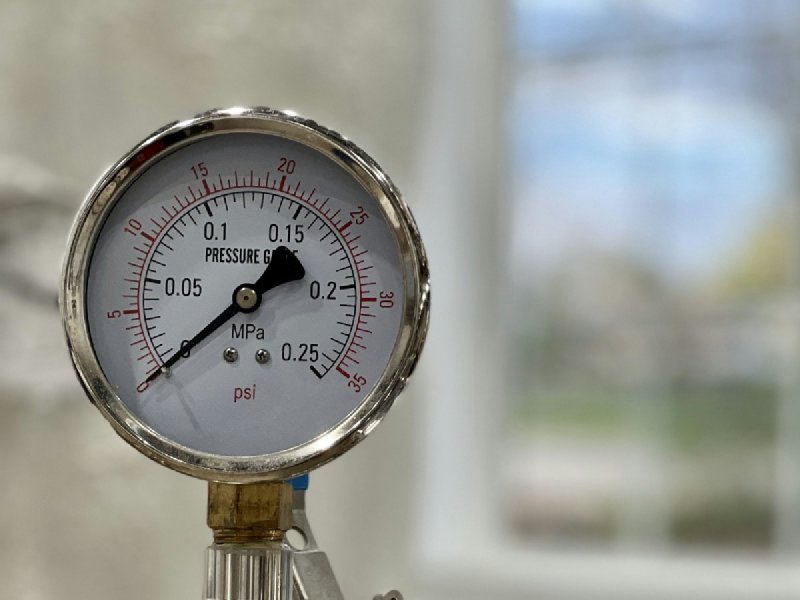
Pressure that drops below 12 psi cold means water is leaving the system. The expansion tank is the first suspect. A waterlogged tank has lost its air cushion: the bladder ruptured, or the Schrader pre-charge bled off, or there never was air in it because nobody set it on install. Water expands when heated, has nowhere to go, and dumps through the relief valve at 30 psi. Each cycle the auto-feed valve adds fresh water. Symptoms: relief valve weeps, pressure swings from 12 to 30 to back over a heat call.
Test it: tap the side of the tank with a knuckle. Hollow ring on top, dull thud on bottom means there’s still air and the bladder’s intact. Same dull sound throughout means it’s drowned, replace at $200 to $450. While you’re there, set the new tank’s pre-charge to 12 psi with a tire gauge before connecting it to the system. Pre-charge has to match the cold fill pressure or the tank can’t do its job.
Boiler short cycles
The burner fires for 30 seconds, shuts off, fires again two minutes later. Two common culprits. First, the aquastat (the temperature controller that decides when the burner runs) is failing or set wrong. A high limit set too close to the operating differential will trip out repeatedly on a hot return. Replacement runs $400 to $700. Second, the expansion tank is again the answer: a waterlogged tank causes pressure spikes that the relief valve dumps, the auto-feed adds water, the system overshoots, the high limit trips. Diagnose the tank first because it’s cheaper to replace and rules out the expensive control work.
Pressure relief valve dripping
The relief valve is doing its job, protecting against overpressure at 30 psi. The question is why pressure got that high. Almost always: a failed expansion tank, fill valve stuck open, or a heat exchanger crack pressurizing the system. Replacing the PRV itself runs $150 to $300 and takes 30 minutes, but if you replace the valve without finding the upstream cause, it’ll weep again within weeks. A reputable tech checks the expansion tank and feed valve before quoting a new PRV.
Cold radiators on the upper floor
Air in the system, or a dead circulator pump. Bleed every radiator first; most boilers have manual bleed screws or air-vent valves at the top of each rad. If air keeps appearing after repeated bleeds, you have an air-introduction problem (waterlogged tank, micro-leak, or a high-point air vent that’s failed open). If the radiators stay cold and quiet with the boiler firing, listen at the circulator. Silent or buzzing without flow points to a seized pump.
Circulator replacement is where the price spread gets wide. A standard cast-iron Taco 007 or Grundfos UPS-15 costs $300 to $600 installed. A high-efficiency ECM variable-speed circulator (Grundfos Alpha, Taco VR1816, Wilo Stratos) costs $600 to $1,100. The ECM uses up to 80% less electricity at part-load and costs $40 to $90 a year less to run. On a system that runs eight months a year, the upgrade pays back in five to seven years.
The trap: a tech can substitute a single-speed pump on a system spec’d for variable-speed and quote you the cheaper number. Your zoning logic, outdoor reset, or modulating control loses its speed feedback. If your boiler was installed with delta-T or outdoor-reset control, insist on an ECM-spec replacement.
When the part is the wrong question
Some failure modes don’t have a sensible repair path. Two of these are inherent to the equipment, and the third shows up when too many smaller failures pile up at once.
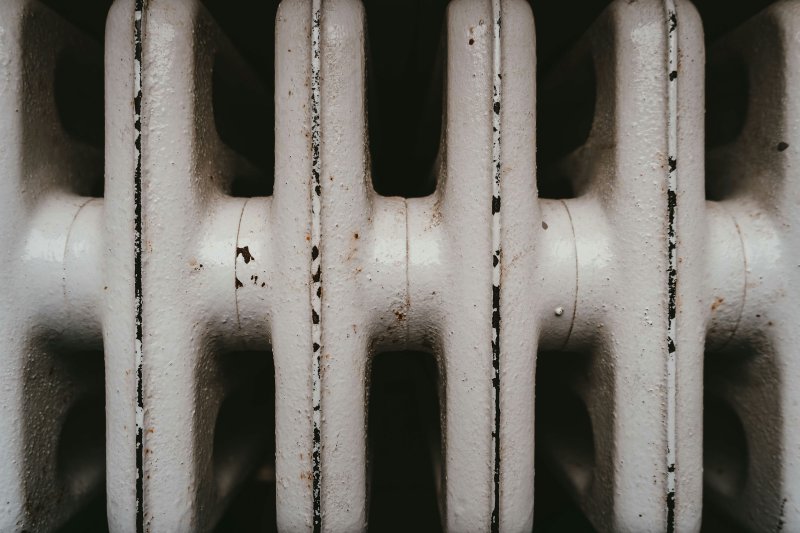
Cast-iron boilers are bolted-together sections, each weighing 50 to 200 pounds, sealed with elastomer push nipples or graphite-impregnated rope gaskets. When a section cracks (usually from thermal stress after a cold-water shock or chronic return-water-too-cold operation), there’s no acceptable repair. The boiler has to be disassembled, the failed section replaced, and the whole stack torqued back together. Labor alone runs $1,500+ on a small unit. By the time you’re 20 years in on a cast-iron boiler, the gaskets are at end of life across all sections, and disassembly typically reveals two or three more about to fail.
Condensing boilers run a stainless or aluminum heat exchanger that lives in a permanently acidic, wet environment. After 12 to 15 years, microscopic pinholes start showing up. A leak from the heat exchanger of a sealed-combustion boiler is a replacement, not a repair — the part alone is $1,200 to $2,500, and labor to swap it on most condensing units approaches half the cost of new equipment.
When the tech finds a failed circulator, weeping PRV, sweating section, and a flaky aquastat on the same visit, you’re looking at a $2,500 quote on a 22-year-old boiler that will see another major failure within two heating seasons. The arithmetic stops favoring repair.
Tune-up math: is $300 a year worth it?
A real annual tune-up runs $200 to $500 and prevents most of the unexpected failures above. Four things actually happen on an honest visit:
- Combustion analysis with a calibrated analyzer at the flue. Target O2 between 6 and 9% on natural gas, CO under 100 ppm undiluted, CO2 around 8 to 10%. Out-of-spec readings catch tuned-too-rich or tuned-too-lean conditions that destroy heat exchangers within a season.
- Mechanical inspection: burner ports cleaned, ignition components tested, manifold gas pressure verified at 3.5 inches water column for natural gas (10 to 11 inches for propane), flame sensor microamp reading, low-water cutoff probe washed and tested.
- Hydronic check: expansion tank pre-charge verified at 12 psi cold, system bled at high points, circulator amp draw measured, relief valve manually exercised, water quality eyeballed at the bleed (rust-brown means oxygen is getting in somewhere).
- Safety verification: spillage test at the draft hood with a smoke pencil on atmospheric boilers, ambient CO sweep at the burner cabinet, gas-leak check with electronic sniffer at every union and tee handled during the visit.
The $79 specials skip the combustion analyzer and the LWCO test. They visually inspect, replace a $4 filter, and write a $400 quote for whatever they noticed on the way out. The honest test: does the truck have a Testo or Bacharach analyzer in it, and does the tech use it on your system? If not, you bought a sales call.
For a deeper breakdown of what an ANSI/ACCA Standard 4 maintenance visit actually covers, see our furnace tune-up guide , where much of the same combustion-analysis methodology applies to atmospheric boilers.
When repair stops making sense
Boring math — but it’s the math that matters.
The 50% rule. If a single repair quote tops 50% of the cost of a new boiler, replacement is the better call. New gas boilers installed run $3,200 to $9,000 depending on type and capacity (cast-iron units sit toward the low end, condensing toward the high). A $2,500 stacked-repair quote on a 22-year-old cast iron with a likely $4,000 to $5,000 replacement fails this test handily. A $400 expansion tank on the same boiler passes easily.
The age rule. Cast-iron hot water boilers average 20 to 30 years; condensing high-efficiency units average 12 to 15. Past half-life, the next failure is usually right behind the current one. A 26-year-old cast iron that just lost its circulator will lose its expansion tank, then a section gasket, then the relief valve, and you’ll spend $2,500 across two winters keeping a system that was going anyway.
Combine both anchors:
- Repair quote under 30% of new system cost → repair
- Repair 30 to 50% of new cost AND age under half lifespan → repair
- Repair quote over 50% of new cost → replace
- Any repair over $1,500 AND age past 20 yrs cast iron / 12 yrs condensing → strongly consider replacement
- Cracked section or pinholed heat exchanger at any age past 15 yrs → replace
Federal credit context matters here too. Through December 31, 2025, the §25C Energy Efficient Home Improvement Credit covered up to $600 for qualifying high-efficiency gas boilers (95%+ AFUE) through the IRS. OBBBA 2025 (Public Law 119-21, signed July 4, 2025) ended that credit for property placed in service after December 31, 2025. From 2026 onward, no federal tax credit applies to residential gas boiler repair or replacement. State and utility rebate programs (Mass Save, NYSERDA, ConEd, Xcel) may still offer rebates of $200 to $1,500 on high-efficiency replacements. Verify directly with your local efficiency program before assuming any subsidy.
Red flags in a repair quote
Three patterns to push back on in 2026.
“Your boiler needs a full system flush”
Real flushing (chemical cleaner, system drain, refill, bleed, charge) has a place on a boiler with rust-brown water, repeated air problems, or clogged radiators. It doesn’t belong on a routine tune-up call. A $400 to $800 line item for “system flush” on a healthy boiler is a sales add-on, not a repair.
“We need to replace the gas valve”
Gas valves do fail, but they’re misdiagnosed often. A boiler that won’t fire is more often a dead thermocouple, dirty flame sensor, plugged pilot orifice, or low manifold pressure. A real gas valve diagnosis includes a manometer reading at the inlet and outlet taps and a millivolt or 24V check at the valve coil. If the tech is quoting $700 to $1,100 on a gas valve without showing you those readings, ask for the diagnostic data before authorizing.
“Your expansion tank is fine, the relief valve is the problem”
Backwards. If the relief valve is weeping on a closed-loop hydronic system, the expansion tank is the first thing to check, not the last. Replacing the relief valve without diagnosing the upstream pressure problem buys you maybe two weeks before the new valve weeps too. A reputable tech checks tank pre-charge before touching the relief valve.
A good vetting question on the phone before booking: “Do you carry a combustion analyzer and a manometer on the truck?” If the answer hesitates, call someone else. Both tools are required to diagnose any modern gas boiler — a shop that doesn’t carry them isn’t equipped to repair anything beyond the most obvious symptoms.
For broader cost context across heating and cooling work, see our HVAC cost guides hub.