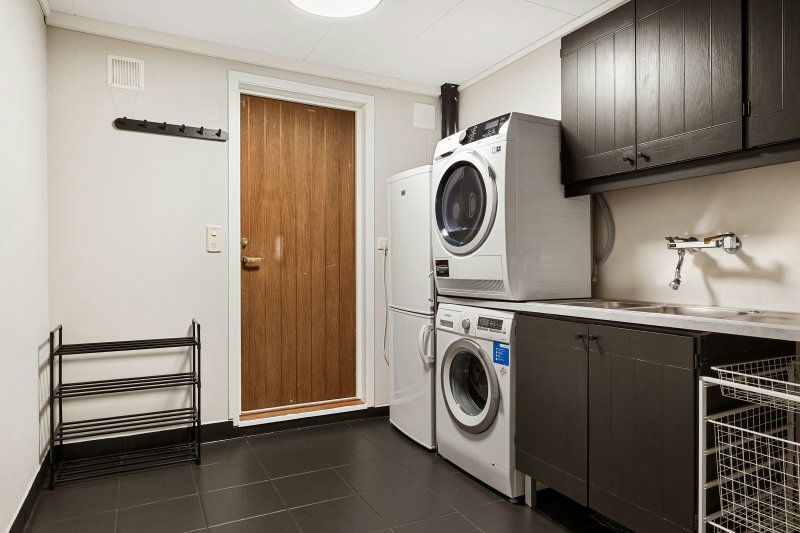
Air duct cleaning in the U.S. costs $300 to $1,000 for a typical single-family home in 2026, with most homeowners paying somewhere between $389 and $500 depending on which industry tracker you trust. Dryer vent cleaning is a much narrower band: $130 to $200 for a normal ground-floor termination, averaging around $145. Together, the two services land at roughly $430 to $1,200 when bundled, and most reputable companies will discount the dryer vent by $20 to $40 if it’s added to the same visit.
The harder question is whether you should be paying for either one in the first place. EPA position and the underlying NADCA standard disagree with the marketing material, and the right answer is different for ducts than it is for the dryer.
Air duct cleaning: 2026 price bands
2026 pricing from major cost trackers, normalized to a 2,000 sf single-family home with one HVAC system:
| Source | Range | Average |
|---|---|---|
| NADCA / Breathing Clean | $450–$1,000 | range only |
| Angi 2026 | $271–$508 | $389 |
| HomeGuide 2026 | $300–$700 | $500 |
| Fixr 2026 | $300–$700 | $500 |
| This Old House 2026 | $300–$1,000 | mid-band |
The cluster is real: most legitimate residential jobs land between $400 and $700, with NADCA-certified shops at the upper end. Per-vent pricing, when itemized, runs $25 to $45 per register. A typical 2,000 sf home has 10 to 14 registers plus a couple of returns, which is how per-vent math arrives at the $400-ish midpoint.
What pushes a job above $700 isn’t usually the cleaning itself. It’s add-ons:
- Multiple HVAC systems (zoned home with two air handlers): roughly 1.7× a single-system price, not 2×, because mobilization and access ports overlap.
- HEPA-filtered negative-air machine vs portable shop vac: the negative-air rig is the NADCA reference standard and what real money buys. Operators arriving with a Shop-Vac aren’t doing source-removal work.
- Sanitizing fog or biocide application: $75 to $300 add-on. Skip unless visible mold has been confirmed.
- Coil cleaning or blower-wheel cleaning: $100 to $400 each. Reasonable add-ons when the unit is genuinely dirty, but commonly upsold without need.
Anything advertised under $99 for the whole house is a red-flag price. The labor floor for legitimate source-removal work (two technicians plus truck-mounted negative-air running three to five hours) is $300. Below that, either the company isn’t doing the work or they’re showing up to upsell mold remediation that doesn’t exist. BBB and the FTC have flagged this pattern as bait-and-switch advertising; several state attorneys general have followed with consumer advisories. The call pattern: robocalls, “lifetime warranty” cold-pitches, on-site pressure to pay $1,000 to $3,000 for “mold sanitizing” before they’ll start.
Dryer vent cleaning: 2026 price bands
Smaller, cleaner pricing band:
| Source | Range | Average |
|---|---|---|
| Angi 2026 | $75–$335 | $145 |
| HomeGuide 2026 | $90–$200 | $130–$150 |
| HomeAdvisor 2025 | $100–$200 | $145 |
| Roof termination | $150–$250 | premium |
A normal job is one truck, one tech, 30 to 60 minutes. The technician disconnects the dryer, snakes a power-drill rotating brush through the full duct, and runs a HEPA vacuum from the exterior termination during agitation. Parts-and-labor add-ons (transition duct, exterior cap, roof jack) typically run $50 to $200.
What pushes the price up from $145 toward $250:
- Roof-vent termination: ladder access plus working overhead is the surcharge most homeowners notice on the invoice.
- Long duct runs over 25 ft: more time to brush, more chance of finding crushed sections that need replacement.
- Multiple 90-degree elbows: each one is an obstacle the brush has to negotiate; three or more elbows often pushes a job into the upper range.
- Bird-screen replacement: dryer terminations are not supposed to have bird screens because lint clogs them in months, but inspectors find them anyway. Swapping a bird-screened cap for a code-compliant flapper hood costs $40 to $80 in parts plus 15 minutes of labor.
EPA’s three triggers for duct cleaning
EPA’s position, in their published “Should You Have the Air Ducts in Your Home Cleaned?” guidance, is direct: “EPA does not recommend that air ducts be cleaned routinely, but only as needed.” Their published guidance lists four trigger conditions, and any one is enough:
- Substantial visible mold growth inside hard-surface ducts or on other HVAC components. Note: not “musty smell,” not “could be mold.” Visible. If you can see it on a flashlight inspection at the register or the air handler, that’s a yes.
- Rodent or insect infestation in the duct system. Mouse droppings on a register grille usually mean activity inside the trunk. Cockroach activity in humid climates is the other common case.
- Excessive dust and debris clogging the system, with particles actively releasing into the home from supply registers. The bar is particles physically exiting the register when the system runs, not a fingertip swiped across the grille coming back gray.
- Documented post-event contamination — drywall dust after a renovation, smoke residue after a kitchen fire, sewage backflow into a basement air handler. The event itself is the trigger.
Outside of those triggers, EPA says the work is optional at best. NADCA’s ACR 2021 Standard, the trade’s own technical document, agrees in substance: it’s a condition-based standard, not a calendar-based one. Annual inspection, then cleaning only when inspection finds documented contamination. The often-quoted “every three to five years” homeowner number is a marketing convenience, not an ACR mandate.

The mold-claim scam plays on the gap between what looks alarming and what qualifies. A flashlight on a sheet-metal trunk will always show some dust. A photo of that dust, sent to a homeowner with a $1,500 sanitizing quote, is the bait. Real mold remediation requires moisture-source diagnosis (look for condensate pan failure or return-side air leakage from a damp crawl space) before cleaning matters. Without fixing the cause, mold returns within months. EPA also notes that “no chemical biocides are currently registered by EPA for use in internally-insulated air duct systems.” Sanitizing-fog upsell on flex duct or fiberglass-lined trunk is, strictly, off-label use.
The honest answer for many homes is closer to “never, until something changes.” Outside of EPA’s documented triggers, the dollar is better spent on filter changes and a coil rinse. The HVAC maintenance service cost guide walks through the ACCA Standard 4 QM checklist that competent contractors follow.
When dryer vents need cleaning
Dryer venting is the inverse case. Lint is combustible, the duct is short, and the dominant failure mode is fire rather than allergens.
NFPA’s research bulletin “Home Fires Involving Clothes Dryers and Washing Machines” puts U.S. fire-department response at roughly 13,820 home structure fires involving clothes dryers per year, with combined dryer-and-washer losses around 13 civilian deaths, 440 injuries, and $238 million in direct property damage annually. Dryers alone account for 92 to 95 percent of injuries and 93 percent of property damage. The leading cause is failure to clean (31%), and lint is the leading first-ignited material at 27 percent. Clothing follows at 26 percent. January is the peak month — heavy winter laundry use and closed-up homes.
Annual cleaning is the consensus recommendation across NFPA and CSIA, with most dryer manufacturers backing the same interval in their service literature. Twice a year is appropriate when:
- The household runs a load every day or near it.
- The vent path exceeds 20 feet or has three or more 90-degree elbows.
- Pet bedding or shedding-breed laundry passes through regularly.
- The dryer takes noticeably longer to dry than it used to. (This is the single best at-home indicator. A clean vent dries cottons in one cycle; a clogged one stretches to two.)
Past-due signs are easy to read at home: clothes hot to the touch at cycle end, the laundry room humid or burnt-smelling, the exterior flapper hood not opening fully when the dryer runs, or a rising power bill. Any one of those means schedule before the next load.
IRC §M1502 rules your installer often breaks
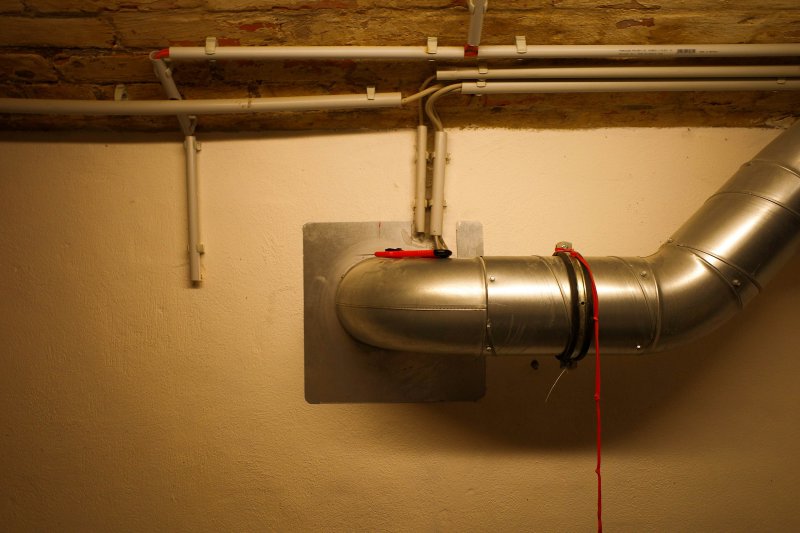
International Residential Code §M1502 , 2024 edition, governs how the dryer exhaust gets installed. The rules look simple, and they’re broken constantly:
- Material: rigid metal, 0.016-inch minimum thickness, smooth interior surface. No flexible foil, no plastic, no slinky vinyl, anywhere except the listed transition duct between the back of the dryer and the wall connection.
- Diameter: 4 inches minimum, or whatever the dryer manufacturer’s instructions specify if larger.
- Maximum equivalent length: 35 feet from dryer connection to exterior termination. Each 45-degree elbow subtracts 2.5 feet. Each 90-degree elbow subtracts 5 feet. A run with two 90s and one 45 has an effective allowable length of 35 − 5 − 5 − 2.5 = 22.5 feet of straight pipe.
- Joints: must run in the direction of airflow. The downstream pipe goes inside the upstream pipe, never the reverse. This matters because lint catches on any internal lip.
- Fasteners: screws that penetrate the duct interior are prohibited. Use foil tape or external clamps. Self-tapping sheet-metal screws inside the duct are the single most common code violation in residential laundry installs, and they catch lint immediately.
- Support: every 12 feet maximum.
- Transition duct (back of dryer to wall): maximum 6 feet. Must be listed per UL 2158A.
Manufacturers’ install instructions can be more restrictive than the IRC and frequently are; many dryers spec a 25-foot equivalent maximum. The lesser of the two governs. If your laundry is on the second floor with a 40-foot vent path through the joist bay to a roof termination, the run is over code, and no amount of cleaning fixes the underlying problem. The duct needs to be re-routed or the dryer relocated. A booster fan in the duct is permitted but only when listed for that use and installed per its instructions, and most field-installed booster fans aren’t.
A competent dryer-vent cleaner will measure the run, count the elbows, and tell you if the install is non-compliant. A cheap one will pull the lint and leave. Ask which one you’re hiring.
Methods: source removal vs vacuum-only
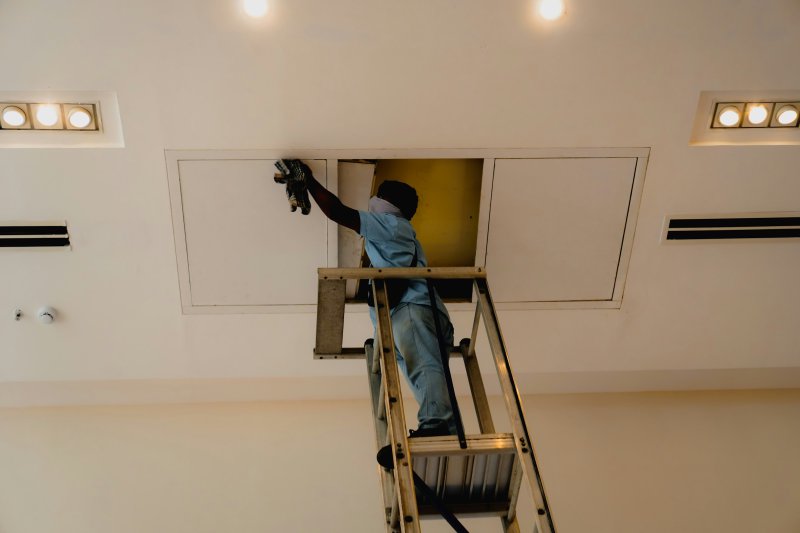
NADCA’s ACR 2021 Standard mandates source removal, which means mechanical agitation inside the duct (typically a rotary brush or air whip) while a HEPA-filtered negative-air machine pulls debris out through a sealed connection. Two pieces matter:
- The agitation dislodges adhered dust and biofilm from the duct walls. Vacuum alone, even a strong one, leaves the inside of the trunk coated.
- The HEPA filter on the collection side prevents fine particulate from being blown back into the living space through return leaks.
Truck-mounted negative-air machines run 5,000 to 15,000 CFM. Portable HEPA units run 2,500 to 5,000 CFM. Truck-mounted is the standard reference; portable is acceptable for small or access-restricted jobs as long as it’s HEPA-filtered. The “shop vac with a brush” approach you’ll get on a $99 special is none of the above and isn’t compliant with NADCA in any form.
Real source-removal also requires cutting service ports into the duct trunk near the air handler and at branch tees, brushing each branch, then sealing the ports back with sheet-metal patches and mastic. If duct trunks show no access ports after a “cleaning,” nobody got inside them.
Symptoms misdiagnosed as a duct problem
Symptoms get confused. Weak airflow at a single register, hot-and-cold rooms, short cycling on heat, a musty smell when the system kicks on: homeowners often diagnose these as duct issues and pay for a cleaning when the actual fault is elsewhere. Common confusions:
- Disconnected or crushed duct: zero flow at one register, full flow at others. No amount of cleaning fixes a flex line that fell off in the attic. Inspection first, cleaning second.
- Failed blower capacitor: weak airflow everywhere. The fix is a $25 part, not a $500 cleaning. A good tune-up catches this. See the furnace repair cost guide for symptoms-to-failure mapping.
- Return-side leakage: musty smell because return air is pulling crawl-space or attic air into the system. Sealing the return is the fix; cleaning the supply trunk does nothing useful.
- Short cycling: usually a thermostat or limit-switch issue, not duct contamination. See what each common HVAC failure should cost for a wider symptom map.
A reputable cleaning company will check the basics before agreeing to clean. The honest call ends with the tech telling you they’ll clean what’s there but you’ve got a bigger issue at the air handler. That’s a real outfit. The other call ends with everything described as filthy and an $1,800 deluxe package on the table. That one gets sent home.
Taxes, credits, and rebates: nothing applies
Air duct cleaning and dryer vent cleaning are routine maintenance. They are not eligible for any federal energy credit or rebate program currently on the books. Specifically:
- §25C Energy Efficient Home Improvement Credit: covers heat pumps, insulation, exterior doors and windows, electrical-panel upgrades tied to qualifying installs, and home-energy audits. Not cleaning.
- §25D Residential Clean Energy Credit: covers solar, geothermal, battery storage, fuel cells, small wind. Not cleaning.
- HEEHRA and HOMES rebate programs (IRA / DOE): cover qualifying equipment purchase and install, primarily heat pumps and weatherization for income-qualified households. Not cleaning.
- Most state and utility incentives: typically aligned with §25C or weatherization scope, which means duct sealing may qualify but duct cleaning rarely does. Check the program rule sheet, not the contractor’s claim.
If a contractor tells you their cleaning service “qualifies for the federal credit,” it doesn’t, and they’re either confused or deliberately misrepresenting it. Walk.
How to vet a cleaning company
Four questions, asked on the phone before booking. The wrong answers tell you everything.
- “Are you NADCA-certified, and what method do you use?” A right answer mentions ACR 2021, source removal, HEPA-filtered negative-air, and access ports. A wrong answer is vague (a generic claim about using the best equipment) or names a shop vacuum.
- “How long will the job take, and how many techs?” A 2,000 sf single-system home should take two technicians three to five hours for ducts, plus 30 to 60 minutes for the dryer vent. Anything materially shorter (under two hours total) is not source-removal cleaning.
- “Do you charge extra for sanitizing or mold treatment?” A legitimate operator will say no biocide gets applied unless visible mold has been confirmed and the moisture source has been identified. Companies that lead with sanitizing as a routine add-on are usually running the upsell pattern.
- “Will you give me before-and-after photos at each access port?” Real source-removal jobs cut and reseal port openings at the trunk and at branch tees. Photos document that the brush actually went inside. Refusal is a signal.
NADCA maintains a member directory that lets you confirm certification status. Verify it. Pre-paid coupons from a Groupon or robocall are almost always tied to operators who aren’t on the list. For air duct work specifically, an operator who can name their truck-mounted machine model and quote CFM without checking notes is doing the work for real. An operator who can’t is selling something else.
Bottom line
Ducts: most homes don’t need cleaning on a calendar. Pay attention to filter changes, the air handler, and EPA’s trigger conditions (visible mold, infestation, particle release, post-event contamination). When one of those is real, $400 to $700 for a NADCA-certified source-removal cleaning is appropriate. Anything advertised at $99 isn’t.
Dryer vents: every year, $130 to $200, no exceptions for normal use. Twice a year if usage or duct path is unusual. NFPA’s fire-statistics math points to one number, and this remains the cheapest insurance in the home-services aisle.
Broader cost context across heating and cooling work lives at the HVAC cost guides hub.