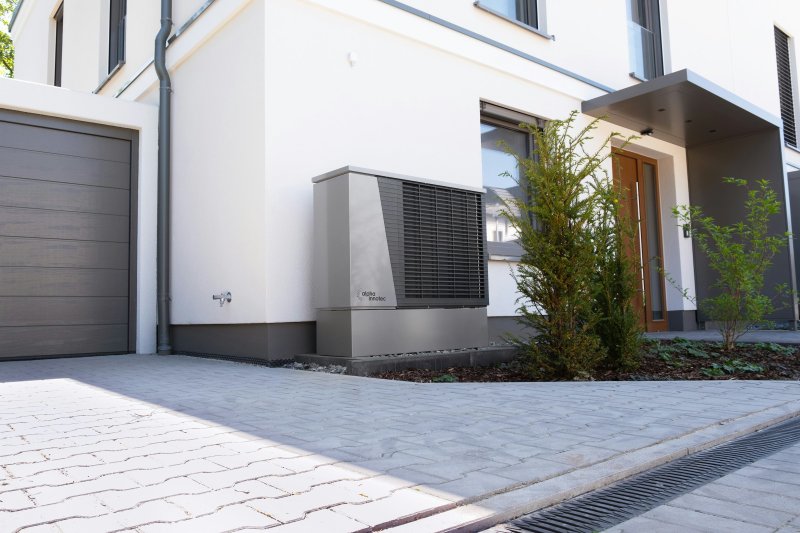
A ductless air conditioner installation in 2026 runs $3,500 to $7,500 for a single-zone wall-mount, $6,000 to $10,000 for a two-zone system, and $10,000 to $16,000 for three or four zones. Five-zone setups land at $14,000 to $20,000 or higher. The number you actually pay turns on how many indoor heads you need, which type of indoor unit you pick (wall, ceiling cassette, floor console, or concealed slim-duct), how much line set has to run through finished walls, and whether your electrical service can support the new load without a sub-panel addition.
One thing buried in nearly every ductless cost guide that still ranks: in 2026, almost every mini-split shipped to U.S. distribution is heat-pump-capable, even when sold as an air conditioner. The cooling-only sub-segment is shrinking fast. If you’re installing ductless this year, you almost certainly own a heat pump. That matters for sizing math, ENERGY STAR ratings, and what’s left of the rebate stack after the §25C credit died on December 31, 2025.
Ductless installation cost by configuration
Configuration drives almost the entire price spread. A one-room sunroom retrofit and a whole-house four-zone system are both “ductless” but they’re different products at different price points. The 2026 ranges, fully installed:
| Configuration | Typical installed range | What you get |
|---|---|---|
| Single-zone, 9K BTU | $3,500–$5,500 | One room: small bedroom, sunroom, office |
| Single-zone, 12K BTU | $4,500–$6,500 | Master bedroom, small living area |
| Single-zone, 18K BTU | $5,500–$7,500 | Open-plan living/dining or large great room |
| Two-zone | $6,000–$10,000 | One outdoor + two indoor heads |
| Three-zone | $9,000–$13,000 | Outdoor + three heads, branch box typical |
| Four-zone | $11,000–$16,000 | Whole-floor or whole-house on a small home |
| Five-zone+ | $14,000–$20,000+ | Whole-house, can need sub-panel and 6-8 zone outdoor unit |
| Premium cold-climate single-zone | $5,500–$8,500 | Mitsubishi Hyper-Heating, Daikin Aurora, LG LGRED° |
Sources: HomeGuide, Angi, Fixr 2026 ranges, with pricing carried from the InsiderCost heat pump cost guide where ducted and ductless overlap. Angi’s 2026 average on a four-head multi-zone is $25,393 — the upper end of the four-zone range above with a sub-panel addition rolled in. The “$2,000 ductless install” you’ll see at the top of search results applies only to a DIY MRCool single-zone that homeowners install themselves, and the moment you involve a licensed contractor, the floor jumps to about $3,500.
Which indoor unit type fits your room
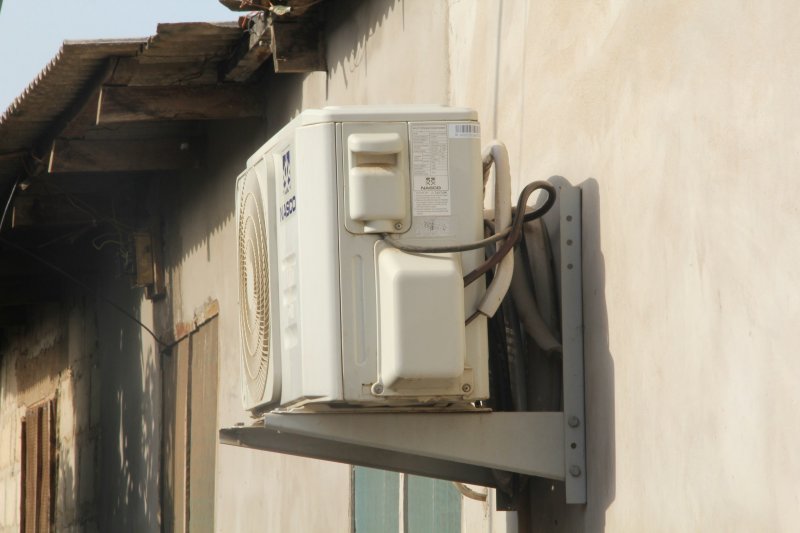
Wall-mounted heads cover roughly 80% of installs because they’re cheapest and the install is fast. Other indoor-unit types exist for specific room geometries where the wall-mount doesn’t fit aesthetically or physically.
| Indoor unit type | Equipment cost | Best for |
|---|---|---|
| Wall-mounted | $1,000–$2,000 | Standard install, fast labor, exterior wall available |
| Ceiling cassette (1-way or 4-way) | $1,800–$3,000 | Suspended ceilings, 360° air distribution, hides the unit |
| Floor-mounted (console-style) | $1,400–$2,500 | Rooms with no wall space, under-window install, easy filter access |
| Slim-duct / concealed | $1,500–$2,500 | Truly hidden install with short ducts to multiple registers, but 20-30% efficiency penalty vs wall-mount |
Ceiling cassettes need above-ceiling clearance (usually 8–10 inches minimum) and a condensate pump, because gravity drain isn’t an option. Slim-duct concealed units add the most labor of any type, because you’re routing short rigid duct runs from the air handler to ceiling registers and running line set to a hidden indoor location. Wall-mounted is the default for a reason.
Inside a $9,500 three-zone install
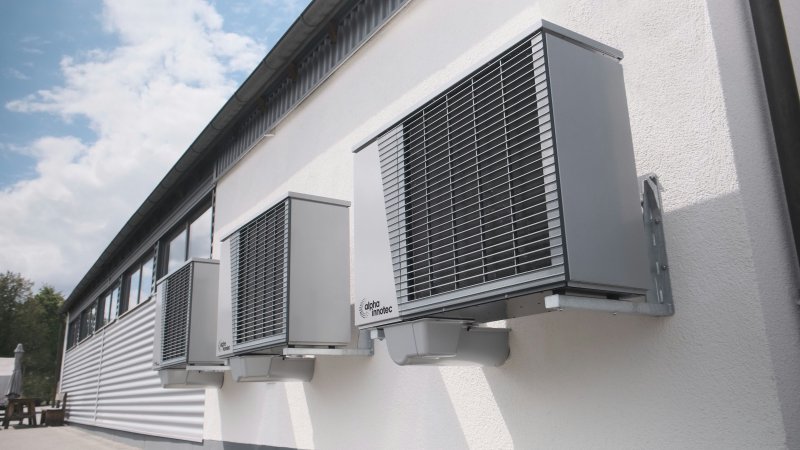
A typical $9,500 three-zone install breakdown:
| Line item | Typical range | Notes |
|---|---|---|
| Outdoor unit (24K-30K BTU multi-zone) | $1,800–$3,500 | Mitsubishi MXZ, Daikin LMXS, LG LGRED multi-zone |
| Indoor units (3 wall-mount heads) | $3,000–$5,400 | $1,000–$1,800 each |
| Branch box (if required) | $400–$1,200 | Mitsubishi PAC-MK, Daikin BPMKS |
| Line set (3 runs, 35 ft total) | $1,050–$2,800 | $30–$80/ft installed, copper + insulation |
| Line hide channel (Slimduct, Fortress LD) | $300–$600 | Surface-mount aesthetic cover |
| Wall penetrations (3 sleeved core drills) | $225–$600 | Brick exterior doubles to $450–$1,200 |
| Condensate pump (if needed) | $0–$400 | Gravity drain free; pump $150–$400 |
| Dedicated 240V circuit | $200–$600 | 15A or 30A from existing panel |
| Permit + inspection | $50–$500 | Mechanical + electrical combined |
| Labor (1.5–2 days, 16-24 hours) | $1,200–$3,200 | $75–$200/hr crew rate |
Source data carries from contractor pricing surveys, manufacturer dealer pricing, and our central air conditioner installation guide where labor rates and electrical components match. Concealed line set inside wall cavities (drywall cut, line set routed, drywall patched and painted) adds $300 to $800 per run over surface-mount line hide. Most homeowners go line-hide and call it good. The channels paint to match siding and disappear from the curb at twenty feet.
Sub-panel and electrical reality
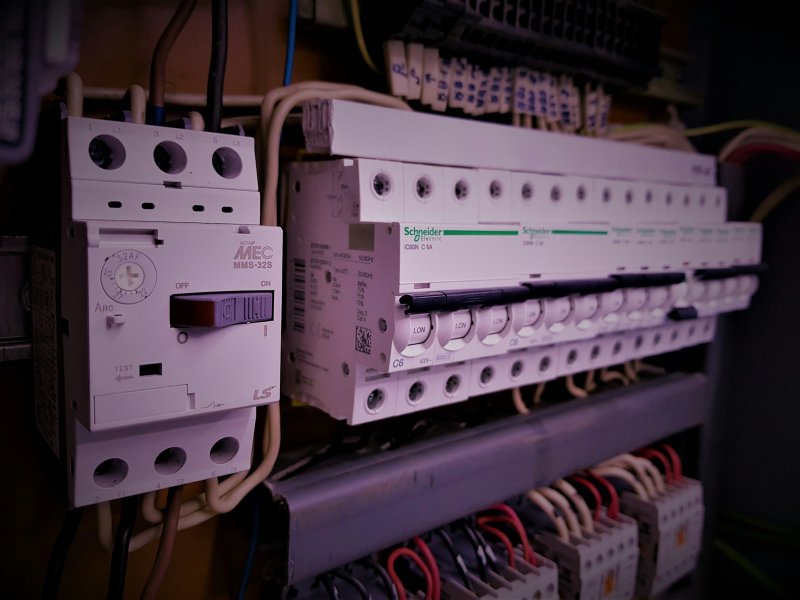
About 25 to 30% of ductless installs hit electrical capacity issues that the original quote didn’t include. A single-zone 12K BTU mini-split draws roughly 12-15 amps at 240V on cooling and similar on heating. One indoor head doesn’t tax most panels. A four-zone system pulling 40-50 amps on a hot afternoon, on a 100-amp panel that’s already running an electric range, dryer, water heater, and lighting, is going to need either a dedicated sub-panel or a service upgrade.
Budget lines that often surprise:
- Dedicated 240V circuit (15A or 30A): $200–$600
- Disconnect box at outdoor unit and whip: $75–$200
- Sub-panel addition (when main is full): $800–$1,500
- 100A → 200A service upgrade: $1,800–$2,500
Older homes on 100A service running electric range and dryer are the classic case. A heat-pump-capable mini-split is the least power-hungry electric heating option, but “least” still means a real load. Ask the installer to do a panel load calc before you sign. It’s a 15-minute exercise that catches the $2,000 surprise before it becomes one.
R-410A is gone, R-32 replaced it
R-410A manufacturing ended on January 1, 2025 under the AIM Act . Almost every ductless mini-split sold in 2026 charges with R-32 — an A2L refrigerant (mildly flammable under specific conditions) with a global warming potential of 675, about a third of R-410A’s GWP. R-32 also runs at lower charge volume, roughly 30% less refrigerant per ton of capacity, which reduces the leak-cost penalty going forward.
What this means on a 2026 quote:
- New ductless equipment with R-32 carries roughly 5 to 10% premium over the legacy R-410A baseline (roughly $300 to $700 on a $7,000 install).
- A2L handling requires updated technician certification beyond the EPA Section 608 Type II already required for legacy refrigerant. Ask the installer.
- Existing R-410A mini-splits keep working. Recharging them runs $100 to $200 per pound retail in 2026, with cylinder spot prices reportedly up over 300% since 2021 due to supply tightening. A 2-pound topup that ran $80 wholesale in 2022 runs $300+ today.
- R-32 retail recharge: $150 to $300 per pound, with pricing easing through 2026 as supply catches up.
Existing equipment installed before 2026 stays serviceable. The cost math has shifted, though, and a $1,500 recharge on a year-12 mini-split with a slow leak now points more clearly toward replacement. For repair-vs-replace deep-dives on existing units, see our heat pump repair guide .
The §25C credit, in past tense
The §25C Energy Efficient Home Improvement Credit paid 30% of qualifying heat-pump mini-split installation cost, capped at $2,000 per year, from January 1, 2023 through December 31, 2025. The unit had to hit CEE Tier 2 cold-climate ENERGY STAR thresholds: SEER2 ≥ 16.0, HSPF2 ≥ 9.5, COP at 5°F ≥ 1.75. Cooling-only ductless never qualified, because the credit was tied to heating performance.
OBBBA (Public Law 119-21, signed July 4, 2025) repealed the credit. IRS Fact Sheet FS-2025-05 (August 21, 2025) put it cleanly: “The credit will not be allowed for any property placed in service after December 31, 2025.” Placed in service means completed install — not contract date, not equipment delivery. A mini-split contracted in November 2025 but commissioned in January 2026 missed the window entirely.
Rebates that still exist in 2026
Federal credits are gone. State and utility programs continue, and the heat-pump-capable mini-splits still qualify for most of them because the programs care about heating efficiency, not the cooling-mode label on the box.
- HEEHRA / HEAR: DOE state-administered, IRA-funded, survived OBBBA. Income-qualified households (under 80% AMI) can claim up to $8,000 on a heat-pump mini-split. 80–150% AMI households get up to $4,000. California’s single-family allocation went fully reserved on February 24, 2026; multifamily continues at $14,000 per unit. Colorado HEAR closed Region 1 on April 28, 2026.
- Mass Save (Massachusetts): $1,250 to $10,000 utility rebate on ENERGY STAR heat-pump mini-splits, with cold-climate bonuses
- NY Clean Heat: $1,000 to $3,000 per ton for cold-climate ductless
- Manufacturer spring promos: Mitsubishi Spring Promotion up to $1,500 via Diamond Contractors, Daikin Comfort Promise up to $1,500, LG Cool Comfort up to $1,200, Carrier Cool Cash up to $2,100 on Performance series
Cooling-only ductless mini-splits don’t qualify for any of these. Buy heat-pump-capable. The price difference is essentially zero in 2026 distribution and the rebate stack only opens with the heat-pump label.
Premium brands and what they actually buy you
The premium-vs-budget gap on ductless is wider than on ducted — the inverter compressor and indoor-coil engineering on a Mitsubishi or Daikin mini-split runs years ahead of generic Goodman or imported equivalents. Where it matters:
- Mitsubishi Hyper-Heating (H2i). Rated to -13°F outdoor, 12-year parts and compressor warranty when installed by a Diamond Contractor (vs. 5-7 year baseline)
- Mitsubishi M-Series. Standard line, SEER2 ratings up to 30 on premium models, well above the federal floor
- Daikin Aurora. 100% heating capacity at -4°F, operation to -13°F on ductless, 12-year limited parts (online registration within 60 days required)
- LG LGRED°. Full capacity to 5°F, operation to -13°F, ENERGY STAR Cold Climate certified across the line
- Fujitsu XLTH. 100% capacity at 5°F, operation to -15°F on AOU outdoor units
- Carrier Performance / Toshiba. Joint platform, Performance series rated to -13°F, 10-year parts on registered units
Generic and budget options:
- MRCool DIY. Pre-charged line set for owner installation, $2,500 to $5,500 single-zone all-in. Voids most warranties unless installed by a licensed contractor.
- Goodman GLS. $2,800 to $5,800 single-zone professional install, 10-year parts when registered (Daikin parent)
- Senville, Pioneer, Klimaire. Importer-direct, $1,500 to $3,500 equipment-only, professional labor adds another $1,500 to $2,500
- Cooper&Hunter, ThermoCore. Mid-tier import equipment $1,800 to $3,800, distributor-supported warranties, less common dealer network than Mitsubishi or Daikin
The premium tilt makes the most sense in cold climates (anywhere with a real winter), where the cold-climate rated brands hold capacity and COP at temperatures where budget units throw on resistance backup heat or fall over entirely. For warm-climate cooling-first installs where heat is rarely needed, the budget tier actually makes sense and the math doesn’t favor paying double for Mitsubishi.
Single-zone or multi-zone, the actual decision
The per-zone math looks like multi-zone wins. A four-head $14,000 install works out to $3,500 per zone; four independent single-zones on the same square footage would run roughly $18,000 to $24,000. So multi-zone wins on price.
Then redundancy gets ugly. A multi-zone has one outdoor unit, one set of refrigerant lines, one branch box. If the outdoor compressor fails, every connected indoor head loses cooling at the same time. On a system with five heads doing whole-house cooling, that’s the entire house out for the four to seven days a compressor swap takes. Two or three independent single-zones cost more upfront but spread the failure risk.
The decision usually comes down to:
- Three or more rooms, single owner, budget-constrained, willing to risk single-point failure → multi-zone
- One or two rooms total → single-zone or two single-zones
- Mixed usage (rental upstairs, owner downstairs) → independent single-zones, billing splits cleanly
- Large home, multi-floor, future expansion likely → multi-zone with one or two zones unused, branch box pre-routed
For broader heat-pump-vs-ducted decision math (when ductless makes more sense than running new ductwork), see our heat pump cost guide . It carries the dual-fuel and balance-point analysis that matters when you’re choosing between adding a mini-split to a ducted house versus replacing the whole system.
Permits, contractor vetting, and warranty traps
The line that catches most homeowners on a multi-zone install is the warranty registration window. Mitsubishi Diamond, Daikin Aurora, LG Premier, and Fujitsu Elite all require the contractor to register the install within 60 to 90 days of commissioning, and the contractor has to be enrolled in the manufacturer’s premium dealer program. A non-Diamond installer doing a Mitsubishi install gets you the standard 5-year warranty, not the 12-year. The retail price difference on the equipment is zero. The warranty difference is seven years — and a $3,000 compressor swap that should have been free.
What to verify before signing:
- Contractor holds current state HVAC license, EPA Section 608 Type II certification, and updated A2L training
- Contractor is enrolled in the manufacturer’s premium dealer program for the brand quoted (Mitsubishi Diamond, Daikin Quality+, LG Premier, Fujitsu Elite, Carrier Factory Authorized)
- Permit is being pulled (no permit means no inspection, which means warranty claims later may be denied)
- Manual J load calc completed for sizing (not square-foot-rule estimation)
- Refrigerant type quoted is R-32 (or R-454B if specifically requested), never R-410A on new equipment in 2026
For broader contractor vetting that applies across HVAC trades, see our HVAC contracting guide . Manual J literacy and EPA certification matter more in 2026 than ever, since rebate-eligible install requires both.
A mini-split lasts 15 to 20 years
Ductless mini-splits land in the 15 to 20 year lifespan range, longer than ducted central AC at 12 to 15 years. The inverter compressor on a Mitsubishi or Daikin runs at modulating capacity for most of its life, never the brutal full-on / full-off cycling that ages traditional single-stage compressors. Refrigerant leak rates run 1 to 3% per year on a healthy ductless system, lower than ducted because the line set is shorter and there are fewer braze joints to fail.
What ends most mini-splits: indoor blower wheel imbalance from accumulated dust on dirty filters, or PCB inverter board failure on the outdoor unit — the most common Mitsubishi failure mode, $300 to $600 installed. The Mitsubishi P-series error code list reads like a story about voltage surges, condensation finding its way into the outdoor electrical compartment, and ground faults from poorly seated line-set connections. Two-thirds of Mitsubishi service calls in the field trace to one of those three causes. The fix on most of them is a board swap, not a compressor.
Annual maintenance on a ductless system is lighter than on ducted equipment. The indoor heads need filter cleaning every one to three months — the homeowner’s job, two minutes per head — and a deep coil clean every two to three years to clear biofilm from the evaporator fins. A pro coil cleaning runs $150 to $400 per indoor unit. The outdoor unit needs a spring rinse to clear pollen and grass clippings, with a refrigerant charge check every couple of years. Total annual cost on a four-head system runs $250 to $500 if both seasonal visits are bundled into a service plan. Skipping maintenance drops SEER2 by 10 to 15% within two years from coil fouling and clogged condensate drains, which makes the unit run longer to hit setpoint and shortens compressor life by similar percentages. For repair-cost detail by failure mode and brand, see the InsiderCost heat pump repair guide .