Furnace repair in 2026 averages $125 to $480 once parts and labor are in, with a service-call diagnostic baseline of $89 to $150 daytime and $140 to $210 per hour after hours. The cheap fixes (flame sensor, ignitor, draft pressure switch) run $80 to $400. Inducer motors and control boards sit at $400 to $1,100. Gas valves and blower assemblies push $600 to $1,500. Heat exchanger replacement and full burner-assembly rebuilds reach $4,000.
What every contractor blog leaves out: which fix actually solves your symptom, which “fixes” are line-item upsells, and the dollar threshold where pouring more money into a 14-year-old furnace stops making mathematical sense.
What each common furnace failure should cost
Most calls homeowners place in 2026 fall into one of these failure modes. The pricing comes from HomeGuide’s 2026 repair-cost data, cross-checked against Forbes Home and Angi plus the contractor-survey numbers in the HVAC system repair guide .
| Failure | Typical repair cost | Average | Hours on site |
|---|---|---|---|
| Diagnostic / service call (daytime) | $89–$150 | $115 | 0.5–1 |
| Diagnostic / service call (after-hours, per hour) | $140–$210 | $175 | 0.5–1 |
| Service-call minimum (any work performed) | $75–$200 | $150 | included |
| Flame sensor replacement | $80–$250 | $160 | 0.5–1 |
| Hot surface ignitor (silicon carbide or nitride) | $100–$250 | $175 | 0.5–1 |
| Thermocouple (older standing-pilot) | $150–$300 | $225 | 1 |
| Draft pressure switch | $90–$250 | $170 | 0.5–1 |
| Limit switch | $100–$375 | $235 | 1 |
| Fan-relay switch | $100–$300 | $200 | 1 |
| Draft inducer motor | $400–$1,100 | $750 | 1.5–3 |
| Furnace control board (standard 24V) | $300–$650 | $475 | 1–2 |
| Furnace control board (Lennox SureLight, Goodman, Carrier OEM) | $400–$700 | $550 | 1.5–2 |
| Furnace control board (Trane ComfortLink variable-speed) | $500–$900 | $700 | 1.5–2 |
| Gas valve replacement | $200–$600 | $400 | 1–2 |
| Blower motor — PSC (single-speed) | $350–$800 | $575 | 2–3 |
| Blower motor — ECM (variable-speed) | $600–$1,150 | $850 | 2–3 |
| Combustion chamber repair | $200–$600 | $400 | 1.5–2 |
| Heating element (electric furnace, per coil) | $125–$400 | $250 | 1–2 |
| Heat exchanger replacement | $1,500–$4,000 | $2,500 | 4–8 |
Sources: HomeGuide furnace repair pricing , Angi, Forbes Home, This Old House. Heat exchanger figures synthesize multiple 2026 industry sources (HomeGuide, HomeAdvisor, Forbes/Bob Vila); Today’s Homeowner’s published floor sits lower at $500 to $3,500 with a $1,500 average for context.
Daytime weekday calls run noticeably cheaper than evenings and weekends because of overtime labor. An ignitor that takes $200 at 10 a.m. on Tuesday becomes $350 at 8 p.m. on Sunday. The part is identical. The clock changed.
Regional pricing follows the same pattern as install work. Coastal high-cost metros (New York, Bay Area, Boston, Seattle) run 30 to 50% above national averages. Rural Midwest and the Southeast run 15 to 25% below. The numbers above are national midpoints.
The no-heat call: symptom to cause
Roughly 70% of January service calls turn out to be one of five failures. Diagnose the symptom before the truck arrives and you’ll know whether the quote is honest.
Furnace lights briefly, then shuts down within seconds
This is flame sensor territory. The sensor is a thin metal rod beside the burner that proves combustion is happening so the gas valve keeps gas flowing. Soot or oxidation coats the rod, the microamp signal it sends back to the control board drops below the 1.5 µA minimum, and the board shuts the burner off within the trial-for-ignition window — typically about seven seconds, depending on the control module. Pull the sensor (one screw on most units), polish it with fine emery cloth or a green Scotch-Brite pad, reinstall. Fifteen minutes. Pros charge $80 to $250 for that exact job. Our furnace tune-up guide walks through the microamp check in detail.
Ignitor doesn’t glow at all
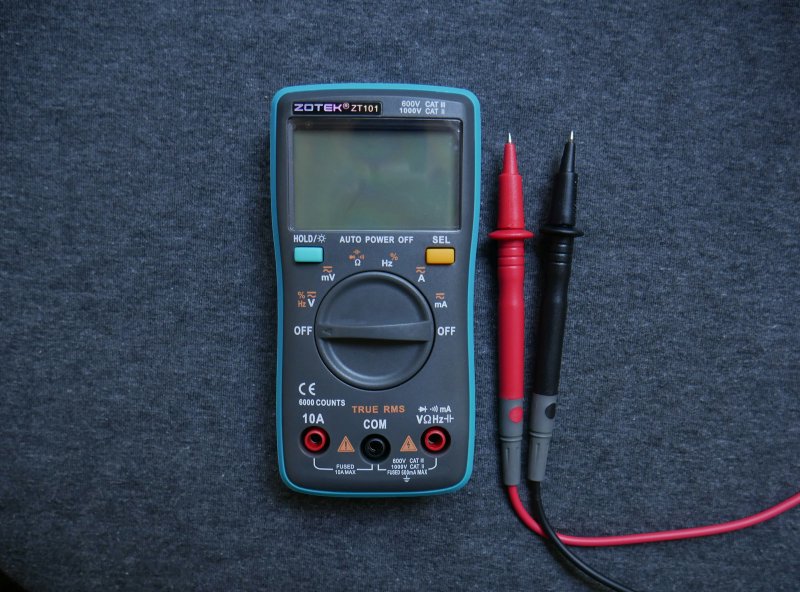
The hot surface ignitor is a brittle ceramic element wired to glow red-hot for the gas to ignite against. Heat-cool cycling kills them. After 5 to 10 years, most need replacement. Diagnostic on Goodman, Carrier, Bryant, and most other brands: kill power, pull the wires off the ignitor, set a multimeter to ohms, and probe the plug pins. Silicon carbide ignitors typically read 40 to 90 ohms at room temperature and are failing once they exceed about 90 ohms per the manufacturer-rated threshold cited by HVAC School . Silicon nitride ignitors (newer designs, post-2015 in most premium lines) read lower, often 10 to 75 ohms depending on model. An OL or open-circuit reading means the ignitor is cracked and needs replacement.
If the ignitor reads in spec but still won’t glow when the furnace calls for heat, the failure is upstream. Use a voltmeter on the ignitor terminals about 60 seconds into the call (after the inducer prepurge). 120V present and no glow = ignitor is bad despite the resistance reading. No 120V = the control board failed to send the signal, which is a $400 to $700 board repair on most brands.
Furnace runs but blower never starts
Suspect the blower motor or its control. On older PSC units, the start capacitor on the motor itself is the usual culprit (a $25 part on a $300 to $500 service ticket). On newer ECM units, the blower control module is more often the failure than the motor itself. Don’t let a tech swap an ECM blower for a generic PSC motor: the variable-speed control your system was designed around disappears, two-stage operation reduces to single-stage, and any humidity or zoning logic that depended on speed modulation breaks. Insist on an ECM-spec replacement at $600 to $1,150 even if it stings.
Inducer motor runs loud or won’t start
The draft inducer is the small motor and squirrel-cage fan that pulls combustion gases through the heat exchanger and out the flue before the burner lights. It’s the second-most-common no-heat failure on any 90%+ AFUE condensing furnace, right behind the ignitor and flame sensor. Failure modes: bearings rumble, the wheel cracks, or the motor itself draws excess amperage and trips the limit. Listen for the inducer at the start of every heat call: five seconds of soft hum before ignition, not grinding. Replacement runs $400 to $1,100 including the often-required vacuum tubing and pressure-switch refurb.
Furnace short-cycles or won’t fire at all
Walk the culprits in order of probability. Start with dirty flame sensor (covered above). Next comes a failed pressure switch: the inducer can’t develop enough draft to close the switch contacts, often because the vacuum hose is cracked or filled with condensate. Then open limit switch, usually from a clogged filter starving airflow until the heat exchanger overheats and the high-limit trips. Pull the filter and check it before calling anyone; ENERGY STAR puts dirty-filter airflow restriction at up to a 15% efficiency hit even before it triggers a safety lockout. Last and most expensive sits the failed gas valve at $200 to $600. A stuck-closed valve causes nuisance no-heat. A stuck-open valve is a CO risk and a real safety event, and replacement is non-negotiable.
Brand-specific failure notes
The price floors and ceilings hold across major brands, but each manufacturer has its own personality on common failures. Knowing what to expect from your nameplate matters when a tech says “this brand always does this.” Sometimes they’re right; sometimes they’re priming an upsell.
Goodman
Goodman runs the value end of the market. Ignitor and flame sensor failures dominate the service log because the OEM ignitor on most Goodman residential models is a standard silicon carbide element that’s serviceable but brittle. The control board is more accessible than on Lennox or Trane: most diagnostic codes blink on the LED indicator behind the door, and OEM replacement boards run $150 to $400 part plus $100 to $200 labor. Total Goodman repair calls average $250 to $600 on common failures. The trap: some independent shops will quote “Goodman parts are hard to find” and recommend a complete system swap. Goodman parts are widely stocked at every supply house. Get a second opinion if the answer to a $400 ignitor problem is a $7,000 install.
Lennox
Lennox uses the proprietary SureLight integrated furnace control across the G23, G26, G50, G51, G60, and G71MPP series. The board has a single LED that blinks diagnostic codes; short flash patterns map directly to ignition failure, flame sensor weakness, pressure switch open, limit, rollout, and board fault. The Lennox 19V36 OEM SureLight kit retails $300 to $500 at LennoxPros and SupplyHouse, and aftermarket alternatives like the ICM2813 run $200 to $300. Total Lennox board replacement: $400 to $700 with labor. Lennox parts are slightly more expensive than Goodman but more thoroughly documented; a competent tech with a smartphone can pull the manual on the brand’s tech portal in two minutes.
Carrier and Bryant
Carrier and Bryant share a parent company and many OEM parts cross-reference between the two brands. If your tech can’t find a Carrier-branded ignitor, the Bryant version is the same component with a different label. The pressure switch is the most-replaced single part on mid-tier Carrier 80% AFUE models (58STA, 58CTA series), typically $100 to $250 installed. On premium variable-speed Carrier Infinity models, the integrated control board with communicating logic runs $500 to $900 and is the most-quoted job to be price-gouged on by techs who hide behind “communicating system, only Carrier knows”.
Trane and American Standard
Trane and American Standard share architecture and most parts. Both use Trane’s proprietary ComfortLink II communicating system on premium variable-speed models. A failed ComfortLink board runs $500 to $900 including labor, and the board is genuinely model-specific, with fewer aftermarket alternatives than on Lennox or Goodman. On standard 80% AFUE Trane units (XR80, XR90 series), repair pricing tracks the rest of the market: ignitor $100 to $250, flame sensor $80 to $250, inducer $400 to $1,100. The myth that “Trane parts cost twice as much” applies only to ComfortLink and higher-tier matched-system models.
Gas vs. oil vs. electric furnace repair
Gas dominates the residential furnace market and most of the pricing above assumes a natural gas or propane unit. The pattern shifts noticeably for the other two fuels.
Oil furnaces add a fuel-pump and nozzle replacement that gas units don’t have. The nozzle gets swapped at every annual service as a matter of course ($25 part, $50 labor). Oil-fired flame sensors (cad cells) read light directly from combustion rather than rectifying flame current — different failure mode, similar replacement cost ($100 to $250). The big-ticket item on oil is the heat exchanger, which corrodes faster than gas exchangers because oil combustion produces more sulfuric byproducts; replacement on a 12-year-old oil furnace is rarely worth doing.
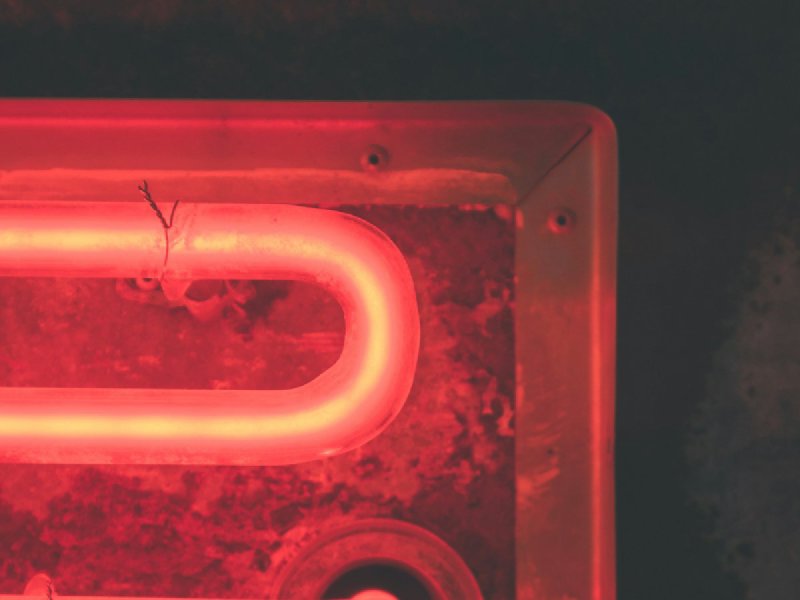
Electric furnaces have the simplest failure mode list because there’s no combustion: the heating elements are resistance coils, the sequencer staggers the elements on, and the blower distributes the heat. Element failure runs $125 to $400 per coil (most furnaces have 3 to 5 coils). A complete element-bank replacement on a 5-coil unit can total $1,000 to $1,500. Sequencer replacement is $150 to $300. There’s no inducer, ignitor, flame sensor, gas valve, or heat exchanger on an electric furnace, so the repair list is short.
When repair stops making sense
Most contractors will quote one repair at a time, hoping you don’t run the math on the next failure. Don’t be that homeowner.
The 50% rule is the first checkpoint. If a single repair quote exceeds half the cost of new equipment, replacement is usually the better call. New mid-grade gas furnaces install at $4,000 to $7,000 in 2026, with high-efficiency 96%+ AFUE models reaching $7,000 to $12,000. So a $3,500 heat-exchanger replacement on a 16-year-old 80% AFUE unit fails the 50% test cleanly. A $400 ignitor swap passes easily.
Layer in age. Gas furnaces average 15 to 20 years; high-efficiency condensing models slightly less because the secondary heat exchanger is exposed to acidic condensate. Past 12 years, the next failure is rarely far behind the current one. A 14-year-old furnace that just lost its ignitor will lose its inducer next, then its pressure switch, then maybe its control board, and you’ll spend $2,500 across three winters to keep something that was going to die anyway.
Combine both anchors and the decision rule looks like this:
- Repair quote under 30% of new system cost → repair
- Repair quote 30 to 50% of new system cost AND age under 12 years → repair
- Repair quote over 50% of new system cost → replace
- Any repair over $1,500 AND age over 12 years → strongly consider replacement
- Any heat exchanger replacement on a unit past 12 years → almost always replace
The §25C federal tax credit complicates the math for 2026. Through December 31, 2025, qualifying high-efficiency natural gas furnaces (96%+ AFUE) earned up to a $600 federal tax credit under §25C. The One Big Beautiful Bill Act repealed §25C effective end of 2025: new gas furnaces installed in 2026 are no longer eligible for federal credit. For a homeowner deciding between a $2,500 repair on a 13-year-old furnace and a $7,000 replacement, the $600 credit was a meaningful tilt — and that tilt is gone. Repair is now relatively more attractive on the margin than it was last winter, but the underlying age and 50% rules haven’t changed.
How to spot a furnace repair upsell
Three patterns to watch in 2026.
The “cracked heat exchanger” without evidence
This is the single most-abused diagnosis in residential HVAC. A cracked heat exchanger is real and dangerous: combustion products including carbon monoxide leak into the supply airstream, and Lennox’s own warning page lists CO at 30+ ppm, soot near burners, and burning/metallic odors as the legitimate symptoms. But it’s also the upsell of choice for a tech trying to convert a $200 service call into a $7,000 install. Before accepting a red tag, demand four things:
- A borescope photo or video of the actual crack, taken in your house with timestamp visible
- A documented CO reading from a supply-air register, not just the burner area
- Combustion analyzer numbers (CO ppm, O2%, stack temp) that explain why the tech was looking at the exchanger in the first place
- The visual or numerical safety symptom that triggered the inspection — a burning odor or soot trail documented earlier in the call
A tech who can’t produce all four is selling you a furnace, not diagnosing one. HomeGuide’s own guide explicitly warns about this pattern, calling out “free furnace inspection” promotions that lead to complete-replacement upsells.
The control board diagnosis without a voltmeter check
A failed control board diagnosis is legitimate, but the test is simple: voltmeter on the ignitor or flame sensor terminals during the call sequence, looking for the 24V or 120V signal at the right moment. If the tech declares the board dead without putting a meter on a single terminal, what they’re declaring is a sales opportunity. A $475 board on top of an unnecessary $300 ignitor swap and a $200 inducer “preventive replacement” is the canonical $1,000-on-three-parts ticket.
The bundled “preventive” replacement on a working part
“Your inducer motor is showing signs of weakness.” “The pressure switch is borderline.” “The gas valve is starting to slow down.” Maybe true. Often a sales pitch wrapped in technical language. Ask for the specific data: amp draw on the inducer, microfarads on the start capacitor, pressure-switch trip voltage. Real diagnostic numbers come with units. Vague qualitative warnings come with invoices.
A good vetting question on the phone: “Do you charge by the hour or flat-rate?” Hourly is more transparent on small jobs and more honest on diagnostic calls. Flat-rate is fine on installs but cuts both ways on repairs. NATE certification is the credential to ask about; NATE-certified technicians have passed standardized testing on diagnosis and repair, and they’re the ones who know the difference between a stuck contactor and a failed ignition control.
For broader heating and cooling cost guidance, see our HVAC cost guides hub.