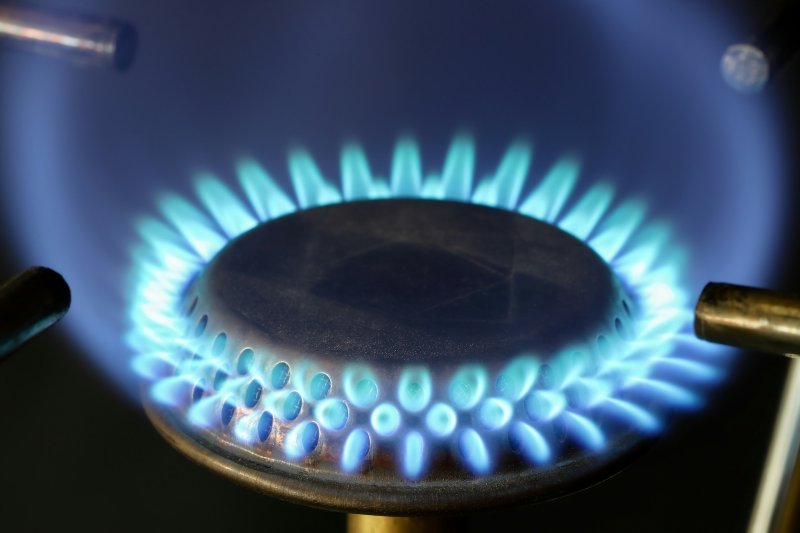
A gas furnace repairman in 2026 runs $89 to $150 daytime to roll a truck and $140 to $210 per hour after hours, with the gas-side fixes themselves landing $150 to $600 for typical work and reaching $1,500 to $4,000 if a cracked heat exchanger is in the picture. What separates a real gas-furnace pro from a generic HVAC tech is whether the truck has a combustion analyzer, whether the tech has a state fuel-gas-fitter credential, and whether they understand that the secondary heat exchanger on your condensing unit is producing acid every minute it runs.
This guide focuses on the gas-specific side of furnace work: gas train, vent, condensate, licensing, plus the moments when keeping the gas line open for an upsized appliance saves you money. For the broad failure-mode cost matrix (ignitor, blower, control board, brand-by-brand pricing), see our furnace repair cost guide , which covers the all-fuel-types breakdown that this article deliberately doesn’t repeat.
What gas-side repairs actually cost
Most homeowner cost guides stop at “$300 to $400 average repair.” The numbers below come from direct pages on Fixr and HomeGuide cross-checked against contractor pricing in the broader furnace repair guide , and they break the work into the categories a real gas-fitter quotes line by line.
| Gas-side service | Typical installed cost | What’s included |
|---|---|---|
| Daytime diagnostic call | $89–$150 | Truck roll, 30–60 min on site, no parts |
| After-hours / weekend / holiday | $140–$210/hr | Same scope, premium labor |
| CSST flex connector to furnace | $150–$350 | 1–4 ft yellow CSST, fittings, bonding clamp, pressure test |
| Gas pressure test (standalone) | $75–$100 | Manometer, 15–30 min hold, leak survey |
| Gas leak repair — behind/under appliance | $120–$250 | Joint or fitting fix, retest |
| Gas leak repair — in wall or crawl | $270–$760 | Cut-in, repair, retest, drywall not included |
| Gas leak repair — buried supply line | $1,500–$5,000 | Excavation, pipe replacement, retest |
| Manifold pressure adjustment | bundled | Regulator-screw turn against manometer; almost never line-itemed |
| Gas valve replacement | $200–$600 | Part + labor + leak test (carried from generic furnace pricing) |
| Condensate neutralizer install | $200–$400 | Kit ($90–$125 retail) + plumbing tee + 30–60 min |
| Condensate neutralizer media refresh | $25–$50 | Calcite/magnesium pellets, swap every 6–12 mo |
| PVC vent section replacement | $200–$500 | 6–10 ft run + elbows, no penetration work |
| Full vent re-pipe to UL 1738 spec | $600–$1,200 | New vent + intake + wall/roof penetration |
| CO + combustion analysis | bundled | Should be included; $50–$100 if line-itemed |
| Gas shut-off valve replacement | $52–$125 each | Quarter-turn ball valve at appliance |
Sources: Fixr gas line installation cost , Bob Vila gas line guide, HomeGuide furnace repair pricing , and contractor-survey numbers carried from sibling caches.
A note on bundling: most reputable shops fold the manometer check, combustion-analyzer reading, and pressure test into the labor on whatever gas-train work they’re doing. If a tech pulls a gas valve and doesn’t put a manometer on the manifold afterward, they’re guessing whether the new valve is delivering 3.5 inches of water column. That’s the National Fuel Gas Code spec for natural gas.
The gas-fitter credential question
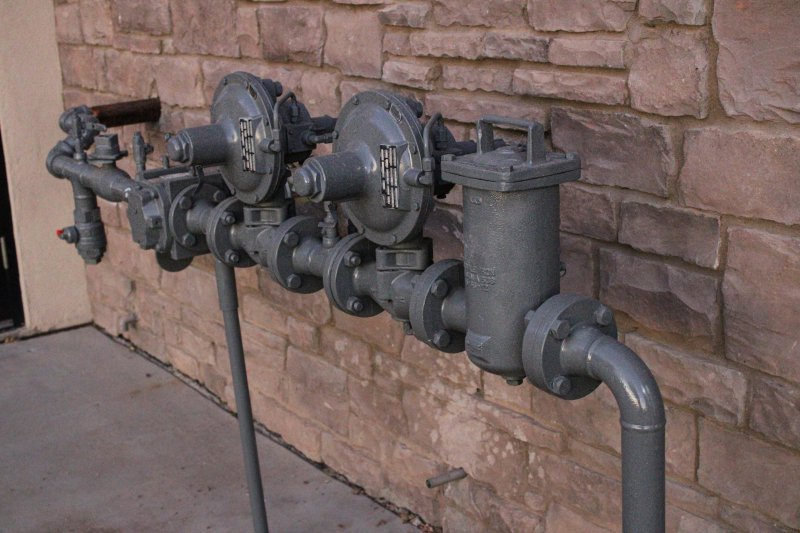
This is the most-skipped vetting question on the homeowner side and the one that matters most if anything goes sideways.
EPA Section 608 is a federal refrigerant license. It governs what a tech can do with the AC side: refrigerant recovery and evacuation. It says nothing about gas. NATE certification is a voluntary trade credential that proves competence on a written exam, including a gas-heating specialty exam, but it is not a state license. Generic HVAC contractor licenses in many states cover only the sheet-metal-and-controls side of the business; gas work is a separate license tier.
States with explicit fuel-gas-fitter licensure layered on top of (or alongside) HVAC include most of the Northeast (NH, MA, CT, RI, NY, NJ), parts of the Mid-Atlantic, and several Midwestern jurisdictions. New Hampshire, for example, requires 60 to 140 hours of training plus 1,000 to 2,000 hours of supervised work plus a CETP or NFPA 54-based or NATE exam to sit for the gas-fitter license; the HVAC contractor license is separate.
In states without statewide gas-fitter licensure (Texas at the residential level, parts of Florida, much of the Mountain West), the qualifying credential is usually a master-plumber license that covers fuel gas. The takeaway: never assume your HVAC card is sufficient for everything on a gas furnace.
The phone-screening question is short. “Is the tech state-licensed for fuel gas, not just HVAC?” If the dispatcher answers in two seconds with a clear yes, you’re talking to a real shop. If they pause or redirect with a vague “all the techs work on gas” without naming the credential, you’re about to be assigned a sheet-metal tech to a gas-train problem.
Gas-train work most homeowners never see priced
These are the items a gas-licensed repairman will quote on a typical service call that the average cost guide simply doesn’t list.
CSST flex connector replacement
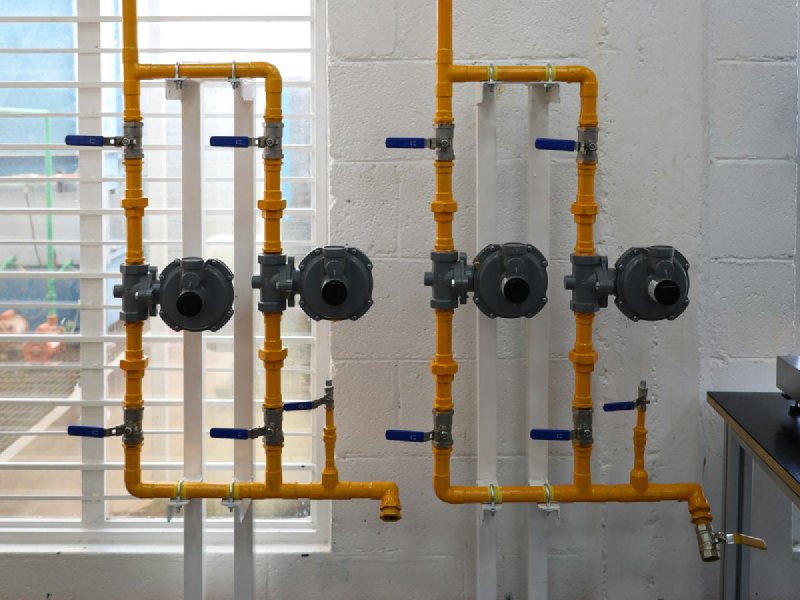
The yellow corrugated stainless flex line (CSST) running between the gas valve and the furnace inlet is the most-replaced gas-side item on any furnace job. It kinks. It work-hardens. The brass fittings on either end develop weeping leaks. The bonding clamp that ties the line to the electrical ground gets removed by techs who don’t understand why it’s there.
That bonding clamp matters. Unbonded CSST has been documented to puncture from arc-over during nearby lightning strikes: the surge finds the path of least resistance through corrugated stainless, the wall thins to nothing at the corrugation peak, and gas escapes into the building. The current National Electrical Code (NFPA 70, 2023 edition) and most major CSST manufacturer instructions require a bonding jumper from the line to the grounding electrode system. If your tech replaces a CSST line and walks away without confirming the bonding clamp, the work is incomplete.
Total cost: a 1-to-4-foot run of CSST plus two fittings, the bonding clamp, and a 15-minute pressure test runs $150 to $350.
Manifold pressure adjustment
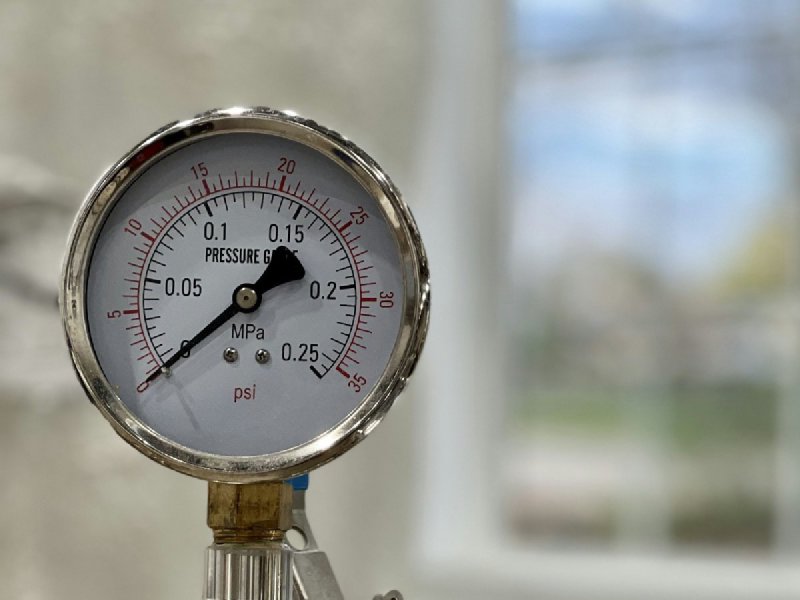
Manifold pressure is the gas pressure delivered to the burners after the gas valve regulates it down. National Fuel Gas Code spec sits at 3.5 inches of water column for natural gas, 10 to 11 inches for propane. Numbers shift slightly with elevation and altitude correction.
A tech with a manometer (Testo 510 or similar, $150 retail) can put the probe on the manifold tap, read the pressure live, and adjust the regulator screw on the gas valve to hit spec. A tech without one is guessing. That’s fine on a brand-new factory-set valve and dangerous on a replacement valve or after any combustion-related work. Symptoms of an out-of-spec manifold: yellow flame tipping, sooting at the burner, lazy ignition. In the other direction, a roaring overfire that runs the heat exchanger hot.
This adjustment is almost never line-itemed because it’s a 60-second job once the manometer is connected. But the absence of it is a tell. If the invoice says “replaced gas valve” and there’s no mention of pressure verification, the work is half-done.
Condensate neutralizer service
Condensing furnaces (90% AFUE and up) extract latent heat by pulling flue gases through a secondary heat exchanger until water vapor condenses and drains. That condensate sits at pH 2.9 to 4, roughly the acidity of lemon juice, and the unit produces five to six gallons of it per day at full duty cycle.
Drain that into a cast-iron stack and you’ll be replacing pipe in a decade. Pipe it into a copper line and the timeline shortens. Send it to a septic system and the bacterial colony that keeps the system functioning takes a hit it doesn’t fully recover from. The fix is a small in-line cartridge, usually a clear plastic tube filled with calcite or magnesium-oxide pellets, installed downstream of the furnace condensate trap. Acidic condensate flows through the pellets, the calcium carbonate reacts and consumes the acid, and the discharge water leaves at pH 6 to 7.
Most older condensing-furnace installs predate the neutralizer becoming standard practice. If your unit is more than five years old and your installer didn’t add one, you don’t have one. Retrofit kit retail runs $90 to $125 at the major distributors (Home Depot, PEX Universe, Watts, Diversitech), installed $200 to $400 with the plumbing tee and trap modification. Media replacement every 6 to 12 months adds $25 to $50.
PVC vent inspection and replacement
Any condensing furnace vents through plastic, not metal: the flue temperature is below the dewpoint of the combustion products and metal corrodes. Most pre-2018 installs used standard Schedule 40 PVC. Most current major-brand install manuals (Carrier and Lennox among them) require UL 1738-listed plastic vent or polypropylene, and many AHJs have followed.
The failure modes a service tech looks for on annual inspection:
- Sagging horizontal runs that puddle condensate and freeze in the flue
- Yellowing or crazing of the PVC, signs of chemical attack from acidic condensate
- Loose joints at fittings from solvent-weld failure under thermal cycling
- Frost or ice at the exterior terminal
- Improper terminal location (under a deck, near intake, less than 12 inches from grade)
A section replacement runs $200 to $500 for 6 to 10 feet plus elbows. A full vent re-pipe to UL 1738 spec, including new intake and a wall or roof penetration, runs $600 to $1,200.
Combustion analysis and CO testing
A combustion analyzer (Testo, Bacharach, UEi) measures O2, CO2, CO, and stack temperature in the flue gas. Targets for an atmospheric-draft natural-gas burner are O2 7 to 9%, CO2 6.5 to 8%, plus CO under 100 ppm undiluted. A condensing furnace runs leaner because of the sealed-combustion design.
The single best signal that you’re dealing with a real gas pro versus a parts swapper: their truck has a combustion analyzer and they actually use it on every gas service call. The single most-abused upsell in residential HVAC, the cracked-heat-exchanger red tag, is also the place where a combustion analyzer is most diagnostic. Lennox’s own consumer guidance treats a CO detector reading above 30 ppm (or any alarm event) as a possible cracked-exchanger symptom. A tech declaring a cracked exchanger without showing you the combustion-analyzer numbers is selling you a furnace, not diagnosing one. Demand the screen photo.
The repair-vs-replace math at the gas-installation moment
Three situations tilt the math toward replacement specifically when the gas line is being touched anyway.
The heat exchanger is genuinely cracked. There’s no acceptable repair, only an exchanger swap or a unit replacement, and the exchanger swap on a furnace past 12 years almost always fails the 50% rule (cost over half of new equipment). New mid-grade gas furnace install lands $4,000 to $7,000; high-efficiency 96%+ AFUE runs $7,000 to $12,000.
A second tilt comes when the gas line is being rerouted or upsized for an unrelated project. A new range, a generator transfer, a kitchen relocation, any of these put the gas line back in play. Bolting a new high-efficiency furnace to a fresh, code-compliant, pressure-tested run costs less in cumulative permits and labor than doing the same install three years from now on a furnace that’s already showing signs.
The third tilt is stacked failures in one season. A 13-year-old furnace that loses an ignitor, then an inducer, then a pressure switch over six weeks is telling you something. Each individual repair passes the 50% test. The cumulative spend across two winters does not.
The §25C federal tax credit changed the math materially. Through December 31, 2025, the credit covered up to $600 of a qualifying high-efficiency natural-gas furnace install (96%+ AFUE, met-region requirements). The One Big Beautiful Bill Act repealed §25C effective end of 2025. As of 2026, a new gas furnace installation gets no federal credit. Repair was never §25C-eligible. Without that $600 federal tilt, the gas-side repair-vs-replace decision now leans further toward keeping the existing unit running, provided the heat exchanger and vent are sound and the cracked-exchanger and stacked-failures triggers above don’t apply.
State and utility rebates partially fill the gap. Mass Save in Massachusetts, NYSERDA in New York, Xcel across Colorado / Minnesota / Wisconsin, ConEd in NYC, plus Energy Trust of Oregon still pay $200 to $1,500 for high-efficiency furnace replacements. The catch: most of these are tilting their incentive structure toward heat pumps in 2026, so a gas-furnace rebate that existed last year may be smaller or gone in your service territory. Check before you assume.
Vetting the repairman before they touch your gas
Four short questions on the phone separate the gas pros from the parts swappers.
- “Is the tech state-licensed for fuel gas?” Listen for a fast, specific answer. Vague redirects to “all the techs work on gas” mean no.
- “Will the truck have a combustion analyzer and a manometer?” Both are required for honest gas-side diagnosis. A tech without them is guessing.
- “What’s the diagnostic fee, and is it credited against the repair if work is authorized on the same call?” Standard-of-practice answer is $89 to $150 daytime, credited if the repair proceeds.
- “Will a written CO and combustion-analyzer reading be left with the invoice?” The honest shops do this without being asked. The shops that don’t are the ones quoting heat exchangers without evidence.
On the visit itself, watch what the tech actually does. A real gas-fitter pulls the door, looks at the burners, hooks up the manometer, hooks up the analyzer, takes a CO reading at the supply register, looks at the vent, looks at the condensate trap, and only then quotes you. A tech who walks in, peers at the unit for ninety seconds, and announces “your heat exchanger is failing, you need a new furnace” is doing a sales call, not a service call. The combustion-analyzer screenshot is your protection. Ask for it on every gas service call, every time.
For broader heating-cost context, see the HVAC cost guides hub. For the part-by-part pricing this article deliberately doesn’t duplicate, the furnace repair cost guide walks the full failure-mode matrix across all furnace fuel types.