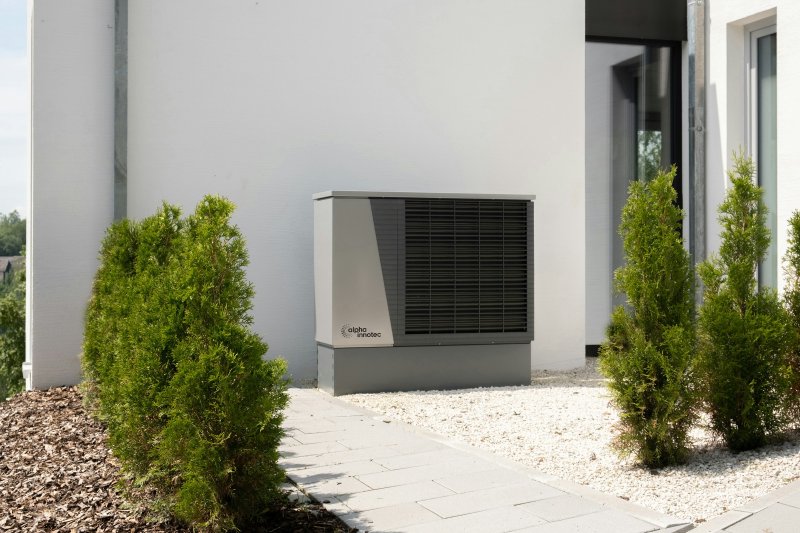
A heat pump in 2026 runs $5,500 to $15,000 installed for a typical ducted air-source replacement, $3,500 to $7,500 for a single-zone ductless, and $20,000 to $38,000 for a vertical-loop geothermal system. The national midpoint on a ducted air-source replacement lands around $13,000, with cold-climate variable-speed equipment pushing 30 to 60% above that baseline. The number you pay turns on three things most quotes hide: whether the system was sized off Manual J or a square-foot rule of thumb, whether the unit is ENERGY STAR Cold Climate-certified for any state rebate program, and whether your installer carries the new A2L refrigerant equipment certified for R-454B charging.
One thing changed in 2026 that most heat-pump pages haven’t caught up to. The federal §25C credit, which paid up to $2,000 on a qualifying heat pump installation through December 31, 2025, was repealed under the One Big Beautiful Bill Act (Public Law 119-21, signed July 4, 2025). The §25D credit on geothermal (30% with no cap) expired on the same date. Incentives in 2026 now come from state HEEHRA rebates, utility programs, plus manufacturer spring promos, and the cracks in that map are visible. California’s single-family HEEHRA fund went fully reserved on February 24, 2026.
What a heat pump installation costs
System type drives almost the entire price spread. A ducted air-source unit replacing existing ductwork is the cheapest install per ton of capacity. Ductless mini-splits are cheap per zone but expensive per ton because every additional indoor head adds equipment plus labor. Geothermal carries the highest ticket because of borehole drilling. The 2026 ranges by system, fully installed:
| System type | Typical installed range | What you get |
|---|---|---|
| Air-source ducted, baseline single-stage | $5,500–$10,000 | 2.5–3 ton, 7.8–8.1 HSPF2, existing ductwork |
| Air-source ducted, variable-speed CCHP | $9,000–$15,000 | Mitsubishi/Carrier/Trane/Daikin inverter, 9.5+ HSPF2 |
| Ductless single-zone | $3,500–$7,500 | One outdoor + one indoor head, no ducts |
| Ductless multi-zone (3–4 heads) | $10,000–$25,000 | One outdoor with multiple indoor cassettes/wall units |
| Geothermal horizontal loop | $15,000–$25,000 | Trench loops, requires yard space |
| Geothermal vertical loop | $20,000–$38,000 | 3–5 boreholes, 100–400 ft deep, urban/small-lot fit |
| Dual-fuel (HP + gas furnace combo) | $9,000–$16,000 | Heat pump compressor, gas furnace as backup |
Sources: Angi, HomeGuide, Bryant, Carrier 2026 pricing data; Angi 2026 averages place ducted at $14,529 and ductless multi-zone at $25,393 nationally. The ducted-CCHP premium runs about $3,500 to $5,000 above a single-stage unit of the same tonnage; you’re paying for inverter compressor hardware that maintains capacity in deep cold. Ductless looks cheap until you count zones; once a four-head system is on the quote, you’re paying $5,000 to $7,000 per zone after labor.
What’s inside a $13,000 ducted heat pump install
A typical 3-ton ducted air-source replacement breakdown on existing ductwork:
| Line item | Typical range | Notes |
|---|---|---|
| Outdoor heat pump (3-ton, 15.2 SEER2 / 7.8 HSPF2) | $2,500–$5,500 | Variable-speed CCHP: $4,800–$8,500 |
| Indoor air handler or coil | $1,200–$3,200 | Must be AHRI-matched to outdoor unit |
| Labor (1–2 days, 8–16 hours) | $1,500–$3,500 | $75–$200/hr crew rate |
| Refrigerant line set (50 ft copper) | $300–$800 | $15–$25/ft for longer runs |
| Electrical disconnect + whip + breaker | $150–$400 | Up to $500 with new dedicated circuit |
| Concrete or composite pad | $50–$200 | Composite is 2026 standard |
| Permit + inspection | $50–$500 | Up to $1,000 if a panel upgrade is involved |
| Old equipment haul-away | $0–$200 | Usually folded into labor |
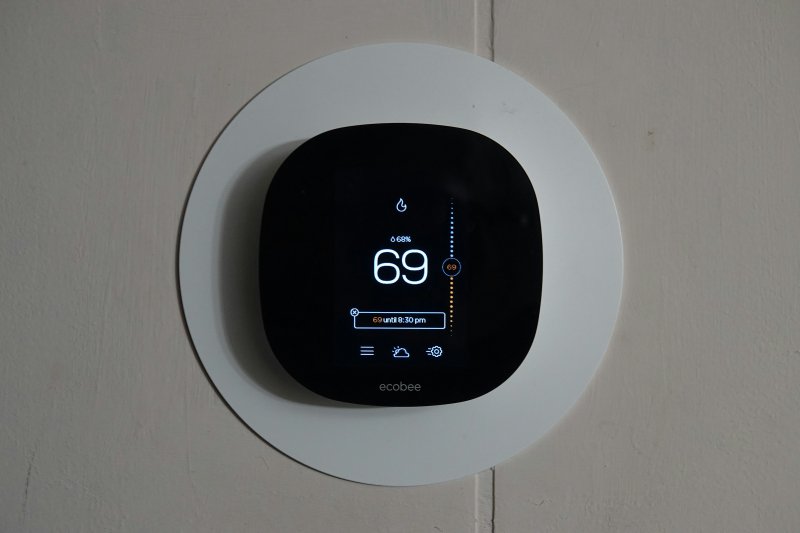
| Smart heat-pump-aware thermostat | $200–$600 | Ecobee or Honeywell with HP-specific staging |
| Sub-panel or 100A→200A panel upgrade | $1,800–$2,500 | Roughly 25% of older homes need this |
Sources: HomeGuide, Angi, Carrier 2026, plus pricing carried from our central air conditioner installation guide where the labor and line-set components are identical. Add the panel upgrade line and the bill jumps fast — older homes on 100A service often can’t handle a heat pump’s electric resistance backup strips on top of existing loads. That single line item is what flips many “$10,000 install” quotes into $13,000 final.
Sizing: Manual J, S, and D, in that order
A heat pump that’s even 25% oversized short-cycles in cooling mode and over-runs the resistance backup strips in heating mode. Both wear the compressor years before its rated life. The fix is the ACCA-published series that competent contractors run before quoting equipment:
- Manual J calculates the heating and cooling load based on insulation, windows, orientation, infiltration, and internal gains, not floor area
- Manual S picks equipment within the per-ANSI ratio: total heating capacity ≤ 140% of design heating load, total cooling capacity ≤ 115% of design cooling load
- Manual D sizes the duct system so airflow delivers the BTU/h the equipment produces
- Manual T finalizes air-distribution registers and grilles so each room gets its share of the load — usually folded into Manual D on residential jobs but called out separately by ACCA
The square-foot rule that 1985 contractors still use (“one ton per 500 square feet”) is wrong for cooling and catastrophically wrong for heating. Allison Bailes published a study of 40 real Manual J calculations on the ACCA blog : the average came out to 1,431 square feet per ton. Zero out of forty would have been correctly sized by the 500-sq-ft rule. For a heat pump, oversizing is a double penalty because the variable-speed inverter runs at minimum capacity for most of the season, never reaching its rated COP.
Ask for the printed Manual J report before you sign. A contractor who sizes by intuition or refuses to share the calculation is guessing, and a heat-pump-specific guess gets expensive when the resistance strips run for half the winter.
HSPF2 and SEER2, the ratings that matter in 2026
In 2023, the DOE replaced HSPF and SEER with HSPF2 and SEER2. The new test protocols are roughly 4 to 5% more stringent on the same hardware, so a 9.0 HSPF unit under the old test rates closer to 7.8 HSPF2 under the new one. Most homeowner pages and a fair number of installer brochures still quote pre-2023 numbers; treat any “9.5 HSPF” claim on a 2026 quote as a signal to ask which test protocol.
Where the floors sit in 2026:
- DOE federal heating minimum: 7.5 HSPF2
- DOE federal cooling minimum (North split): 13.4 SEER2
- DOE federal cooling minimum (South split, under 45,000 BTU): 14.3 SEER2
- ENERGY STAR split-system heat pump: HSPF2 ≥ 7.8, SEER2 ≥ 15.2, EER2 ≥ 11.0
- ENERGY STAR Cold Climate ducted: HSPF2 ≥ 8.1, SEER2 ≥ 15.2, plus 70% of rated heating capacity at 5°F
- ENERGY STAR Cold Climate non-ducted: HSPF2 ≥ 8.5, SEER2 ≥ 15.2
- NEEP ccASHP Specification v4.0: COP at 5°F > 1.75 for any cold-climate listing
Below the ENERGY STAR threshold, you’re locked out of nearly every state rebate. Below the Cold Climate designation, you can’t access the cold-climate-specific premium rebates that some Northeast states stack on top. Both floors matter more in 2026 than they ever have because rebate dollars are now the only meaningful incentive.
The NEEP cold-climate product list at ashp.neep.org carries roughly 40,000 systems from 100+ brands. The list migrated to AHRI joint data collection on April 1, 2025; it’s now the single authoritative database for verifying cold-climate performance claims on any quote.
R-410A is gone, so what charges your new heat pump now
Heat pump manufacturing using R-410A ended on January 1, 2025, the same date that closed it for central AC. The replacement refrigerants are R-454B (GWP ~466) and R-32 (GWP ~675), both A2L (mildly flammable) classifications that require updated technician certification, leak detection inside the air handler, and slightly different copper line set sizing on retrofit jobs.
What this means on a 2026 quote:
- Equipment charged with R-410A is still installable through December 31, 2025 inventory, though the EPA proposed in October 2025 (Federal Register 2025-19438) to remove that install deadline for systems where all components were manufactured before January 1, 2025. Supply is drying up regardless.
- New equipment with R-454B or R-32 adds roughly 5 to 10% to the equipment line, about $350 to $700 on a typical 3-ton job. The breakdown carries from our central air conditioner installation guide .
- R-454B cylinder shortages through 2025 pushed wholesale refrigerant prices up more than 300% per industry reports. Most installers now refuse to overcharge: if a leak develops, recharge prices in 2026 are punishing.
- A copper line set sized for R-410A may not be acceptable on an R-454B retrofit, which can mean a new line run pulled through walls. Budget $300 to $800 if your 50-ft line set has to be replaced.
Existing R-410A heat pumps installed before 2026 keep working, and the EPA continues to allow servicing with reclaimed R-410A. The cost math changes: a $1,200 recharge in 2022 is a $2,500–$3,500 line item in 2026. For a unit past year ten with a slow leak, the math now points at full replacement rather than chasing the leak.
The §25C credit, in past tense
The §25C Energy Efficient Home Improvement Credit paid 30% of qualifying heat pump costs, capped at $2,000 per year, from January 1, 2023 through December 31, 2025. The unit had to be ENERGY STAR-certified at the CEE highest non-advanced tier; a ductless mini-split needed to hit the cold-climate threshold to qualify in most cases. Homeowners who placed equipment in service through that window claimed the credit on IRS Form 5695.
OBBBA (Public Law 119-21, signed July 4, 2025) repealed the credit. IRS Fact Sheet FS-2025-05 (August 21, 2025) put it plainly: “The credit will not be allowed for any property placed in service after December 31, 2025.” Placed in service is defined by completion of the original installation, not the contract signing date or the equipment delivery date. A heat pump contracted in November 2025 but commissioned in January 2026 missed the window.
The §25D Residential Clean Energy Credit, which covered geothermal heat pumps at 30% with no cap, expired on the same date. Geothermal had been on a phase-down schedule that wasn’t supposed to end until 2032; OBBBA accelerated that to a hard stop.
What rebates still exist in 2026
Federal credits are gone. State and utility programs continue, and the better ones now carry the heat-pump tilt the federal credit used to provide:
- HEEHRA / HEAR: DOE state-administered rebates funded by the IRA, surviving OBBBA. Income-qualified households (under 80% AMI) can claim up to $8,000 off a heat pump as a point-of-sale discount; 80–150% AMI households get up to $4,000. California’s single-family HEEHRA fund went fully reserved on February 24, 2026. Multifamily allocations of up to $14,000 per unit continue. Colorado HEAR closed Region 1 (Front Range) on April 28, 2026. Other states still have active applications.
- Mass Save (Massachusetts): utility-funded rebates of $1,250 to $10,000 for ENERGY STAR heat pumps, with cold-climate-specific bonuses
- NY Clean Heat: $1,000 to $3,000 per ton for cold-climate models
- Oregon Energy Trust: incentives layered with utility programs
- Manufacturer spring promos: Bryant, Carrier, Lennox, Trane typically run March–May rebates of $500 to $2,100 stacking on top of state programs
For HVAC contractors who guide homeowners through rebate stacking, vetting practices, plus licensing, see our HVAC contracting guide . Manual J literacy plus EPA Section 608 certification matter more in 2026 than they ever have, since a rebate-eligible install requires both.
Maintenance on a heat pump runs longer than on AC alone
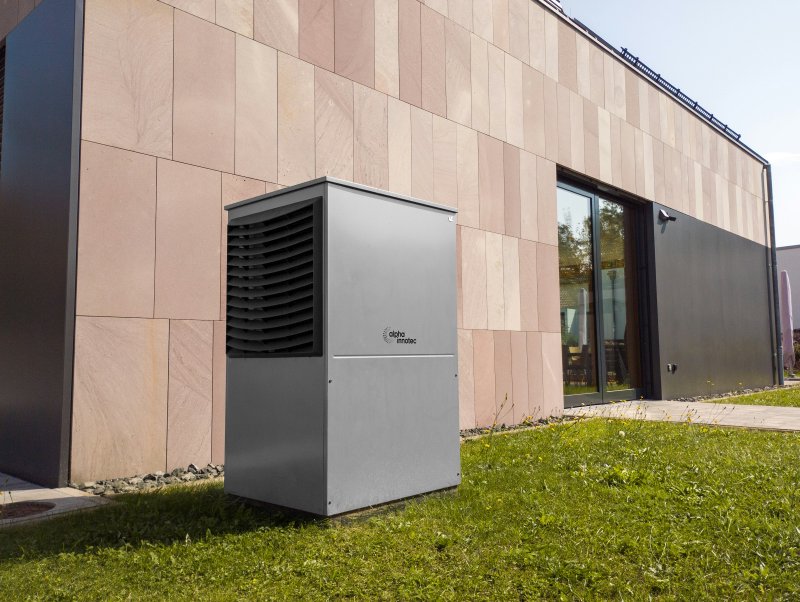
A heat pump runs in both heating and cooling mode, which roughly doubles annual run hours over a straight central AC plus separate furnace. The maintenance cadence reflects that. The professional standard is ANSI/ACCA Standard 4 QM: two pro visits per year, one before each season.
The pre-heating visit is the one a generic AC tune-up technician often skips:
- Reversing valve switching test in both modes (the failure that strands you in February)
- Defrost cycle verification: the unit should reverse to cooling for 8 to 12 minutes when ice builds on the outdoor coil
- Crankcase heater operation in cold weather (prevents liquid refrigerant slugging the compressor on startup)
- Refrigerant charge weight check under heating-mode pressures, not only cooling
A reasonable pre-heat visit takes 60 to 90 minutes per system. Pricing runs $150 to $350 per visit, or $200 to $500 a year on a service plan that bundles both seasonal calls plus parts discounts. A 25-minute visit is a sales call dressed up as service. For broader pricing on tune-ups across all HVAC equipment types, see our HVAC maintenance service guide .
Filter swaps are on the homeowner: monthly to quarterly depending on filter rating and household conditions. Outdoor coil cleaning every spring catches grass clippings, cottonwood seed, plus pollen that smother heat exchange and drag SEER2 down 10 to 15% within two years if neglected.
Heat pump versus gas furnace: the operating cost math
The break-even between a heat pump and a gas furnace turns on the local electricity-to-gas price ratio. The formula:
Cost per useful therm = (electricity rate $/kWh × 29.3 kWh per therm) ÷ COP
A 96% AFUE gas furnace at $1.20 per therm delivers heat at about $1.25 per useful therm. A heat pump running COP 3.0 at $0.14 per kWh delivers heat at $1.37 — gas wins narrowly. Drop the electricity price to $0.10 per kWh and the heat pump comes in at $0.98 per useful therm; the heat pump wins decisively. The crossover ratio is roughly 3.5 to 1 in $/MMBtu.
What makes the math nuanced is that COP isn’t constant. A typical air-source heat pump runs COP 3.5 at 47°F, drops to 2.0–2.4 at 5°F (cold-climate models) or 1.5–1.8 (standard models), then falls below 1.0 if the resistance backup strips kick in. Those strips deliver heat at COP 1.0 — three times more expensive than the heat pump at COP 3.0. An oversized or improperly staged thermostat can leave them running for hours of every cold day, which is how an electric bill triples in January and the homeowner blames the heat pump for a problem the install caused.
For the failure-mode and gas-side pricing math on the alternative, see our furnace repair guide . For when a compressor swap on an aging AC starts looking similar to a full heat pump retrofit, our AC compressor repair guide carries the parallel break-even calculation.
A heat pump lasts 12 to 15 years; geothermal goes 25+
Air-source heat pumps land in the 12 to 15 year average lifespan range — shorter than a straight central AC because the unit runs year-round in both modes. Ductless mini-splits, with their inverter compressors and lighter cycling load, often reach 20 years. Geothermal indoor units last 20 to 25 years, with the buried ground loop carrying a 50-year+ warranty on most polyethylene piping.
Compressor failure ends most heat pumps. Refrigerant leak rates run 3 to 5% per year on average, which compounds to 50–85% loss over a 17-year service life if leaks aren’t caught at every annual visit. The brands with the best warranty tilt for this risk:
- Mitsubishi Hyper-Heating (H2i): 12-year parts plus compressor when installed by a Diamond Contractor, rated to -13°F
- Daikin Aurora: 12-year parts limited (online registration required within 60 days), 100% heating capacity to -4°F, operation to -13°F on ductless
- Carrier Infinity Greenspeed: 10-year parts when registered
- Trane XV20i: 10-year compressor warranty when registered
- Bosch IDS Premium: 10-year parts and compressor
Warranty coverage is conditional on professional install by an authorized dealer, the registration window (usually 60–90 days), plus annual maintenance documentation. Skip any of those and a $4,000 compressor failure at year nine becomes a homeowner expense, not a warranty claim.