A typical heat pump repair runs $400 in 2026, with most homeowners paying between $150 and $661 (Angi 2026 data) or $150 and $650 (Fixr 2026). That national average hides a bimodal distribution every contractor knows: capacitor or contactor jobs and thermostat swaps cluster at $100 to $400, while major refrigerant-circuit work — reversing valves, compressors, evaporator coils — clusters at $800 to $3,500. There is almost nothing in the middle, which means the average is the worst possible number to budget against. The right number is the one tied to the part the technician named.
What also turns the bill is the brand on the nameplate. A Mitsubishi inverter PCB, a Carrier defrost board, a Trane XV20i compressor, and a 2009-vintage Goodman evaporator coil all have known failure histories that show up on quotes in 2026. The repair-versus-replace math also shifted: R-410A refrigerant pricing more than tripled since 2021, the §25C federal credit was repealed effective December 31, 2025 under the One Big Beautiful Bill Act, and a 12-year-old system is now competing against rebate-stacked replacement quotes that come in at $5,500 to $15,000. This guide walks through what each brand actually fails at, what the part runs, and when the math tips to replacement.
What heat pump repairs cost in 2026
Pricing data from Fixr and Angi (both fetched May 2026) line up closely on the part-by-part numbers. Contractor-survey ranges from PickHVAC and Blue Water Climate Control (with AVS Heating cross-checks) fill gaps where the cost-guide aggregators undercount labor on bigger jobs. The 2026 picture by part:
| Repair | Typical installed cost | Notes |
|---|---|---|
| Service call / diagnostic | $75–$250 | Often credited toward repair |
| Hourly rate (no parts) | $75–$150/hr | After-hours adds $100+ |
| Capacitor replacement | $100–$400 | Part: $9–$80; the most common no-cool/no-heat call |
| Contactor replacement | $150–$350 | Often paired with capacitor |
| Thermostat replacement | $80–$350 | Smart HP-aware models hit the top |
| Drain line cleaning | $75–$300 | Mini-splits especially |
| Refrigerant recharge | $100–$600 | Per pound; see refrigerant section below |
| Refrigerant leak repair | $200–$1,500 | Locate + braze + recharge |
| Defrost control board | $200–$650 | Carrier/Bryant signature failure |
| Control board (general) | $150–$700 | Premium communicating boards run higher |
| Blower motor | $300–$1,000 | ECM at the top, PSC at the bottom |
| Fan motor (outdoor) | $200–$700 | Condenser fan |
| TXV / expansion valve | $250–$800 | $400–$1,200 typical with full bi-flow recharge |
| Reversing valve | $1,500–$3,500 | Fixr’s $350–$700 captures simple swaps only |
| Evaporator coil leak repair | $1,000–$2,500 | Coil replacement plus recharge |
| Compressor replacement | $1,800–$3,500 | Out-of-warranty; $800–$1,500 labor only under warranty |
Sources: Fixr heat pump repair cost (page-direct 2026), Angi heat pump repair cost (page-direct 2026), Blue Water Climate Control reversing-valve guide, and contractor-survey averages from PickHVAC. The reversing-valve range is where cost-guide aggregators most commonly mislead. A simple swap on an accessible valve with cheap refrigerant recovery can land at $700, but a 4-to-6-hour job with $300/lb refrigerant lands at $3,000+ in 2026, and the second case is now more typical than the first.
Brand-by-brand failure modes and what they cost
Every HVAC technician knows the joke: a Goodman fails at the coil, a Carrier fails at the defrost board, a Mitsubishi fails when the upstream surge protector skips a beat. The pattern is real because parts engineering and supplier choices differ across manufacturers, with thermal-stress profiles compounding the divergence. What follows is the 2026 picture by brand, drawn from manufacturer service literature and distributor catalogs (cross-checked against contractor-forum failure histories):
| Brand | Most common failures | Typical 2026 repair cost | Warranty tilt |
|---|---|---|---|
| Mitsubishi (M-series, Hyper-Heating) | Inverter PCB, communication errors, flare leaks | PCB $300–$600; complex $500–$1,000 | 12-yr parts + compressor with Diamond Contractor install |
| Trane (XL18i, XL20i, XV20i) | Compressor (multiple repeats documented), TXV/reversing valve sticking | Compressor $1,800–$3,500; ComfortLink board $500–$900 | 10-yr parts registered, 1-yr labor |
| Carrier / Bryant (shared platform) | Defrost control board, condenser fan motor, capacitor | Defrost board $200–$650; fan motor $200–$700 | 10-yr parts registered, 1-yr labor |
| Lennox (XP25, XP21, XP16) | Fan motor, communication errors, SureLight control board | SureLight board $400–$700; XP16 TXV per service bulletin | 10-yr parts registered |
| Goodman / Amana | 2009–2011 evap coil leaks, Parker-supplied TXV failures (SR-033) | Coil $1,000–$2,500; TXV $400–$1,200 | 10-yr parts registered (60-day window); cheaper parts |
| Rheem (Classic, Prestige) | Capacitor, Parker-era TXV | Capacitor $150–$350; TXV $400–$1,000 | 10-yr parts and compressor on Prestige |
| Bosch IDS / IDS Premium | Inverter motor controller board, E6 fault | IDU board $500–$1,000 | 10-yr parts + compressor (Premium) |
| Fujitsu (Halcyon / AIRSTAGE) | Main outdoor PCB, error code 35 | PCB $400–$700; multi-zone $700–$1,200 | 10-yr parts and compressor with Elite Contractor |
A few brand-specific notes worth carrying into a quote conversation.
Mitsubishi (M-series, Hyper-Heating)
Inverter PCB failures dominate the field-repair docket on these units. The sensitive inverter electronics punish ground faults and voltage fluctuation, with condensation ingress an additional risk; about half the calls on a 7-year-old Hyper-Heating trace back to the PCB. Replacement runs $300 to $600 if the diagnosis is correct. Where it goes wrong: a technician who can’t read the P2/P5/P8 communication codes ends up quoting a $1,500 unrelated component. Always ask which error code triggered the diagnosis.
Trane (XL18i, XL20i, XV20i)
Premium variable-speed compressors on the XL18i and XL20i lineups carry documented repeat-failure history in the HVAC-Talk professional forum (two compressors burned out in 6 years on one XL18i thread; XL20i pressure-switch and reversing-valve issues on others). Trane’s 10-year parts warranty covers the part on a registered system, then the labor-only swap runs $800 to $1,500. Out of warranty, you’re at $2,000 to $3,500 for a premium variable-speed compressor swap. Confirm registration status before authorizing work, since Trane labor-only quotes need the dealer to file the paper.
Carrier and Bryant (shared platform)
These two share a parent (Carrier Global) and identical OEM parts on most models, so cross-referencing part numbers across brands works. The defrost control board is the heat-pump-specific failure mode (the part doesn’t exist on a straight AC condenser); failure shows up as ice-locked outdoor coils in winter or continuous defrost cycling. Replacement runs $200 to $650 installed.
Goodman and Amana
The most-discussed failure history of any HP brand. Indoor evaporator coils manufactured between roughly 2009 and 2011 used a thin copper alloy that corrodes and develops pinhole leaks within 5 to 10 years; the class-action settlement covered the affected units. Goodman shifted to all-aluminum coils starting around 2012, which solved the problem on newer equipment. Separately, the same Goodman/Amana lineup (along with Rheem) used Parker-supplied TXV valves that prompted Goodman Service Bulletin SR-033, with outdoor TXVs failing at higher rates than industry norm. On the upside, Goodman parts run 20 to 35% cheaper at distributor level than Carrier or Trane equivalents, which is why a Goodman repair quote often comes in lower than a same-tonnage Carrier quote for the same part.
Lennox, Rheem, Bosch, Fujitsu
Lennox heat pumps (XP25, XP21, XP16) carry the SureLight integrated control board across the lineup; failure on premium variable-speed lines runs $400 to $700 installed, with XP16 TXV failures documented in a Lennox service bulletin. Rheem Classic and Prestige units fail at the capacitor most often (commodity capacitor pricing keeps Rheem repairs at the low end of industry, $150 to $350 installed), with the same Parker-era TXV history Goodman owns. Bosch IDS Premium and Fujitsu Halcyon use sealed inverter boards that resist component-level repair; Bosch throws an E6 fault on inverter communication, Fujitsu throws error 35 on PCB faults, and both require full board swaps at $500 to $1,200 installed depending on tonnage and accessibility.
Symptom-to-cost diagnostic
What the homeowner sees on the wall thermostat or hears at the outdoor unit usually points to one of five buckets. Each bucket has a price band that the contractor’s quote should land inside:
- No heat and no cool (system completely down): start with capacitor + contactor at $250 to $500, breaker check (free), and low-voltage thermostat wire. Compressor failure is the worst case at $1,800 to $3,500 but should be the diagnosis of last resort, not first.
- Cools fine but won’t heat (or vice versa): reversing valve at $1,500 to $3,500, or reversing-valve solenoid coil at $200 to $400 if the valve is mechanically intact. Get a second opinion before authorizing valve replacement on anything past year 10.
- Outdoor unit ices over in winter and stays iced: defrost control board at $200 to $650 (Carrier/Bryant), defrost sensor at $150 to $300, or refrigerant undercharge at $100 to $1,500 depending on leak severity.
- Short cycles, ice on indoor coil, weak airflow: evaporator coil leak at $1,000 to $2,500 plus recharge, or TXV at $400 to $1,200, or restricted airflow (filter or duct issue, free to $200).
- Humming compressor that won’t start: capacitor at $100 to $400 first, then hard-start kit at $100 to $270, then locked-rotor compressor at $1,800 to $3,500. About half the “compressor is dead” calls on a hot July afternoon are capacitor failures. The AC compressor repair guide walks the capacitor-and-contactor pre-test sequence in detail; the same logic applies on the heat pump side.
What refrigerant costs in 2026
This is the line item that has changed hardest since 2022. Three refrigerants are in play depending on system age:
- R-410A (systems manufactured before January 1, 2025): per-pound retail to homeowners now runs $100 to $200, up from roughly $30 to $50 in 2022. Cylinder spot prices have roughly quadrupled since 2021 under the AIM Act phasedown. A 6-pound recharge that ran $400 in 2022 lands at $900 to $1,500 in 2026. R-410A is no longer manufactured but reclaimed supply remains legal for service.
- R-32 (most ductless mini-splits manufactured January 2025+): $150 to $300 per pound retail, A2L mildly flammable classification, requires updated Section 608 training and EPA-required leak detection sensors on equipment.
- R-454B (most ducted central heat pumps manufactured January 2025+): $150 to $300 per pound retail, with cylinder spot prices reportedly up over 300% in 2025 due to supply constraints. A2L. The compressor charge on a typical 3-ton system is 6 to 10 pounds, so a full recharge on a leaked-down R-454B unit runs $900 to $3,000 in refrigerant alone.
EPA Section 608 makes refrigerant recovery legally mandatory at any charge level. The technician must vacuum out remaining refrigerant before opening the refrigerant circuit. That recovery time and the deep vacuum afterward (500 microns or better) is why labor on any refrigerant-circuit job runs 4 to 6 hours.
For a system past year 10 with a slow leak, the refrigerant cost alone now tilts the math. A 3 to 5% annual leak rate is industry-typical; on a 17-year unit, that compounds to 50 to 85% loss over service life. In 2022 that meant a $300 annual top-off. In 2026 that’s a $600 to $900 line item that recurs every spring service. The full background on the AIM Act phasedown and the post-2025 R-410A install allowance lives in our heat pump cost guide .
Warranty matters more than most homeowners check
Almost every major heat pump brand offers a 10-year parts warranty when registered within 60 to 90 days of installation. Most also carry a separate compressor warranty line for 10 years. Labor is almost universally 1 year unless the homeowner bought an extended labor warranty at install time, which most don’t.
That registration window is where homeowners lose money. A compressor failure at year 9 on a registered unit costs labor only, around $800 to $1,500 on most brands. The same failure on an unregistered unit costs the full out-of-warranty rate at $1,800 to $3,500. The dealer registers the unit at install, but homeowners almost never get the registration confirmation; the only way to verify is to call the manufacturer with the serial number. Do that as a routine check before authorizing any repair past $500, since it can flip the bill.
The brands with the strongest warranty tilt for heat pump repair specifically:
- Mitsubishi Diamond Contractor: 12-year parts plus compressor when both the install company and the registration are filed. Standard non-Diamond Mitsubishi falls to 5-to-7-year parts.
- Daikin Aurora: 12-year parts with online registration within 60 days. Daikin owns Goodman/Amana but maintains a separate premium brand.
- Carrier Infinity Greenspeed / Bryant Evolution: 10-year parts registered, plus 10-year compressor on premium tiers.
- Trane XV20i: 10-year compressor warranty on registered systems, 10-year parts.
- Bosch IDS Premium: 10-year parts plus compressor.
- Goodman / Amana: 10-year parts registered (60-day window, otherwise 5-year), 10-year compressor.
- Rheem Prestige / Classic Plus: 10-year parts plus compressor.
A warranty-covered repair on an out-of-pocket $3,000 compressor swap drops to $800 to $1,500 in labor. That alone is the difference between fixing and replacing the system on most age-related failures.
When to repair and when to replace
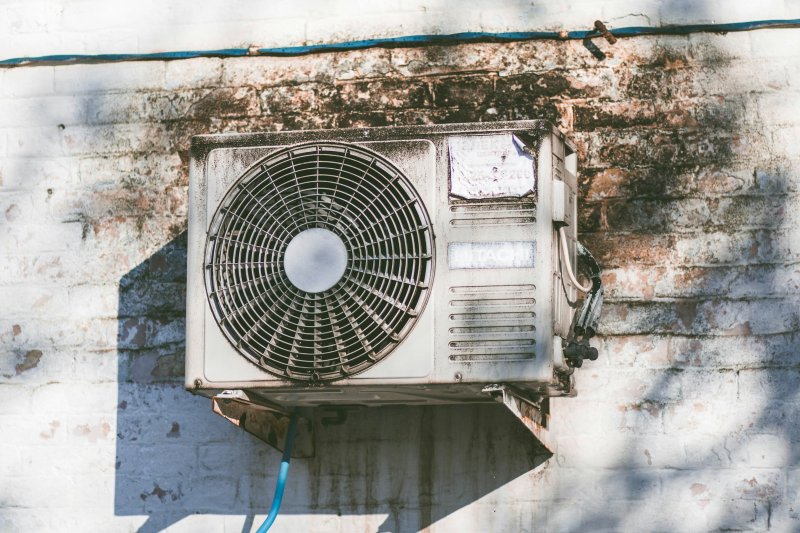
Two thumb rules, applied together, settle most repair-or-replace decisions:
- The 50% rule: if the repair quote crosses 50% of replacement system cost, replace. For 2026 ducted heat pumps at $5,500 to $15,000 installed, that trigger sits at $2,750 on the cheap end and $7,500 on the high end. Reversing-valve swaps and compressor replacements routinely cross the cheap-end threshold (coil leaks too, with the recharge added). Capacitors and defrost boards never do.
- Age × repair ≤ $5,000: multiply system age in years by the proposed repair cost. If the product crosses $5,000, replace. A $1,500 reversing valve on a 4-year-old system passes ($6,000) but the age rule is too aggressive that early; the second rule kicks in for older systems where the 50% rule is too generous.
Where the rules conflict, take the more conservative one. A $1,500 valve on an 8-year-old system fails the age rule ($12,000) and passes the 50% rule. Replace. A $1,500 valve on a 4-year-old system fails the age rule but passes the 50% rule. The age rule is too aggressive that early; keep the unit.
The rules tilt harder toward replacement in 2026 for two reasons. First, a compressor or coil failure on an R-410A system means refrigerant pricing turns every future service call into a $200 to $600 line item just for top-off. Second, HEEHRA replacement rebates of up to $8,000 for under-80% AMI households and $4,000 for 80–150% AMI survived the One Big Beautiful Bill Act’s December 2025 sweep. California’s single-family fund went fully reserved on February 24, 2026, with other states exhausting allocations. If you qualify and your state still has funds, that turns a $10,000 replacement into a $2,000 to $6,000 net decision. The §25C federal credit no longer applies (it was repealed effective December 31, 2025, with repairs never eligible anyway), but the state programs alone still tip the math against pouring $3,000 into a 12-year-old unit.
For the full installation-side pricing picture and the rebate map for replacement scenarios, see our heat pump cost guide . For broader HVAC system repair-versus-replace logic covering both the AC and furnace sides of a hybrid system, the HVAC system repair guide carries the parallel arithmetic.
Vetting a heat pump repair quote
A few quote-side checks that filter out misdiagnosis and markup:
- Ask which error code triggered the diagnosis (Mitsubishi P2/P5/P8, Bosch E6, Fujitsu 35, Carrier/Bryant defrost-board LED). A technician who skips the code lookup is guessing.
- Ask whether the unit is still under registered parts warranty. The dealer should know; if not, call the manufacturer directly with the serial number.
- For any compressor or reversing-valve quote past $1,500, confirm capacitor and contactor were ruled out first. About half of “compressor is bad” diagnoses on a no-start call are capacitor failures.
- For Goodman or Amana coil leaks on systems manufactured 2009 to 2011, ask whether the original class-action settlement still applies. Coil pricing reflects retrofit-aluminum pricing, not the original copper.
- For any R-454B or R-32 recharge, ask the technician about A2L training and EPA Section 608 status. Both are legally required since January 1, 2025; older techs may not be current.
Quote variance on the same repair across three contractors should fall within roughly 25%. Anything wider, like a $900 versus $2,400 split on the same reversing-valve job, usually means one of the contractors is misdiagnosing or marking up well past industry norms.