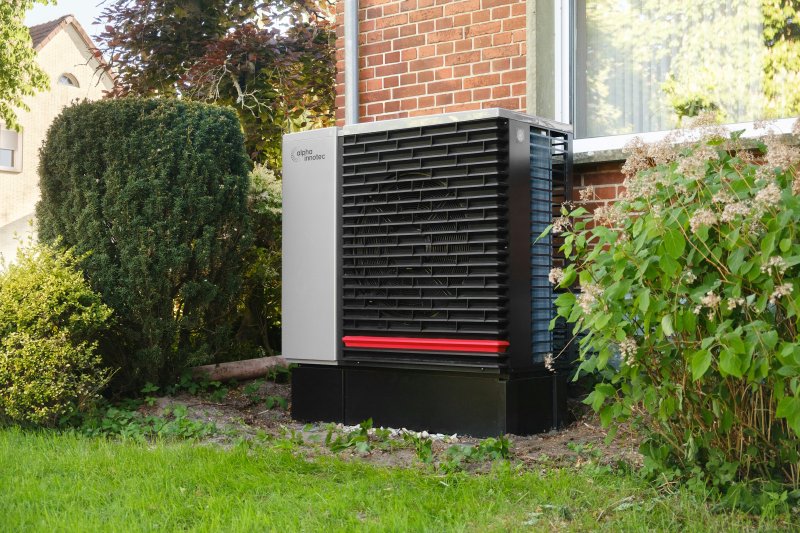
HVAC system repair in the U.S. costs $89 to $250 just to diagnose and $200 to $3,500 to fix depending on which component failed. The four common cheap fixes — capacitor, contactor, thermostat, and a clogged condensate drain — run $200 to $400 and cover most no-cool summer service calls. Compressor failure, evaporator coil leaks, and full blower motor swaps push $1,500 to $3,500 and force a real repair-vs-replace decision.
Articles that rank for this keyword publish a sea of price ranges and stop there. The harder questions: which fix actually solves your problem, which “fixes” are line-item upsells, and at what dollar threshold pouring more money into the existing system stops making sense.
What each common HVAC failure should cost
Most calls a homeowner places in 2026 fall into one of these failure modes:
| Failure | Typical repair cost | Average | Hours on site |
|---|---|---|---|
| Diagnostic / service call (daytime) | $89–$150 | $115 | 0.5–1 |
| Diagnostic / service call (after-hours) | $150–$250 | $200 | 0.5–1 |
| Capacitor replacement (run or dual-run) | $250–$400 | $300 | 0.5–1 |
| Contactor replacement | $150–$350 | $250 | 0.5–1 |
| Capacitor + contactor combo | $300–$500 | $400 | 1 |
| Thermostat replacement (basic) | $100–$300 | $200 | 0.5–1 |
| Thermostat replacement (smart with C-wire add) | $300–$600 | $450 | 1–2 |
| Condensate drain unclog | $75–$200 | $130 | 0.5–1 |
| Refrigerant recharge (per pound, 2026 retail) | $100–$200/lb | $150/lb | included |
| Refrigerant leak repair (find + fix + recharge) | $300–$1,500 | $800 | 2–4 |
| Hot surface ignitor (gas furnace) | $100–$300 | $200 | 1 |
| Flame sensor replacement | $80–$250 | $160 | 0.5–1 |
| Furnace control board | $300–$650 | $475 | 1–2 |
| Blower motor — PSC | $350–$800 | $575 | 2–3 |
| Blower motor — ECM (variable speed) | $600–$1,150 | $850 | 2–3 |
| Condenser fan motor | $200–$1,200 | $500 | 1–2 |
| Evaporator coil replacement | $1,000–$2,500 (warranty) / $2,500–$4,500 (out) | $2,200 | 4–6 |
| Compressor replacement (out of warranty) | $1,200–$3,000 | $2,100 | 4–8 |
| Heat exchanger replacement | $1,500–$4,000 | $2,500 | 4–8 |
Sources: HomeGuide, Angi, This Old House, Filterbuy. All 2026 data, cross-checked against sibling pricing in our HVAC maintenance service guide where the numbers overlap.
Daytime weekday calls are noticeably cheaper than evenings and weekends because of overtime labor. A capacitor that runs $250 at 10 a.m. on a Tuesday becomes $400 at 6 p.m. on a Saturday. The part hasn’t changed, the clock has. If the system is still limping along, wait for a regular-rate appointment whenever you safely can.
Regional pricing follows the same pattern as installation work. New York metro, Bay Area, Boston, and Seattle markets run 30–50% above national averages. Rural Midwest and Southeast trend 15–25% below. The numbers above are national midpoints.
Symptom to cause: the no-cool call
Roughly 60% of summer service calls turn out to be one of four cheap failures. Diagnose the symptom correctly before the truck arrives and you’ll know whether the quote is honest.
Outdoor unit hums but doesn’t spin
Almost always a dead run capacitor. The capacitor is a small cylindrical component that delivers the starting jolt to the compressor and condenser fan motor. Heat stress kills them. The fan won’t turn, the compressor sits there humming, and a microfarad reading on a meter lands 20%+ below nameplate. Part: $20 to $80. Total replacement: $250 to $400. A reasonable tech is in and out in 30 minutes.
Outdoor unit completely silent, indoor blower running
Suspect the contactor, the relay that the thermostat tells to send 240 V to the condenser. Contacts get pitted, weld shut, or refuse to close. A burnt-smelling contactor with carbon between the points is the textbook sign. Part: $20 to $50. Replacement: $150 to $350. If the tech finds the contactor and capacitor both failing together (common, since they share the same compartment and both bake in the sun), expect a $300 to $500 combo that’s still a reasonable repair.
Indoor unit running but air feels lukewarm
Two possibilities split here. If the supply registers feel barely warmer than ambient, you likely have a refrigerant leak, and unlike the cheap electrical fixes, this one runs $300 to $1,500 once a tech finds and seals it. If the air is genuinely cold but the airflow is weak, you have a dirty filter, frozen evaporator coil, or duct restriction. Pull the filter and look at it before calling anyone. ENERGY STAR puts airflow problems at up to a 15% efficiency hit on their own, and a filter so dirty you can’t see daylight through it has been starving the coil for weeks.
Water pooling under the indoor air handler
Clogged condensate drain. PVC line plugged with biological slime that grows in any humid trap. Clear it with a wet/dry vac on the outdoor termination (5 minutes) or pay a tech $75 to $200 to do the same. If the drain-pan float switch did its job, the system shut itself off; restart it after clearing the line. If the switch is missing or bypassed, you’ll find drywall damage to go with it.
Furnace lights briefly then shuts down
Most common cause is a dirty flame sensor. The sensor is a thin metal rod that proves a flame is present so the gas valve stays open. Soot coats it, the microamp signal drops below the 1.5 µA threshold, and the board cycles the burner off after seven seconds for safety. A homeowner with emery cloth and 15 minutes can clean it. A tech does the same job for $80 to $250. Our furnace tune-up guide covers the full diagnostic and ignition spec deep-dive.
Refrigerant repair got expensive
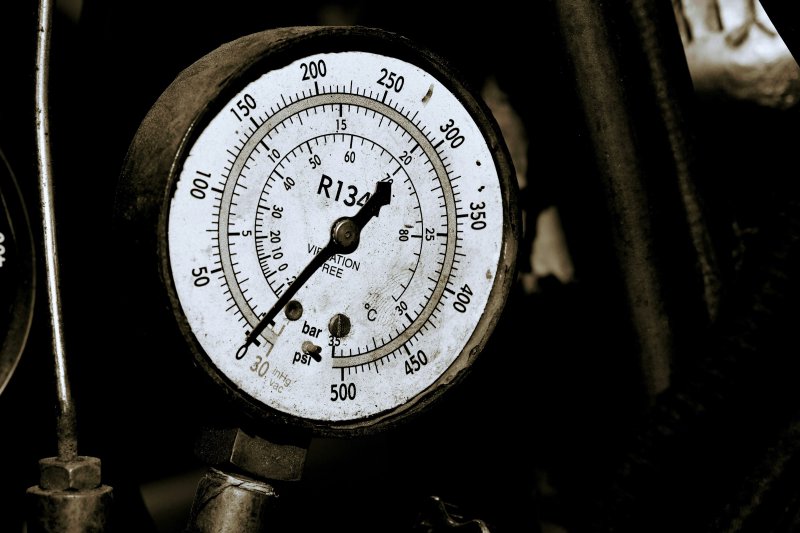
Anything involving refrigerant in 2026 is more expensive than two years ago, and the trend isn’t reversing.
The big driver is the AIM Act. R-410A new-equipment manufacturing was effectively banned in January 2025, and available supply tightened sharply through 2025. The refrigerant is still legal to service existing systems; supply just isn’t being replenished at scale. Spot pricing for R-410A cylinders went from roughly $345 in 2021 to over $2,000 in 2025. Retail per-pound charges to homeowners now sit at $100 to $200 per pound, up from $50 to $100 in 2022. A 2-pound topup on a slow leak that ran $200 four summers ago lands closer to $500 to $600 today.
Compounding that is EPA Section 608 of the Clean Air Act. Anyone who repairs a refrigerant-containing system has to be certified, and homeowners aren’t legally allowed to buy refrigerant in cylinders over 20 pounds without it. Section 608 also bans intentional venting and enforces leak-repair documentation on commercial-size systems, so a real leak repair includes a nitrogen pressure test, vacuum to 500 microns, and a documented evacuation. That paper trail is part of what you’re paying for.
Practical implication: never authorize a topup without a leak search. A sealed system that’s low has a leak by definition. Adding refrigerant without finding the source is paying $400 to delay the same call by six months. A reputable tech runs a leak detector across all brazed joints, the Schrader valves, and the evaporator coil first, then quotes a fix. If the leak is in the evaporator coil itself (common on systems 8 to 12 years old), that’s a $1,000 to $2,500 repair under warranty and $2,500 to $4,500 out of warranty, and the repair-vs-replace conversation starts there.
The PSC vs ECM blower question
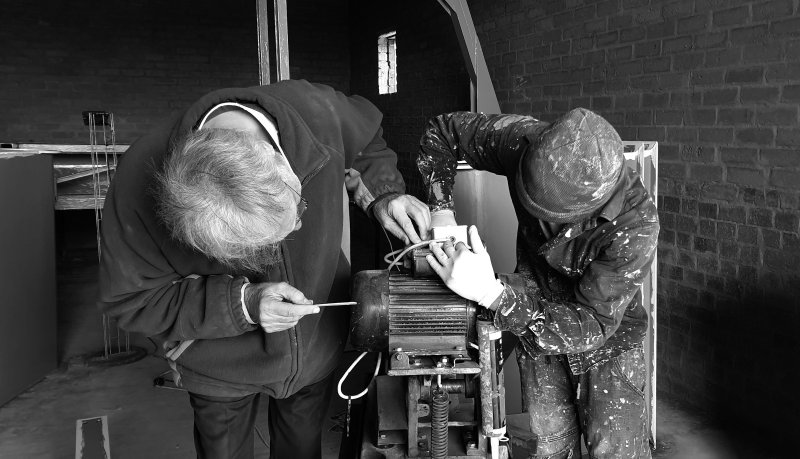
“Blower motor replacement” hides a 2-3× price spread that depends on which generation of motor your system has, and most quotes don’t volunteer the difference.
Permanent split capacitor (PSC) motors are the older single-speed type. Most pre-2010 air handlers and furnaces use them. They’re loud, run flat-out whenever called, and replace for $350 to $800 total. The motor itself is a $100 to $300 commodity part stocked on every truck.
Electronically commutated motors (ECMs) are the variable-speed motors used in most 2015-and-later equipment. They’re quieter, run at partial loads, and use up to 75% less electricity at low speed. Replacement runs $600 to $1,150 because the motor is $400 to $700 alone and frequently ships with a separate control module that adds $100 to $200.
The trap: a tech can sometimes substitute a universal PSC motor for a failed ECM and quote you the cheaper number. The system will run, but the variable-speed control logic is gone. Your two-stage furnace effectively becomes single-stage, and any zoning or humidity control that depended on speed modulation breaks. If your system was sold to you as variable-speed or two-stage, insist on an ECM-spec replacement. The price difference is real because the technology is real.
Hard-start kits are a related angle. A $40 to $80 add-on capacitor that gives the compressor extra starting torque can buy a marginal compressor another summer or two. It’s not a fix, but on a 13-year-old AC where you’re trying to get one more season before replacement, it’s a defensible $150 line item including labor. A tech who pushes it as the sole solution on a brand-new system probably just doesn’t want to chase down a real start-circuit fault.
When repair stops making sense
Whether to fix or replace is more boring math than most contractors make it sound.
The 50% rule is the first checkpoint. If a single repair quote is more than 50% of the cost of new equipment, replacement is usually the better call. A new matched 3-ton AC with installation runs $5,500 to $12,500 (see our central air conditioner installation guide for the full breakdown). So a $3,500 compressor swap on a 13-year-old condenser fails this test. A $400 capacitor swap on the same condenser passes easily.
Layer in age. AC systems average 12 to 15 years; gas furnaces 15 to 25; heat pumps 10 to 15. Past half lifespan, the next failure is usually right behind the current one. A 14-year-old AC that just lost its compressor will lose its evaporator coil next, then its capacitor, then its fan motor, and you’ll spend $5,000 in repairs across two summers to keep a system that was going to die anyway.
Combine both anchors and the decision rule looks like this:
- Repair quote < 30% of new system cost → repair
- Repair quote 30–50% of new system cost AND age < half lifespan → repair
- Repair quote > 50% of new system cost → replace
- Any repair > $1,500 AND age > half lifespan → strongly consider replacement
Refrigerant is the third anchor most repair-vs-replace discussions skip. If the failed system runs R-410A and the repair involves the sealed refrigerant circuit (compressor, evaporator coil, condenser coil, line set), you’re putting expensive 2026-priced R-410A into equipment that will be obsolete within five years anyway. The R-454B systems coming online now will not accept R-410A and vice versa. Repair-vs-replace tilts toward replace once refrigerant is in the picture.
Annual maintenance can prevent most of these failures from happening unexpectedly. A real tune-up catches a weak capacitor on a meter before it strands you on a Saturday afternoon. Our HVAC maintenance service guide covers what an actual ACCA-grade visit looks like and which $79 specials don’t qualify.
How to spot a repair upsell
Three live patterns in 2026.
The “preventive” replacement
A tech tells you the compressor is “showing signs of weakness” or the coil is “starting to corrode” on a system that’s currently cooling fine. Maybe true. Often a sales pitch wrapped in technical language. Ask for the specific data: amp draw on the compressor, microfarads on the cap, suction-line temperature differential. If the answer is hand-waving, push back.
The mystery refrigerant top-off
“Your charge is a little low, so the system needed a couple of pounds.” This was a $100 line item in 2018. In 2026 it’s a $300 to $500 line item that didn’t fix anything. A sealed system doesn’t lose charge unless it has a leak. Ask where the leak is. If the tech can’t show you, what you paid for wasn’t a repair, just a delay.
The bundled “electrical inspection”
A $250 capacitor swap with $400 of “wiring assessment, contactor inspection, voltage check” tacked on. The capacitor swap legitimately includes 30 seconds of looking at the contactor and the disconnect; that’s not a separate billable service. Ask the tech to itemize and decline the line items that should be part of the basic call.
A good vetting question on the phone: “Do you charge by the hour or flat-rate?” Hourly is more transparent on small jobs and more honest on diagnostic calls. Flat-rate is fine on installs but cuts both ways on repairs (you might pay for an hour on a 20-minute fix, or you might benefit when the same fix takes three hours). NATE-certified technicians are the credential to ask about. They’ve passed standardized testing on diagnosis and repair, and they’re the ones who actually know the difference between a stuck contactor and a failed control board.
For broader cost context across heating and cooling work, see our HVAC cost guides hub.