A plumber in 2026 costs $45 to $200 per hour in labor plus a $50 to $200 service-call fee that usually covers the first hour of work, per HomeGuide’s 2026 plumber cost data cross-checked against Angi’s 2026 cost report . Most residential work lands at $80 to $130 an hour, with master plumbers in expensive metros billing the high end. The single number that determines whether a plumber call is a $200 visit or a $1,200 invoice is timing. Standard daytime rates apply Monday through Friday, 7 a.m. to 5 p.m.; everything outside that window runs at 1.5 to 3 times the daytime rate, plus a separate emergency fee.
Below: when calling pays off, what each license tier bills, the service-call mechanics nobody explains on the phone, common-job flat rates, and the hiring red flags that separate a $400 toilet rebuild from a $4,000 scam. Brand-specific tankless repair detail for Rinnai and Navien sits in the tankless water heater repair guide . Water heater install pricing by type lives in the water heater installation cost guide . Sewer-line and slab-leak scopes have their own dedicated guides linked at the end.
What plumbers charge by license tier
The hourly rate you see on the invoice depends almost entirely on who is holding the wrench. State licensing law splits practitioners into three tiers, and each tier bills differently.
| Tier | Hourly billing rate | Take-home pay | What they can do |
|---|---|---|---|
| Apprentice | $45–$90 | $16.50–$22 | Work under supervision; cannot pull permits |
| Journeyperson | $60–$110 | $30–$34 | Install/repair under own license; varies by state on permit-pulling |
| Master | $80–$200 | $35–$45 | Pull permits, own a business, supervise crews, stamp designs |

Take-home pay comes from BLS Occupational Employment and Wage Statistics May 2024 cross-referenced with PayScale and ZipRecruiter 2026 data. Billed hourly comes from Angi’s 2026 plumber-cost report. The 2x-to-4x gap between worker take-home and customer invoice covers truck, insurance, dispatcher, parts margin, office, training, the years paid as an apprentice, and the years getting sued for someone else’s mistakes. Plumbing companies do not gross-margin like Apple. Liability and worker-comp insurance is the single largest line item, on a job where one missed sediment trap can blow up a basement.
A 5-year apprenticeship is the standard path. HomeGuide notes that apprentice plumbers “work for about 5 years under a master plumbing and learn as they go.” BLS confirms apprenticeship as the primary entry route and notes that most states require licensure to do anything beyond strictly supervised work. To upgrade from journeyperson to master, most states require a minimum 2 years of journeyperson experience plus a passed master exam that covers code and business law.
The service-call fee nobody mentions
You call the plumber, describe the problem, and the dispatcher gives you a window between 1 and 4. What the dispatcher does not say up front: there is a $50 to $200 minimum charge before any wrench moves, and that fee bundles travel, the diagnostic, plus (usually) the first hour of work.
This is not a markup. The plumber’s truck is rolling whether the job is $50 or $5,000, and a free estimate model only works on big-ticket projects (kitchen and bath remodels, sewer-line replacements, whole-house repipes). For a clogged drain or a leaky shutoff, somebody has to pay for the wheels. HomeGuide puts the typical service-call fee at $50 to $200; Angi reports $100 to $250.
A few mechanics worth understanding before the truck arrives:
- Most companies credit the fee toward the first hour or first repair if you approve the work on the spot. Decline the work and the fee is yours to pay.
- Trip charges over 10 miles add $1 to $2 per mile (HomeGuide) or $50 to $300 flat (Angi) on top of the service-call fee for clients outside the standard service zone.
- A separate diagnostic fee ($75 to $150) sometimes applies on top of the service-call fee for problems that require pressure testing, camera inspection, or smoke testing — anything that takes diagnostic equipment beyond a flashlight and a wrench.
- Saturday morning is sometimes cheaper than Saturday night. A plumber working a normal Saturday shift bills time-and-a-half, not double; you only pay the worst rate when the call comes in after the shift ends.
This is also why no honest plumber will quote a firm price over the phone for a job they have not seen. The shutoff that needs a $40 ball valve replacement looks identical on the phone to the one that needs a $1,200 manifold rebuild.
Common-job flat rates in 2026
For repeated, predictable jobs many plumbers price flat from a published rate book — same dollar amount regardless of how fast the crew works. The numbers below come from HomeGuide and Angi 2026 data, with Angi’s ranges generally higher because Angi customers skew higher metro and higher value.
| Job | HomeGuide 2026 | Angi 2026 |
|---|---|---|
| Toilet repair (rebuild kit, flapper, fill valve) | $100–$300 | $100–$300 |
| Toilet install (replace existing) | $250–$750 | $300–$800 |
| Unclog a drain (snake or auger) | $100–$275 | $95–$500 |
| Garbage disposal install | $600–$850 | — |
| Faucet install (drop-in replacement) | $120–$300 | — |
| Leak repair (visible, accessible) | $150–$850 | $175–$550 |
| Pipe repair (general, mid-job) | $400–$2,000 | — |
| Burst pipe repair | — | $1,000–$4,000 |
| Gas line repair (small, accessible leak) | $100–$250 | $250–$750 |
| Water heater repair (gas valve, element, tank flush) | $150–$700 | $150–$750 |
| Sewer line cleaning / hydrojetting | $150–$800 | — |
| Water main repair | $400–$1,500 | — |
Two tells separate honest flat-rate from gouging. First, an honest flat-rate plumber will show you the page in the rate book if you ask — the book is real. Second, an honest flat rate beats hourly only on jobs where the labor time is predictable. A clogged sink trap is flat-rate-friendly because every kitchen sink is a 15-minute job. A “find the leak somewhere in the wall” call is hourly because it might be 90 minutes or it might be 6 hours, and a flat rate on that work is a contractor lottery ticket.
The HomeGuide national-average plumbing job lands at $280 ($75 to $850 typical range). Angi’s national average is higher at $339 ($99 to $976 typical), which tracks with the higher-metro skew of their customer base.
Frozen pipes, burst pipes, and the math on emergency calls
Frozen pipes are the standard winter call where the math gets interesting. A pure thaw — locating the frozen section, applying heat, restoring flow — averages $167 to $417 per the cross-sourced 2026 data, with $279 a typical bill if the line did not split. Add a burst section and the cost jumps to $1,000 to $4,000 per Angi’s 2026 burst-pipe report, before any of the drywall and flooring damage gets touched.
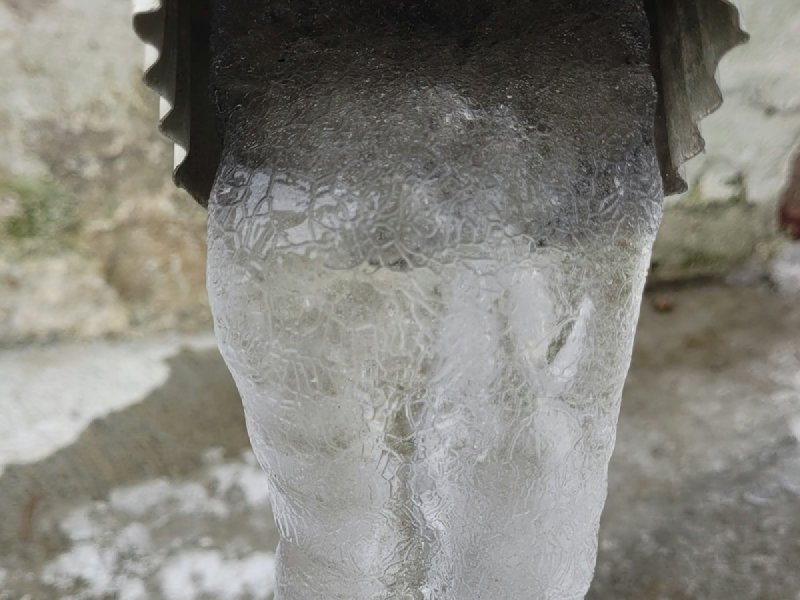
Three field rules matter here. If a frozen pipe has not split, the fix is cheap and the call can wait an hour or two while you turn off the main and let supply pressure off the affected line. Once a frozen pipe has split, it is bleeding water somewhere even if you cannot see it, and the main needs to come off in the next 5 minutes regardless of whether a plumber is on the way. Frozen drain lines are almost never an emergency and wait until morning every time.
Emergency multipliers from Angi’s 2026 emergency plumber data and HomeGuide’s plumber-cost page:
- Weeknight evenings: time-and-a-half (1.5×)
- Weekend daytime: double (2×)
- Sunday night, holidays: triple (3×)
- Per-visit emergency dispatch surcharge: $150 to $250 added on top of the hourly multiplier in many markets
- Effective emergency hourly rate: $125 to $300 typical; $200 to $450 on a holiday master-plumber call
Bias to internalize: a daytime $300 toilet rebuild is a $600 to $900 invoice at 11 p.m. on a Sunday, plus the dispatch fee. The break-even on calling versus waiting is whether the situation gets materially worse in the 8 to 12 hours until business hours. A toilet that will not flush in a two-bathroom home will not get worse overnight. A burst supply line, a sewage backup, or a confirmed gas smell will. Gas leaks call the utility first — they come free and have authority to shut off at the meter. A plumber comes after the utility has confirmed safe.
Flat-rate vs time-and-materials billing
Two billing models dominate residential plumbing, and the difference matters more than most homeowners realize.
Flat-rate book pricing locks the dollar amount per job from a published rate book, regardless of how long the work takes or how cheap your zip code is. Large franchises (Roto-Rooter, Mr. Rooter, Benjamin Franklin) almost universally use it. The advantage is predictability: you sign for $487 and you pay $487. The disadvantage is that simple, fast jobs get priced 15 to 30 percent above the hourly equivalent because the rate book bakes in average time, not best-case time. HomeGuide notes the flip side: “Customers may save money with a flat rate if the job takes longer than expected.”
Time-and-materials clocks billing on arrival and runs hours-times-rate plus parts at retail or wholesale-plus-markup. Independents and small shops favor it. T&M is cheaper on simple jobs and a coin flip on complicated ones. The trap is the open-ended invoice: a 4-hour estimate that runs 7 hours because the trim ring is corroded onto a 1962 cast-iron drain.
When the bid is borderline, ask for a not-to-exceed cap on the T&M quote. A plumber willing to write “labor not to exceed 6 hours” on the work order is selling confidence in the diagnosis. One who refuses is hedging on a job where they are not sure what they will find.
How to vet a plumber before the truck rolls
Every state with mandatory licensure runs a free public lookup. The plumber gives you a license number; you type it into the state portal; you get back status, expiration, classification, and (in most states) the disciplinary record and bond/insurance verification. The portals worth bookmarking:
- California: CSLB Check A License
- Texas: TSBPE License Verification
- Illinois: IDPH Plumber License Verification
- North Carolina: NC State Board of Examiners
Other states follow the pattern. Search “{your state} plumbing license verification” and the first .gov result is almost always the right portal.
The hiring red flags that correlate with bad outcomes:
- No license number on the truck or the invoice
- “Proof of insurance next time” (the answer is today, before any work starts, or no work)
- Cash-only or a deposit demand over 50 percent of the bid
- Unsolicited door knock claiming to have spotted a problem from the street
- “Found another problem” announced after the work has started, with no written change order
- Refusal to pull a permit on a job that visibly requires one (re-piping, gas line work, opening walls)
- High-pressure scare tactics — “this is about to fail” with no measurement and no photo
The single most reliable signal: a plumber who will not hand over a license number to verify is one to walk away from. Honest plumbers expect homeowners to check and welcome it. Scammers know homeowners might check and find a way not to give the number.
HomeGuide notes the permit math : plumbing permits run $30 to $500 and are required when you open walls, install new pipe during an addition, or change the plumbing of the home. They are not required for like-for-like repair or fixture replacement. A plumber who pulls a permit when one is needed is a plumber who expects the work to pass inspection — which is the only kind worth hiring.
When the call is not a plumber call at all
Two scopes get mistakenly handed to general plumbers when they should go to specialists, and one scope is handled directly by the gas utility for free.
Slab leaks need acoustic and thermal detection equipment most general plumbers do not carry on the truck. The diagnostic is its own line item before any repair starts. Ranges and the four repair paths (spot repair, reroute, epoxy lining, full repipe) live in the slab leak repair guide .
Sewer lateral failures mean excavation or trenchless pipe lining, both of which fall outside the typical residential plumber’s daily scope. Camera-inspection cost, the lining-vs-dig decision, and per-foot pricing sit in the sewer line repair guide .
Confirmed gas smell calls the utility first, not a plumber. The utility responds free and has authority to shut off at the meter. Once the leak is confirmed on the customer side, a licensed plumber or gas-fitter does the repair. Going plumber-first wastes the dispatch fee on a job the utility would have stabilized for nothing.
For water heater install economics specifically (tank, tankless, heat-pump, solar, plus the IPC 607.3 expansion-tank rule that fails inspections), see the water heater installation cost guide . For tankless repair pricing on Rinnai and Navien specifically, the tankless water heater repair guide covers brand-level error codes and warranty terms.