
A tankless water heater repair runs $200 to $1,200 for typical work in 2026, with the HomeAdvisor 2026 cost data putting the average at $600 and the normal range at $75 to $1,300. Major jobs (heat exchanger, gas valve, control board) reach $1,950. The split between a routine fix and a four-figure invoice almost always comes down to one variable: whether the unit was descaled annually. Rinnai and Navien dominate the U.S. tankless market, and both manuals are explicit. Scale is the failure mode that takes out the heat exchanger, the most expensive part on the unit.
This guide is brand-specific. Rinnai SENSEI and the older V-series, Navien NPE-A2 and NPE-S2: error code tables, the gas-pressure spec, the descaling protocol, the warranty terms, and the repairs a homeowner can attempt versus the ones that need a licensed gas tech. For the gas-side credentialing question (manifold pressure, CSST bonding, combustion analysis) that overlaps any gas appliance, see the gas furnace repair guide rather than re-explaining it here.
What tankless repair costs in 2026
The numbers below come from HomeAdvisor’s 2026 tankless repair page cross-checked against contractor pricing carried from the furnace repair sibling cache , with brand-specific part costs verified against Rinnai and Navien parts distributors.
| Repair | Typical installed cost | Notes |
|---|---|---|
| Diagnostic call (daytime) | $89–$150 | 30–60 min on site, no parts |
| Hourly labor | $45–$200/hr | Regional spread; metro plumbers top out higher |
| Annual descale / flush (pro) | $150–$350 | 60–90 min; bumped to every 6 mo on 7+ gpg water |
| DIY descale kit | $100–$300 one-time | Pump, hoses, bucket. Vinegar $4/gal. ~$40/year recurring |
| Igniter or flame-rod kit | $75–$200 | Rinnai 104000249, Navien equivalent. DIY-safe |
| Flow sensor cleaning | $100–$200 | Inline strainer + sensor disassembly |
| Thermistor (water/exhaust) | $75–$200 | Codes 31/32/33/34 (Rinnai), E047 (Navien) |
| Gas valve | $300–$500 | ~$350 average per HomeAdvisor; combustion check after |
| Control board / PCB | $400–$700 | Rinnai code 70, Navien internal |
| Combustion fan motor | $250–$500 | Rinnai code 61, Navien E109 |
| Vent section repair | $50–$125 | PVC or polypropylene, no penetration |
| Heat exchanger swap | $500–$1,300 | Out of warranty; in-warranty = labor only |
| Full unit replacement | $1,200–$3,500 | Plus permit and venting if reconfigured |
Regional spread on the same job is significant: Seattle $400 to $1,400, Austin $200 to $1,000, Portland Maine $140 to $600, per the HomeAdvisor metro tables. Get two quotes if the first invoice exceeds the upper bound for your region.
A note on bundling. A reputable shop folds the manometer reading, combustion-analyzer check, and a five-minute fresh-water flush after any HX work into the labor on whatever they are doing. If a tech replaces a gas valve and walks out without confirming the manifold pressure dynamically, the work is half-finished. The same logic that applies to gas furnaces applies here.
Rinnai error code decision matrix
Rinnai service manuals list 40-plus diagnostic codes; the official troubleshooting PDF on the manufacturer site is the canonical reference. These are the ones that account for ~80% of real-world service calls.
| Code | Meaning | DIY-safe? | First step |
|---|---|---|---|
| 10 | Air supply or exhaust blockage | Maybe | Check vent terminal: leaves, snow, wildlife, ice |
| 11 | No ignition | Yes if gas-trained | Verify gas supply on, igniter sparking, flame rod |
| 12 | Flame failure | Yes | Inspect flame rod for carbon, clean with emery cloth |
| 14 | Thermal fuse (overheat) | No | HX is scaled or restricted, needs flush plus fuse |
| 16 | Over-temperature warning | No | Airflow, fan, HX blockage; call tech |
| 25 | Condensate trap full | Yes | Drain reservoir, check pump |
| 31/32/33/34 | Thermistor faults | Maybe | Measure resistance against spec, clean scale |
| 52 | Modulating gas solenoid | No | Coil resistance, gas valve |
| 61 | Combustion fan motor | Maybe | Fan turns freely, motor resistance |
| 65 | Water flow control fault | No | Shut off water; internal leak risk |
| 70 | PC board | No | Replace PCB |
| 72/79 | Flame-sensing fault | Yes (72) / No (79) | Clean flame rod (72); shut off water (79) |
| LC / LC0–LC9 | Heat exchanger scaled | Yes | Run a vinegar flush; see procedure below |
| SS | Service Soon flush reminder | Yes | Flush, then reset On/Off 5x in 5 sec |
Two of these stop the unit on purpose and should not be reset-and-retry: 14 (thermal fuse activated, the heat exchanger has overheated) and 79 (internal water leak detected, water is hitting electrical components inside a sealed combustion enclosure). Both mean shut off and call a licensed tech.
Navien error code decision matrix
Navien NPE-A2 and NPE-S2 use a different code scheme (E-prefix, three or four digits). Pulled from Silva Mechanical’s mirror of the Navien service handbook and Wilson Plumbing’s NPE service guide.
| Code | Meaning | DIY-safe? | First step |
|---|---|---|---|
| E001 / E016 | HX overheat | No | Strainer cleaning, flow rate, flush |
| E003 | Ignition failure | Yes | Manual gas valve open, ground wire, igniter spark |
| E004 | False flame detection | No | Igniter, ground terminals at HX |
| E012 | Flame loss | Yes | Main gas valve, flame rod, gas pressure |
| E030 | Exhaust over-temp (>230 °F, 10 sec) | No | Vent obstruction, scaled HX |
| E047 | Exhaust thermistor abnormal | No | Connection at PCB |
| E060 | Dual venturi limit switch | No | Venturi, TEST mode |
| E109 | Fan motor abnormal | Maybe | Intake-air filter, voltage |
| E110 | Exhaust blockage | Yes | Wildlife, ice, snow at terminal |
| E760 | Flushing service alarm | Yes | Annual flush due, not a fault |
E760 trips up homeowners constantly. It is not a fault. It is a calendar-based reminder Navien fires on a service interval you set at install. Run the flush, hold the reset combo for the model (NPE-A2: press the diagnostic button + Enter for 5 sec), and the alarm clears. Calling a plumber for an E760 alone is throwing $150 at a reset button.
Annual descaling: the one repair that prevents the others
Both manufacturers say annually. Both manufacturers will deny a heat-exchanger warranty claim if you cannot show maintenance records. The Water Quality Association classifies water above 7 grains per gallon (gpg) as hard, which is the threshold where the descaling interval should drop to every 6 to 8 months on a tankless. At 10+ gpg the manuals call for every 4 to 6 months.
The procedure, end to end, takes 60 to 90 minutes:
- Shut off the gas valve and the electrical disconnect.
- Close the cold (blue) and hot (red) isolation valves at the unit. The unit should now be dead-headed off the building plumbing.
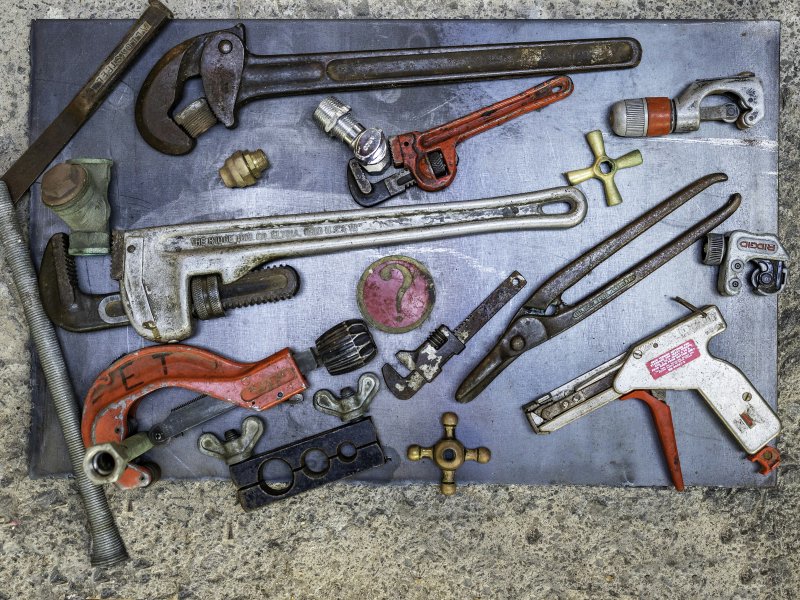
- Open the cold and hot service valves, the smaller handles with the threaded boss for a hose connection. Open means perpendicular to the pipe.
- Connect a washing-machine hose from the cold service valve to the discharge of a small submersible pump (Liberty 404 or any 1/6 HP utility pump). Run a second hose from the hot service valve back into a 5-gallon bucket holding 1 to 2 gallons of undiluted white distilled vinegar. Manufacturer-specific tankless descalers (citric-acid based) work too.
- Power the pump and recirculate 45 to 60 minutes. Bumps to 60 on heavy scale.
- Drain the vinegar, refill the bucket with fresh water, recirculate 5 minutes to flush the acid.
- Disconnect, close the service valves, open the isolation valves, restore power and gas. Open a hot tap to purge air before relighting.
Skip the CLR. It contains lactic and gluconic acids strong enough to attack the copper plate of a Rinnai HX and the rubber seals on the diaphragm. White vinegar (acetic acid, ~5%) is the manufacturer-preferred solvent for a reason. Cost-side: a DIY descale kit (pump, hoses, bucket) is $100 to $300 one-time at any plumbing supply, and the vinegar runs about $4 per gallon. Recurring annual cost in materials: roughly $40. A pro descale runs $150 to $350.
Gas pressure: the spec a tank install never had to meet
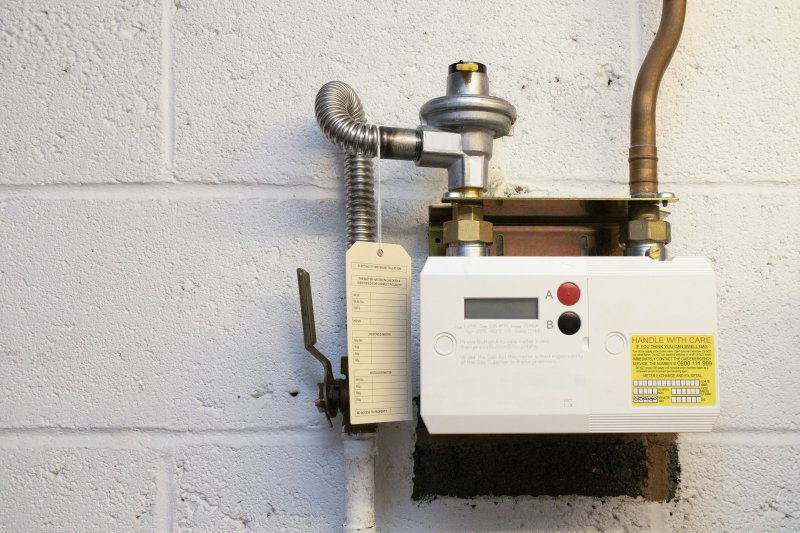
Per the Rinnai SENSEI install manual, the natural-gas inlet pressure at the test port (measured with a manometer with all gas appliances at maximum rate) must read 5.0 inches water column minimum, 10.5 inches W.C. maximum. Below 5″ and you get code 11 ignition failures every cold morning when the furnace and the tankless try to fire together. Navien specs are nearly identical (4″ minimum on some legacy NR models, 5″ on NPE).
Compare that to a gas furnace, which tolerates 5″ to 7″ on the dynamic load. A tankless water heater is hungrier: a Rinnai SENSEI RX199 dumps 199,000 BTU/hr the instant a hot tap opens. That is roughly equivalent to firing two 80,000-BTU furnaces simultaneously, off the same gas line. Half-inch black-iron runs sized for a 40,000-BTU storage tank do not survive the upgrade. The most common silent install failure: contractor swaps the storage tank for a tankless on the existing line, the unit works fine alone, and then code 11 starts whenever the furnace cycles in winter. The fix is a 3/4″ or 1″ line back to the meter, $400 to $1,200 of work depending on routing.
When you call for a service quote on a unit throwing code 11, ask the dispatcher whether the tech will arrive with a manometer. The honest answer separates real gas plumbers from drain-cleaning shops who happen to also work on tankless. Without the manometer reading, the tech is replacing parts on a guess.
Venting failures and what they cost to fix
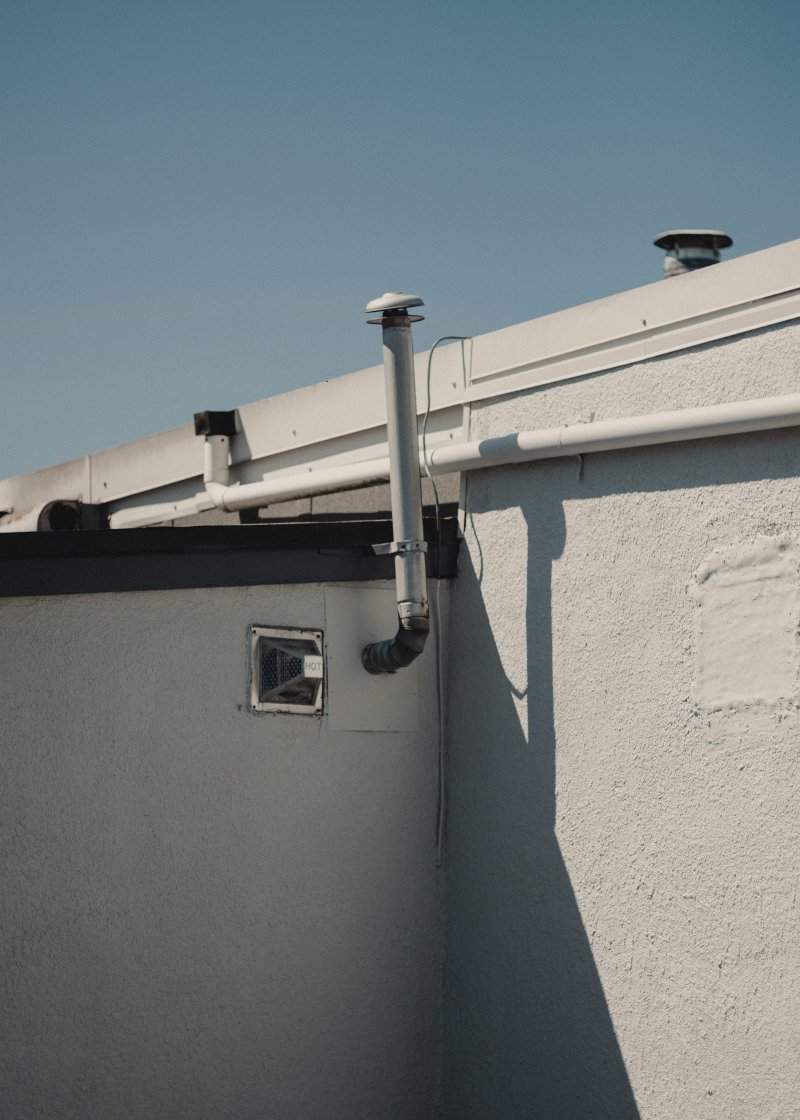
Condensing and non-condensing tankless heaters use different vent materials, and that distinction is what fails most often on a 10-year-old install.
Condensing units (Rinnai SENSEI, Navien NPE) vent through Schedule 40 PVC, CPVC, polypropylene listed to UL 1738 / ULC S636, or Category III/IV stainless. Most installs since 2018 use polypropylene because the major manufacturers shifted toward it for chemical resistance. Per Navien’s published spec, condensate from the secondary heat exchanger sits at pH 3 to 5, acidic enough to attack PVC over a decade, ice-block at horizontal terminals, and corrode any cast-iron stack the condensate drains into.
Non-condensing units (Rinnai V-series) vent through Category III stainless only. PVC will fail catastrophically at flue temperatures of 350 °F. If you bought a house with a Rinnai V-series and the vent looks like white plastic, that install is non-compliant.
Vent-related repair pricing lands in roughly three bands. Section replacement in PVC or polypropylene (6 to 10 feet plus elbows) runs $200 to $500. Stepping up to a full re-pipe with a new wall or roof penetration to UL 1738 spec costs $600 to $1,200. The concentric vent termination kit in 3″ PVC retails for $80 to $150 plus labor.
The acid-condensate problem is the same one that hits high-efficiency condensing furnaces. If your installer skipped the condensate neutralizer , your drain stack is corroding right now.
Repair-vs-replace at the cost-curve break
Energy.gov puts tankless life expectancy at more than 20 years with maintenance, meaningfully longer than the 10 to 15 years a storage tank delivers. That math changes the repair-vs-replace calculation versus a tank, where year 12 usually means replacement.
Four triggers tip toward replacement:
- Confirmed heat-exchanger crack on a unit past year 12. Even when the 15-year warranty still covers the part, you pay the labor (a $400 to $700 line item the manufacturer does not reimburse beyond year 1 or 5 depending on registration). On a unit already showing other wear, the math fails the 50% test.
- Stacked failures within one season. A control board ($500), then a gas valve ($350), then a fan motor ($400) on a 13-year-old unit means the rest of the components are aging in parallel. Each individual repair passes the 50% rule. The cumulative spend across two winters does not.
- Gas-line work for an unrelated upgrade. If you are running a new line for a generator, a kitchen relocation, or a furnace upgrade, bolting a new tankless to a freshly pressure-tested line costs less than the same install three years from now.
- Non-condensing V-series with non-compliant venting. Bringing the vent up to Category III stainless on an aging V-series often costs more than the unit’s residual value. A condensing-unit replacement with PVC or polypropylene venting can come out cheaper end-to-end.
Otherwise, repair. An 8- to 10-year-old Rinnai or Navien with a single failure is almost always worth fixing. Full unit replacement runs $1,200 to $3,500 plus venting reconfiguration if the new unit changes form factor.
The warranty trap most homeowners miss
Both brands publish warranties that look similar at a glance:
| Brand | Residential HX | Parts | Labor |
|---|---|---|---|
| Rinnai SENSEI (registered) | 15 years / 12,000 hr | 5 yr | 5 yr |
| Rinnai SENSEI (unregistered) | 15 years / 12,000 hr | 5 yr | 1 yr |
| Navien NPE-A2 (controlled recirc) | 15 yr | 5 yr | 1 yr |
| Navien NPE-A2 (uncontrolled recirc) | 5 yr | 3 yr | 1 yr |
| Either brand commercial | 8 yr | 5 yr | 1 yr |
Per the Navien NPE-A2 warranty page , the trap is the recirculation clause. If a homeowner adds an external recirc pump to a tankless without an aquastat (common on retrofits where someone wires a continuous pump for instant hot water at distant fixtures) the warranty drops to 5 years on the heat exchanger. The unit runs continuously instead of cycling, accelerates scale, and Navien’s position is that the duty cycle exceeds residential design assumptions. Document the pump configuration with photos at install. If the contractor used the Navien-built-in recirc on an NPE-A2 (controlled) or installed an aquastat on the external pump, you are protected. If they wired a Taco bronze pump straight to a power switch, you are not.
Rinnai’s residential SENSEI labor coverage is the other under-known detail: it is 5 years if you register within 90 days of purchase, otherwise 1 year. Registration is a 5-minute web form and the savings are real, since a fifth-year labor claim on a control board is worth $300 to $500.
What you can DIY versus what needs a pro
Comfortable with a manometer and basic plumbing tools? These you can handle:
- Annual descale (Rinnai LC, Navien E760)
- Flame-rod cleaning (Rinnai code 12 or 72; Navien E012)
- Inlet-water filter cleaning (low-flow symptoms)
- Vent terminal de-icing (Rinnai code 10, Navien E110)
- Igniter or flame-rod kit replacement (Rinnai 104000249 / Navien equivalent, $75–$200)
Licensed-only:
- Gas valve replacement (gas pressure must be re-verified post-install)
- Heat-exchanger swap or repair
- Internal gas piping or manifold pressure adjustment
- Anything throwing code 65 (Rinnai water-flow control fault, internal leak risk)
- Anything with a 79 (Rinnai internal-leak detect) or repeated 14 (thermal fuse)
The phone-screening question matches the one for gas furnace work : “Is the tech state-licensed for fuel gas?” If the dispatcher fumbles the answer, call somewhere else. A real tankless service truck has a manometer, a combustion analyzer, a tankless flush kit, and a parts box stocked with the common Rinnai and Navien igniters and thermistors. A truck without those is rolling out for a parts-swap-and-pray service call.
For broader plumbing-cost context, see the plumbing repair hub and the whole-house repipe guide if your tankless install ran into legacy pipe sizing issues.