Sewer line repair in 2026 costs $150 to $3,800 for the typical residential job. The bill tracks the repair scope: cleaning a clogged line, cutting roots out, or excavating one failed section of pipe. Hydro-jetting runs $250 to $1,400, a spot dig-and-couple repair runs $500 to $2,500, and a short pull-in-place CIPP liner runs $3,000 to $4,000. Once the camera scope shows two or more failure modes, the spend swings toward full replacement and the “repair” label stops applying.
Most homeowners searching this term want two answers in one tab: how much the repair should cost, and how to avoid hiring the wrong plumber. The pricing comes off a small set of repeatable scopes; the contractor question is harder and gets the second half of this guide.
Numbers below come from 2026 data published by HomeGuide and UseCalcPro , cross-checked against camera-scope and trenchless-equipment specs from Angi, Nuflow, and several regional plumbing contractors.
What sewer line repair actually costs in 2026
Repair pricing splits into four scope tiers. The right one for your job is the one that matches what the camera shows, which is why every honest plumber starts with a scope and not a price.
| Repair Type | Typical Cost | What It Fixes |
|---|---|---|
| Snaking / cable rooter | $150–$500 | Soft clog, hair, grease, light root tendrils |
| Hydro-jetting | $250–$1,400 | Heavy roots, scale buildup, recurring backup |
| Tree-root removal add-on | $100–$600 | On top of jetting when roots are the cause |
| Spot dig-and-couple repair (1–4 ft) | $500–$2,500 | Single break or offset joint, accessible depth |
| Pull-in-place CIPP liner (single section) | $3,000–$4,000 | One bad section on otherwise intact line |
| Sewer cleanout install (one-way) | $650–$2,000 | Future-proofs every later scope and snake |
| Sewer cleanout install (two-way) | $1,400–$3,500 | Lets you scope both directions from one fitting |
Hydro-jetting prices range $250 to $1,400 across the same source pages because two different jobs share the name. A bundled jet during a scheduled scope visit is $250 to $600. A standalone emergency jetting on a Saturday with heavy root mass and 75 ft of cleaning runs $800 to $1,400. Ask whether your quote is the bundle or the standalone before you compare.
The spot-repair tier is where most homeowners land if they catch a problem early. A plumber excavates a 4-by-4 ft pit over the failed section, cuts out the bad foot or two of pipe, and slides in a new PVC section with two couplings. Half a day on site for a shallow line. Past 5 ft of depth, OSHA shoring requirements turn the same job into a two-day excavation and the price climbs toward the top of the range.
Repair vs replace: where the line is
A repair is the right call when the camera shows one failure on otherwise sound pipe. Replacement is the right call when it shows the underlying material is done. The distinction matters because chasing repairs on a failing pipe is the worst possible spend: you pay for the repair, the next failure happens 14 months later, you pay for that one, and within three years you’ve spent more than a trenchless replacement would have cost up front.
| Camera Shows | Repair or Replace | Why |
|---|---|---|
| Single hairline crack, pipe round | Repair (spot or pull-in-place liner) | Localized failure, sound material |
| Roots in 1–2 joints, pipe intact | Repair (jet + root cut, optional CIPP point liner) | Joint seals fail, not the pipe body |
| Multiple cracks across the line | Replace (full CIPP) | Repair cost passes 50% of replacement |
| Collapsed section, soil displaced | Replace (pipe bursting or dig) | No host pipe to grip a liner |
| Severe belly, water pooled >25% ID | Replace (open-trench with regrade) | Trenchless follows the same bad slope |
| Orangeburg pipe (built 1945–1972) | Replace, regardless of current symptom | Material is failing line-wide |
| Cast iron with channeling | Replace (CIPP or burst) | Bottom-of-pipe corrosion progresses |
The simple rule: if the repair quote is more than 30% of a full replacement quote, replace. A $4,000 repair on an 80 ft cast iron lateral that would replace for $12,000 is bad math. The same $4,000 spent on a 40 ft lateral that would replace for $7,000 is good math. Get both quotes before you commit.
Cast iron channeling is the call most homeowners get wrong
Cast iron from the 1950s and 1960s reaches end of life by corroding from the bottom up. The top of the pipe looks fine on a scope; the bottom is missing. This is “channeling,” and it’s the single most common reason homeowners spend $3,000 fixing the wrong thing. A spot repair on channeled cast iron buys a year or two before the next 10 ft section channels through. The right call is full replacement, ideally CIPP lined so the new structural wall covers all of it at once.
Clay pipe lasts 50 to 60 years before joint mortar fails and roots find the gaps. Orangeburg (a tar-impregnated wood-fiber pipe used 1945 through the early 1970s) lasts about 30 to 50 years before it deforms into an oval and collapses. Both are full-replacement candidates once the scope confirms the material, regardless of the current failure point.
What the scope actually finds
A camera scope is a self-leveling cable camera pushed down the line from the cleanout, recording video and distance in feet. The recording should come back with pipe material identified at each segment, exact failure location, failure type (crack, root, belly, offset, channel, scale buildup), and a recommendation tied to what’s actually on screen, not pulled from a generic price book. Any plumber who refuses to hand over the footage is hiding the diagnosis or doesn’t have one.
If the house has an outside cleanout, the scope is straight access and takes about an hour. Without a cleanout, the camera has to enter through a pulled toilet, which roughly doubles the inspection cost. Adding a one-way cleanout during the repair is the quietly best add-on of the trip: $650 to $2,000 today, and every future scope, snake, jet, or liner job comes off that fitting instead of through the bathroom floor. On any house over 30 years old without one, install a cleanout. A two-way cleanout adds about $750 to $1,500 over a one-way and lets the next plumber scope or jet upstream and downstream from the same access — on a duplex, a long lateral, or any house with branch ties, the upgrade earns its keep on the next callback.
Hydro-jetting and root removal
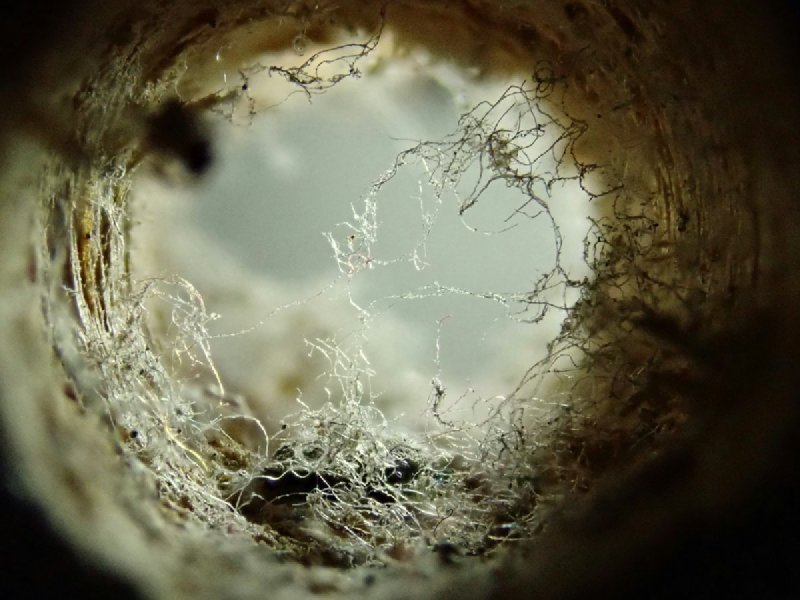
Roots are the most common reason homeowners search “sewer line repair near me.” A maple in the front yard finds the joint between two clay sections, sends a fine hairline of roots through, and inside three years the line is 60% blocked at that joint. The fix is a jet plus a robotic cutter, not excavation, as long as the pipe shape behind the roots is intact.
A hydro-jet uses 1,500 to 4,000 PSI of water through a rotating nozzle to scour the pipe wall, pulverize root mass, and strip out grease and scale. A separate cutter blade chews through anything the water can’t move. Total time on site is usually 2 to 4 hours. Recurring root issues are best treated annually or every other year, scheduled before the seasonal rains push them past 75% blockage.
What the jet doesn’t fix: the joint that let the roots in. If the camera shows a deteriorated joint feeding the root intrusion, plan on a CIPP point liner ($3,000 to $4,000) within 6 to 12 months of the jetting, or the roots return through the same opening every spring.
Hiring a sewer contractor: what “near me” should mean
Sewer work is one of the worst trades for pricing transparency. Two contractors looking at the same camera footage can quote $1,800 and $7,200 for what reads as the same job, and the gap usually isn’t quality. It’s how each shop loads mobilization, permit, restoration, and warranty into the line items.
What to insist on before you sign:
- Camera footage in your hands as part of the diagnosis, not after deposit. A contractor unwilling to share the recording is hiding either the diagnosis or the lack of one.
- Per-foot rate broken out from mobilization. A high mobilization minimum is normal on a small job; a high mobilization with no per-foot transparency is a flat-fee guess dressed up as a quote.
- Permit pulled by the contractor, not by you. Pulling the permit makes them the responsible party for code compliance. Homeowners pulling their own permit save $50 and inherit the liability.
- Warranty on the repair in writing. Typical installer warranties run 10 years on CIPP work and 1 to 2 years on couplings and connections. The resin itself is rated to ASTM F1216 for a 50-year design life, but the labor warranty is a separate document and the one that actually covers your repair. A contractor offering “lifetime” with no carve-out for misuse, root re-intrusion, or ground movement is selling marketing.
- License confirmed. A residential plumber’s license is required everywhere. Some states require an additional underground-utility or sewer-contractor endorsement for excavation past 5 ft of depth. Verify on the state licensing board’s website, not on the contractor’s marketing page.
- NASTT membership for trenchless work. The No-Dig trade group has a public member directory and certification track. Not a guarantee, but it correlates strongly with shops that train their crews on real equipment.
The “near me” angle of the search isn’t about distance. It’s about whether the shop has a real local presence: a yard with equipment in it, an address that isn’t a UPS box, and 5 to 10 years of permit pulls in your municipality. National lead-gen sites that route you to whoever paid the most for the click are the wrong starting point.
When the cheap quote is actually the right one
Not every $400 quote is a corner-cutter, and not every $4,000 quote is honest. A snake job for a soft clog should cost $200 to $400 and run for an hour. A scope-and-recommend visit should cost $250 to $500 and end with a real PDF report. Both are legitimate floors. What matters is that the scope of work matches the scope of the problem.
The bad pattern is the opposite case: a $2,500 quote for a “repair” with no scope ahead of time, no diagnosis on the invoice, and no warranty stated. That’s not a repair. That’s an excavation looking for something to charge for.
Frequently asked questions
Scope first, match the repair to the failure, demand transparent pricing, and replace instead of repair when the camera shows the underlying pipe is done.