A water heater installation in 2026 lands somewhere between $600 and $9,000 depending on what you put in. The tight spread is type-dependent: a like-for-like 40-gallon gas tank costs $600 to $3,100 installed per HomeGuide 2026 data , while a heat-pump (hybrid electric) unit hits $2,000 to $5,300 installed per the Rheem cost guide . A whole-home tankless gas runs $1,400 to $5,600 before any gas-line or venting upgrades. The single most common reason a project blows past the typical range is a fuel-type or tank-to-tankless conversion that triggers $400 to $2,500 in gas-line, vent, or electrical retrofit work.
This guide breaks install economics by type, the code items that fail inspections (IPC 607.3 expansion tanks, NEC 422.31 disconnects, California seismic strapping), heat-pump water heater (HPWH) site requirements, and the post-OBBBA tax credit reset. Brand-specific tankless repair detail (error codes, warranty terms, descaling) sits in the Rinnai and Navien tankless repair guide . This article covers install economics only.
What a water heater install costs in 2026
The numbers below come from HomeGuide’s 2026 water heater installation page and Angi’s 2026 replacement data , cross-checked against the Rheem heat-pump cost guide and the Energy Star residential water heater criteria .
| Type | Capacity | Unit | Labor | Total installed |
|---|---|---|---|---|
| Standard gas tank | 40 gal | $400–$1,200 | $200–$1,000 | $600–$3,000 |
| Standard gas tank | 50 gal | $450–$1,500 | $250–$1,000 | $700–$3,100 |
| Standard electric tank | 40–50 gal | $400–$900 | $200–$700 | $800–$2,000 |
| Tankless gas (whole-home) | 180–199k BTU | $1,000–$2,500 | $800–$3,000 | $1,400–$5,600 |
| Tankless electric (whole-home) | 24–36 kW | $700–$1,800 | $500–$1,500 | $1,500–$3,500 |
| Heat-pump (hybrid electric) | 50–80 gal | $1,000–$2,800 | $800–$2,500 | $2,000–$5,300 |
| Solar (active, with backup) | 80 gal | $2,000–$5,000 | $1,000–$3,500 | $3,000–$9,000 |
| Point-of-use electric | 2.5–7 gal | $200–$500 | $100–$300 | $300–$700 |
Notes on the spread. A like-for-like swap on a builder-grade 40-gallon gas tank in a market with cheap labor (Houston, Phoenix, parts of the Sun Belt) runs the low end. The high end of each range absorbs three things: a permit, code retrofits the previous install skipped, and difficult access (attic, crawlspace, second-floor closet that needs a pan and drain run).
What is not in the matrix and almost always shows up on the invoice:
- Expansion tank if your home has a PRV or backflow preventer: $100 to $300 installed.
- Seismic strapping kit in CA, OR, WA: included in install labor for replacements, $30 to $75 in parts.
- Sediment trap (drip leg) on a gas line: included in gas hookup labor.
- Old-unit haul-away: $0 to $200.
- Permit and inspection: $50 to $300, typical $100 to $150.
Tank install line items
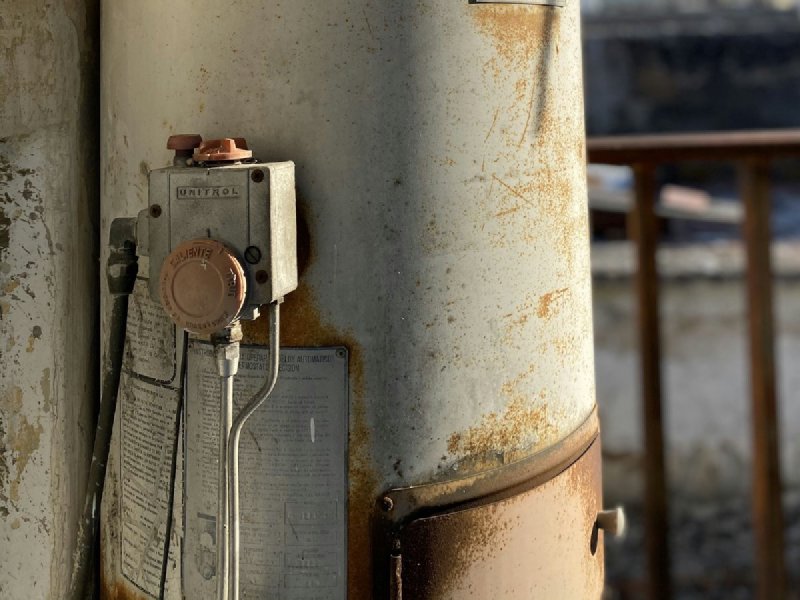
A standard storage tank install is the most predictable job in residential plumbing. Shut off, drain, disconnect, swap, reconnect, refill, light. The price spread comes down to access, the code retrofits a previous installer skipped, and whether the contractor itemizes or bundles.
A two-person crew lands a like-for-like gas-tank swap in 2 to 4 hours. Thirty minutes draining the old unit, 30 minutes for the swap itself, an hour on the gas reconnect with sediment trap and leak test, 30 minutes on water reconnect with dielectric unions, and the rest on T&P discharge piping plus the expansion tank if needed. Houston, Phoenix, and most of the South are bundled flat at $200 to $700; Bay Area and Northeast metros itemize at $125 to $200/hr and routinely cross $1,000 in labor on the same job.
IPC Section 607.3 requires a thermal expansion control device when the storage water heater is fed cold water through any check valve, pressure-reducing valve, or backflow preventer — any one of which creates a closed system. The expansion device installs on the cold supply downstream of those components. If your municipal supply runs through a PRV at the meter (most do, anywhere the street pressure exceeds 80 psi), the expansion tank is mandatory. The most common reason a $1,200 tank-replacement quote turns into a failed inspection: the installer skipped the $40 part. Re-inspection plus a return trip costs $200 to $400.
IPC 504/505 is unforgiving on T&P discharge. The temperature-and-pressure relief valve discharge tube must terminate to a floor drain, a pan, or an approved exterior location with no threaded end (fits a hose = code violation), no upward routing, and no reduction in pipe size. Inspectors fail this constantly when a previous installer routed it into a bucket or capped it.
Two dielectric unions ($40 to $120 in materials) belong on every reputable install. A copper-to-galvanized or copper-to-steel transition without a dielectric isolator is a galvanic corrosion site that pinholes within 5 to 8 years.
Tankless install line items

Tankless gas sits at $1,400 to $5,600 installed for a reason: same plumber labor as a tank, plus a gas-line evaluation, often a vent reconfiguration, and a manometer check at startup. The line items below come from the HomeGuide tankless 2026 page and contractor pricing carried from the Rinnai and Navien repair sibling cache .
Gas-line upsize
Whole-home tankless units dump 180,000 to 199,000 BTU/hr the instant a hot tap opens. That is roughly equivalent to firing two 80,000-BTU furnaces simultaneously off the same gas line. Half-inch black-iron sized for a 40,000-BTU storage tank does not survive the upgrade. Run alone the unit fires fine, but every cold morning when the furnace cycles in winter you get a code 11 ignition failure. Fix: 3/4" or 1" line back to the meter, $400 to $1,200 depending on routing.
Venting
Condensing tankless heaters vent through Schedule 40 PVC, CPVC, polypropylene listed to UL 1738 / ULC S636, or Category III/IV stainless. Most installs since 2018 use polypropylene because the major manufacturers shifted toward it for chemical resistance. Section replacement runs $200 to $500. Full re-pipe with a new wall or roof penetration costs $600 to $1,200. Concentric vent termination kits retail for $80 to $150 plus labor.
Condensate management
The condensing-tankless byproduct sits at pH 3 to 5, acidic enough to attack PVC drain stacks and cast iron over a decade. The condensate routes through a neutralizer ($60 to $150 part, $150 to $300 installed) before entering the drain stack. Skipping it is the same mistake high-efficiency furnace installs make, and the corrosion shows up at year 8 to 10.
Sizing
DOE specifies tankless minimum flow at 3.25 GPM and notes that a 70 °F temperature rise yields 5 GPM through a gas unit and 2 GPM through an electric one. A typical four-bedroom home with two simultaneous showers (1.8 GPM each) plus a dishwasher (1.5 GPM) needs 7 to 9 GPM at design rise. A 180,000 to 199,000 BTU gas tankless covers it; a 36 kW electric tankless covers it too on a 200A panel with the room to spare.
Heat-pump water heater install line items
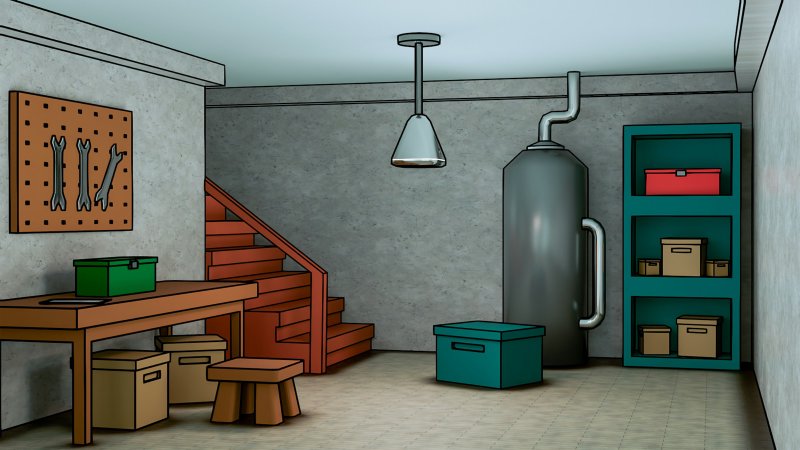
A hybrid heat-pump water heater (HPWH) takes a 40 to 50-gallon storage tank and adds a refrigerant compressor on top that pulls heat from surrounding air. The unit costs more than an electric tank but uses 70% to 75% less energy. The install economics differ from both tank and tankless on a handful of points worth pricing out separately.
Room volume
The DOE HPWH guidance calls for 1,000 cubic feet of conditioned air space around the unit. ENERGY STAR manufacturer guidance (per Rheem’s planning notes) drops that to 450 to 700 cubic feet if the room is louvered or ducted. Below 700 cu-ft you need a louvered door or full ducting kit ($300 to $600). The compressor pulls heat from ambient air, which means a closed mechanical room loses roughly 9 °F over a heating cycle. In a small basement utility closet, that drop is enough to push the unit into electric-resistance backup and kill the efficiency advantage.
Operating temperature
Standard HPWH spec is 40 to 120 °F ambient operating range, optimal 40 to 90 °F. Below 40 °F the unit kicks to resistance heat. The Rheem ProTerra widens the envelope to 37 to 145 °F and qualifies for the Northern Climate Spec Tier 4. An attached garage in Minneapolis hits 35 °F in January; an HPWH there runs on resistance for 4 to 5 months a year and gives back none of the savings. The ideal location is a conditioned basement at 60 to 70 °F.
Electrical
Standard models need a 240V/30A dedicated circuit. If the existing electric tank used a 240V/30A line, the swap is plug-and-play. Retrofits from gas to HPWH need a new circuit pulled from the panel — $300 to $800, more if a sub-panel or 200A panel upgrade is required (the heat-pump installation guide covers panel-upgrade economics on a similar pull). The Rheem ProTerra plug-in 120V/15A model side-steps this entirely on retrofits where a standard receptacle is within reach.
Condensate
The HPWH produces about 1 gallon of condensate per day in heavy use. The drain line routes to a floor drain (free) or a condensate pump ($100 to $200 installed). Unlike a condensing gas tankless, HPWH condensate is near-neutral pH, so no neutralizer is needed.
Specs that matter
ENERGY STAR HPWH minimum UEF is 3.30 for 240V integrated models and 2.20 for 120V/15A or split systems. The Rheem ProTerra 50-gallon hits UEF 4.07, the highest in residential class. Bradford White’s AeroTherm series targets cold-climate installations. Both carry a 6-year sealed-system warranty as the ENERGY STAR floor.
Code and permit checklist
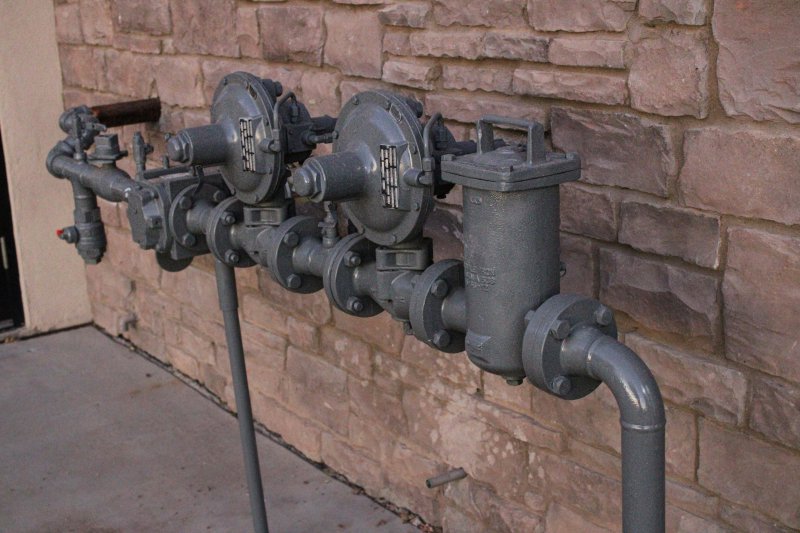
Every replacement triggers an inspection in nearly every jurisdiction. The items below fail inspections most often:
- Plumbing permit ($50 to $300, typical $100 to $150). Houston minimum $131 per the 2026 fee schedule; many CA cities $50 flat for water-heater-only.
- T&P discharge to floor or pan, no threaded end, no reduction, no upward routing (IPC 504/505).
- Expansion tank on cold supply if any closed-system trigger exists — a check valve at the meter, a PRV, or a backflow preventer (IPC 607.3).
- Seismic strapping in CA, OR, WA: two straps at upper third and lower third, third strap if tank > 52 gallons, ¼" × 3" lag bolts to studs (CA H&S §19211, CPC 507.2).
- Sediment trap (drip leg) on the gas line, 3" minimum nipple, vertical, downstream of the gas valve (IFGC 408.4).
- Manual gas shutoff within 6 ft of the appliance (IFGC 409.5).
- Pan and drain under any unit installed above a finished space.
- Disconnecting means within sight (≤ 50 ft, visible both directions) for electric units, or a lockable breaker (NEC 422.31).
- Dielectric unions at copper-to-galvanized transitions.
- Vent termination clearances: 12" from windows, 4 ft from forced-air intakes, 1 ft above ground (manufacturer + IFGC).
A separate gas permit is required in many jurisdictions when the gas line is modified, not when the install is a like-for-like reuse of the existing connection. Confirm at the permit counter, not on the install day.
Sizing: FHR for tank, GPM for tankless
Tank and HPWH sizing keys off First Hour Rating, the gallons of hot water the unit delivers in the first hour starting full. The DOE formula: tank capacity × 0.70 + recovery rate = FHR. A 40-gallon gas tank typically delivers 75 gal/hr FHR; a 40-gallon electric, 60 gal/hr; a 50-gallon gas, 70 to 80 gal/hr.
To pick the right size, sum your peak hour demand. The DOE worksheet example: 3 showers × 20 gal = 60 gal, plus dishwasher (6 gal) and laundry (7 gal) → 73 gal. Match FHR ≥ peak hour demand. A typical four-person household lands at 60 to 80 gal/hr, which a 40 or 50-gallon gas tank covers. Six-person households need 80-gallon. Ten gallons of capacity per fixture is a useful field-check rule when the FHR sticker is missing.
Tankless sizes off GPM at design temperature rise. Sum simultaneous fixture flows: a low-flow shower 1.8 GPM, a kitchen sink 1.5 GPM, a dishwasher 1.5 GPM. Two simultaneous showers plus a dishwasher in a Northern winter (incoming water 40 °F, output 110 °F = 70 °F rise) needs about 7 GPM. A 180,000-BTU Rinnai or Navien delivers it; a 199,000-BTU unit covers three simultaneous draws.
§25C history and the 2026 rebate landscape
The federal §25C Energy Efficient Home Improvement Credit paid up to $2,000 per year for qualifying heat-pump water heaters (the cap was shared with heat-pump space conditioning under §25C(d)(3)) and required ENERGY STAR-certified equipment in the CEE highest non-advanced tier. The credit was repealed under the One Big Beautiful Bill Act (Public Law 119-21, signed July 4 2025). Per the IRS guidance in FS-2025-05 , “the credit will not be allowed for any property placed in service after December 31, 2025.” Today the credit is gone for new HPWH installs.
What survived OBBBA: HEEHRA (Home Electrification and Appliance Rebates), a DOE state-administered, IRA-funded program. The HPWH rebate is $1,750 for in-unit installations, with the same amount per served unit on multifamily. Income tiers: under 80% AMI receives the full rebate, 80 to 150% AMI gets 50%, over 150% AMI receives nothing. California’s TECH-administered single-family HEEHRA hit fully reserved status statewide on Feb 24 2026, though multifamily continues. Other states (Mass Save, NY Clean Heat, Oregon Energy Trust, BayREN) layer utility programs on top — a household stacking BayREN + HEEHRA in a Bay Area Title 24 retrofit can land $3,000 to $5,000 in combined rebate. Check the IRA residential rebate page for current state status before committing to a unit.
The math without §25C: a Rheem ProTerra 50-gal at 4.07 UEF saves a typical electric-tank household about $400 to $550 per year at $0.16/kWh. Unit premium over a standard electric tank is $1,500 to $2,500. Payback before any rebate is 3 to 7 years; with HEEHRA $1,750 stacked, payback compresses to 1 to 4 years.
Repair vs replace at the cost-curve break
The 50% rule applies cleanly to water heaters. Tank gas/electric units last 8 to 12 years; if the repair quote exceeds half the cost of a new install, replace. Tankless units last 15 to 20+ years per the Energy.gov tankless guide , shifting the threshold further out. HPWHs split the difference at 10 to 15 years.
Four triggers tip toward replacement on a tank:
- Leak from the tank shell. A leaking jacket means the inner tank corroded through. No repair fixes it — the tank is the appliance.
- Repeated heating-element failures on electric. A second element burnout within 18 months on a 9+ year unit signals scale buildup that descaling won’t fully reverse.
- Age 10+ with a major part failure. A gas-valve replacement on a 12-year-old gas tank ($350 part, $200 labor) is throwing $550 at a unit with 1 to 2 years of remaining life.
- Insurance non-renewal on the polybutylene era. Some carriers will not renew on supply lines that include water-heater feeds older than 1995; pairing the heater swap with the whole-house repipe guide avoids paying for two visits.
Anode rod replacement at year 4 to 5 is the maintenance item that doubles tank lifespan. Most homeowners never check it; the rod corrodes to a wire by year 6 to 8, after which the tank itself starts sacrificing. A $30 anode swap at year 4 turns an 8-year-old tank into a 14-year-old tank.
Tankless repair-vs-replace runs on a different calculus. Heat-exchanger cracks plus stacked component failures plus warranty traps drive the decision. The Rinnai and Navien tankless repair guide covers the brand-specific call.
Related plumbing-cost reading
For projects adjacent to a water heater swap, see the whole-house repipe guide when aging galvanized supply lines need to come out at the same time, and the sewer line repair guide for the other end of the plumbing system. For the heat-pump-side conversation that overlaps HPWH (panel upgrades, cold-climate envelopes), the heat pump installation guide carries the electrical-side detail.