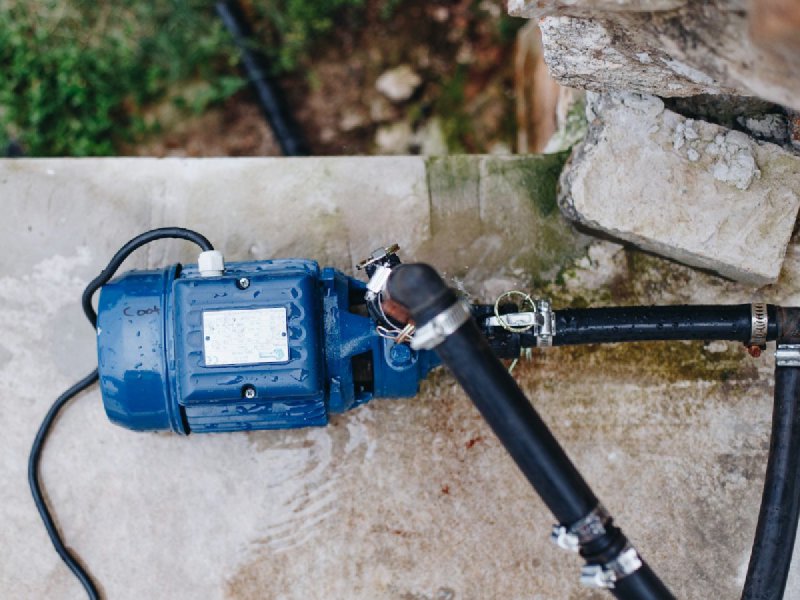
A well pump in 2026 costs $400 to $2,500 to replace on a typical residential job per HomeGuide’s 2026 well-pump cost data cross-checked against Angi’s 2026 replacement report . The spread is driven almost entirely by two things: pump type and well depth. A shallow-well jet pump on a 20-foot dug well lands at the bottom of the range, while a deep-well submersible on a 250-foot drilled well lands near the top. Wells past 300 feet plus rural sites that need fresh wiring back to the panel push the total toward $5,000 or higher.
Below: what each pump type costs by well depth, the pressure-switch and pressure-tank line items that get rolled into the invoice, HP sizing without burning the well dry, EPA testing cadence, NSF/ANSI 61 wetted-parts certification, and why a plumbing license alone does not cover well work in most states. General plumber pricing for non-well work lives in the plumber cost guide . Water heater install economics is a separate scope and sits in the water heater installation cost guide .
What a well pump costs in 2026
Pump-only pricing depends on type and depth. The numbers below come from the HomeGuide 2026 well-pump page and Angi’s 2026 well-pump replacement report , cross-checked against the HomeGuide pressure-tank guide and Angi’s pressure-switch troubleshooting page .
| Pump type | Best for | Unit | Labor | Total installed |
|---|---|---|---|---|
| Jet pump (shallow well) | Up to 25 ft | $150–$500 | $250–$500 | $400–$1,000 |
| Jet pump (deep / convertible) | 50–100 ft | $250–$700 | $250–$700 | $500–$1,400 |
| Submersible (standard) | 100–300 ft | $400–$1,500 | $400–$1,000 | $1,000–$2,500 |
| Submersible (deep / high-flow) | 300+ ft | $800–$3,500 | $700–$1,500 | $1,500–$5,000+ |
| Hand pump (backup / off-grid) | Any depth | $300–$2,000 | $0–$300 | $300–$2,300 |
A like-for-like swap on a working tank with serviceable wiring sits at the low end. The high end absorbs three factors at once — a deeper well needing longer drop pipe, a waterlogged pressure tank getting replaced on the same visit, and rural sites where the breaker panel sits 80 feet from the wellhead and the wiring run gets redone.
What is not in the matrix and frequently shows up on the invoice:
- Pressure switch: $20 to $50 part, $150 to $350 installed.
- Pressure tank (when the diaphragm has failed): $300 to $700 average; $800 to $1,500 with pro labor on a typical residential job.
- Drop pipe and wire (replaced when an old submersible is pulled): $2 to $4 per foot, plus torque-arrestors and a heat-shrink splice kit.
- Pitless adapter (yard frost-line connection): $40 to $120 part, included in install labor on most well-pro quotes.
- Permit and inspection in jurisdictions that require it: $50 to $300, varies by county.
Drilling cost is separate. A new 200-foot drilled well runs $30 to $80 per foot, or $6,000 to $16,000 turnkey with casing plus pump plus electrical plus permits all bundled, per HomeGuide’s 2026 well drilling page . Confusing pump replacement with new-well drilling is the most common pricing trap homeowners walk into when their old pump fails on day one of ownership.
Jet pump vs submersible: when each one wins
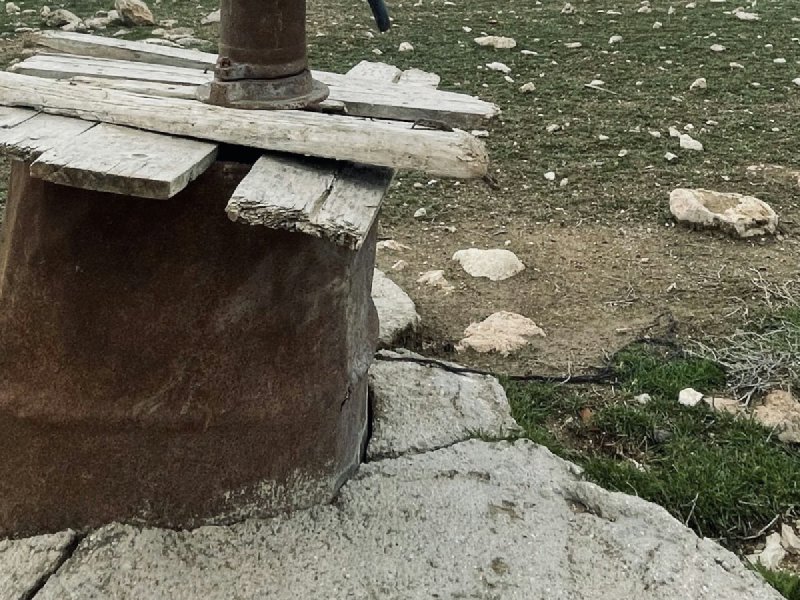
The pump type is fixed by the well, not by homeowner preference. Jet pumps work by suction from above ground; physics caps suction lift at about 25 feet at sea level. A single-pipe jet pumps a shallow dug well or a sandpoint. A two-pipe convertible jet adds a foot valve and a return line down the casing and reaches roughly 100 feet by recirculating water through a venturi. Past 100 feet, suction loses against head pressure and a submersible is the only practical option.
Submersibles drop into the well below the water table and push water up. There is no suction-lift ceiling because the motor sits below the water surface in its own cooling bath. The trade-offs:
- Jet pump above-ground pros: serviceable from the basement or pump house, no need to pull from the well for repairs, lower unit cost.
- Jet pump cons: noisy (centrifugal pump in a pressure-fed line), suction-limited to about 25 ft on a single-pipe rig, prone to losing prime if the foot valve weakens.
- Submersible pros: quieter because the motor sits 100+ feet down with water masking the noise, plus efficient at depth and longer-lived on average.
- Submersible cons: pulling one for repair means renting a hoist or paying a well-service truck $300 to $600 for the pull alone.
A failed submersible is the worst news on a residential well because both the diagnostic and the repair require pulling the pump. A failed jet pump is cheaper because it sits at chest height in the basement.
The pressure switch: cheapest fix in the catalog
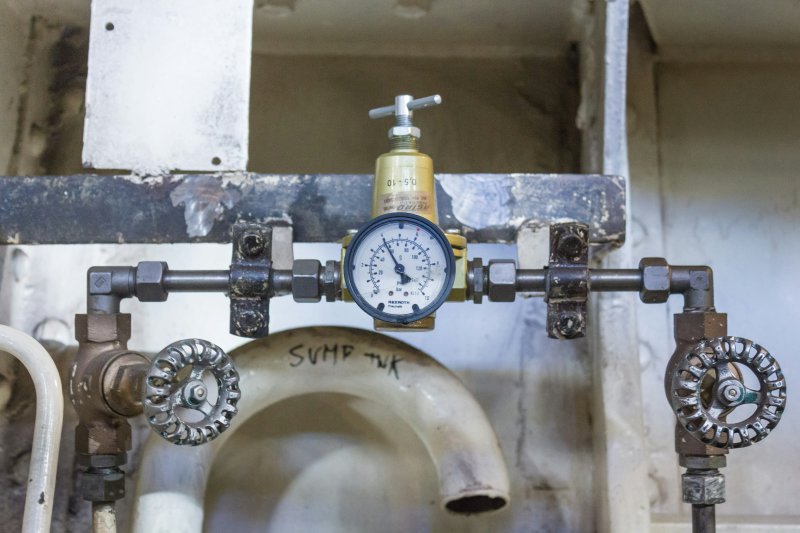
A well system runs on demand. The pressure switch reads tank pressure, closes the circuit when pressure drops to the cut-in setting (30 PSI on a 30/50 system, 40 PSI on a 40/60 system), and opens it again at the cut-out setting. Two failure modes dominate. The contacts pit and arc until the switch sticks closed, leaving the pump running constantly until it overheats or burns out. Or the diaphragm above the contacts loses sensitivity, which short-cycles the pump (turning on and off every few seconds) until it flogs the motor windings and overheats anyway.
Either failure looks like a dead pump from the homeowner’s side — but the fix is not a dead pump.
| Item | Cost |
|---|---|
| Pressure switch part (Square D, Schneider, Pumptec) | $20–$50 |
| Pro install labor (30–60 min) | $100–$200 |
| Service-call fee (if separate) | $50–$150 |
| Total typical | $150–$350 |
Most pressure tanks built before 2010 ship with a 30/50 PSI switch as the residential default. A 40/60 switch suits homes that need more pressure at upper-floor fixtures or run a sprinkler system off the well. Cut-in to cut-out spread is fixed at 20 PSI on a standard switch; wider spreads stress the pump and narrower spreads short-cycle. Adjusting either setting beyond the factory range without rebalancing tank pre-charge is the fastest way to ruin a working pressure tank.
When a homeowner reports the pump “running constantly” on a 5-year-old well, the cause is almost never a worn motor. It is a bad pressure switch, a saturated pressure tank, or a slow leak between the pump and the house that the homeowner has not noticed. A pro diagnoses the switch first because the test is 20 minutes of work and rules out the cheapest cause.
The pressure tank: sized by family, not by pump
The tank is a buffer. The pump fills it under pressure; household fixtures draw from it without cycling the pump for every flush. Without one, the pump kicks on for 10 seconds every time the toilet refills and the motor lasts 18 months. The tank stretches that into one pump cycle every couple of minutes (a 1-gallon-per-minute draw on a 40-gallon tank cycles roughly every 10 minutes), and the pump runs out the full 8 to 15 years it was rated for.
Cost depends on tank size and bladder type:
- 20–40 gallon diaphragm (1–2 occupants): $200 to $500 part, $300 to $700 installed.
- 40–60 gallon bladder (3–4 occupants): $300 to $800 part, $500 to $1,200 installed.
- 80+ gallon (large household, irrigation): $500 to $1,500 part, $800 to $1,800 installed.
- 120-gallon commercial-grade: up to $2,500 installed.
Rule of thumb: $10 to $15 per gallon for the tank itself, plus $125 to $200 in labor on a clean swap. A waterlogged tank ignored for years adds 30 to 60 minutes of labor because the bladder has often welded itself to the inside wall and the technician fights the drain.
A pre-charge check costs nothing and catches a failing tank before the pump shows symptoms. With the system off and the tank drained, the air pre-charge at the Schrader valve should read 2 PSI below the cut-in setting (28 PSI on a 30/50 system, 38 PSI on 40/60). A reading that drops 5 PSI in an hour means the diaphragm is split.
Sizing horsepower without burning the well dry
HP sizing rules from scwellservice’s 2026 sizing guide cross-checked against InspectAPedia’s pump-capacity reference :
| Well depth | Typical HP | GPM range |
|---|---|---|
| Under 100 ft | ½ HP | 8–10 |
| 100–200 ft | ¾ HP | 8–12 |
| 200–300 ft | 1 HP | 10–15 |
| 300–500 ft | 1½–2 HP | 12–20 |
| 500+ ft | 3+ HP | 15+ |
Two constraints set the HP, and homeowners get the second one wrong. Depth is the first — more head pressure means more horsepower to lift the same gallons per minute. The second is what the well can recharge. A 5-GPM well drilled into a marginal aquifer cannot feed a 20-GPM pump; the bigger pump pumps the well dry, the motor air-locks, the windings overheat. Oversizing is the most preventable failure mode in residential well systems and the one warranty disputes hinge on most.
The driller’s original well-yield report specifies the recharge rate at a given depth. If that report is missing (common on properties more than 30 years old), a pump-service company can run a recovery test for $200 to $400 before sizing the new pump. Skipping the test and guessing big is how a $2,000 install becomes a $4,500 pump-then-repump install eight months later. A typical three-bedroom home with two showers running plus an active dishwasher needs 10 to 12 GPM at 50 PSI for normal pressure at every fixture, which lands a ¾ HP pump on most 100- to 200-foot wells.
What kills a well pump early
Submersibles are rated for 8 to 15 years, jet pumps 7 to 12, per scwellservice’s lifespan data . Pumps that hit the low end of those ranges almost always fail from one of five causes:
- Sand and sediment. Abrasive solids grind the impeller, score the seal, erode the volute. A 5-micron sediment filter at the wellhead plus a sand separator on high-sediment wells are the standard mitigations.
- Frequent on/off cycling. Usually caused by a waterlogged pressure tank or a wrong-spread pressure switch. Each start pulls 4 to 6 times running current through the motor windings; cycling every 30 seconds for a year racks up the thermal stress of a decade of normal use.
- Lightning. A direct or near-strike spikes voltage on the buried wire run. Rural panels with no surge protection are exposed. A $100 to $200 surge arrestor at the panel plus a Pumptec or Pumpsaver low-voltage relay at the pressure switch protect the windings.
- Low-water dry-running. Air-locks the motor, eliminates the cooling water bath, cooks the windings in minutes. A low-water cutoff relay shuts the pump down before damage.
- Acidic or corrosive water. Well water with pH below 6.5 attacks brass and copper pump components. NSF/ANSI 61 certified wetted parts give some margin, but a neutralizer tank is the long-term fix.
Replace rather than rebuild when the pump is past 15 years, has failed twice in the last 18 months, or when the rebuild estimate exceeds 50% of new-pump replacement. The 50% rule applies cleanly to jet pumps because they are accessible. On submersibles, factor in the $300 to $600 pull-and-reinstall cost on both sides of the math; at that point a full replacement almost always wins.
EPA testing, NSF/ANSI 61, and what the well needs every year

A private well sits outside the federal Safe Drinking Water Act. Testing is the homeowner’s responsibility, and no compliance authority will catch a contaminated well before someone gets sick. The EPA private-well guidance sets the cadence:
- Annually: total coliform bacteria, nitrates, total dissolved solids, plus pH.
- Every three years: radionuclides (radon, uranium, gross alpha) on wells in geology with documented exposure.
- Immediately: after flooding, after any nearby fuel or pesticide spill, after any system component gets replaced, or whenever the water turns funky in any way.
- As-needed: lead and copper if the home pre-dates 1986, plus arsenic and pesticides on agricultural-area wells.
Use a state-certified drinking-water lab, not a DIY strip kit. Many local health departments provide free or subsidized test kits; one phone call before paying $150 for a private lab test is worth it.
NSF/ANSI/CAN 61 is the relevant certification for components that touch drinking water: pump bowls, drop-pipe, pitless adapter, pressure tank bladder, and the pressure switch’s wetted contacts. The standard caps how much lead and other regulated contaminants can leach from those materials. Pumps marketed for residential potable supply almost always carry the cert. Pumps marketed for irrigation or pond circulation frequently skip it. Match the cert to the use case: running a non-NSF irrigation pump on a household supply is a slow-leach problem that does not show up until annual testing flags lead 10 years later.
State licensing: well-driller is not plumber
Plumbers who hold a state plumbing license are not automatically authorized to work on water wells. Most states with mandatory licensure split the work into separate well-drilling, pump-installer, and general-plumbing credentials, with their own exams and insurance carriers.
- Texas: the Texas Department of Licensing and Regulation runs the Water Well Drillers and Pump Installers program . Two licenses are issued (Driller and Pump Installer), both requiring 2 years of supervised experience plus a state exam. The Texas Water Development Board’s Submitted Driller Reports database makes every drilled well in the state public record.
- California: well-drilling contractors hold a CSLB C-57 specialty license; well construction follows DWR Bulletin 74-81 / 74-90 standards. The plumbing C-36 license is separate and does not authorize well work.
- Florida: the Florida DEP licenses Water Well Contractors under Chapter 62-531 F.A.C., regulated through five district offices. Florida plumbing contractors are licensed separately under DBPR.
- NGWA Certified Contractor is a voluntary national credential layered on top of the state license. The NGWA contractor lookup is a useful national verification check above and beyond the state portal.
Verifying a quote means asking for the well-pump installer license number — and looking it up on the state portal before any work starts. A plumber working on a well pump in Texas or California without the well credential is not insured for the work, will not pull a permit, and leaves the homeowner exposed if the pump fails or the casing is damaged. The license check takes 90 seconds and forecloses the most expensive scam vector in the trade.
When the call is the wrong call
Three scopes get mistakenly handed to general plumbers when they should go to specialists, and one belongs with the county for free.
A failed pump on a 30-year-old drilled well is a well-pump-installer call. The specialist has the hoist, the pull truck, plus the wire-splicing kit and well credential. Calling a general plumber wastes the dispatch fee on someone whose insurance does not cover the work.
Slab leaks in the supply line between the wellhead and the house manifest as low pressure plus constant pump cycling that mimics a bad pressure switch. The diagnosis requires acoustic and thermal detection equipment most general plumbers do not carry. Repair paths and per-foot pricing live in the slab leak repair guide .
Nuisance odors at the tap (sulfur, iron, manganese) are a water-treatment problem, not a pump problem. The chemistry needs a softener or a neutralizer; replacing the pump on a sulfur smell solves nothing and costs $2,000.
Contamination events get bumped to the county. Visible turbidity after a flood, a fuel smell, or a positive coliform test all call the local health department first. The department can pull a sample and advise on shock-chlorination; in some states it will fund the lab work too. The pump-disinfection job that follows the test runs $150 to $400 and any well-pump installer can deliver it.
General-plumber pricing on non-well jobs lives in the plumber cost guide . Water heater install economics sits in the water heater installation cost guide , which covers tank and tankless and heat-pump pricing plus the IPC 607.3 expansion-tank rule that catches inspectors. Brand-specific tankless repair pricing on Rinnai and Navien is handled in the tankless water heater repair guide .