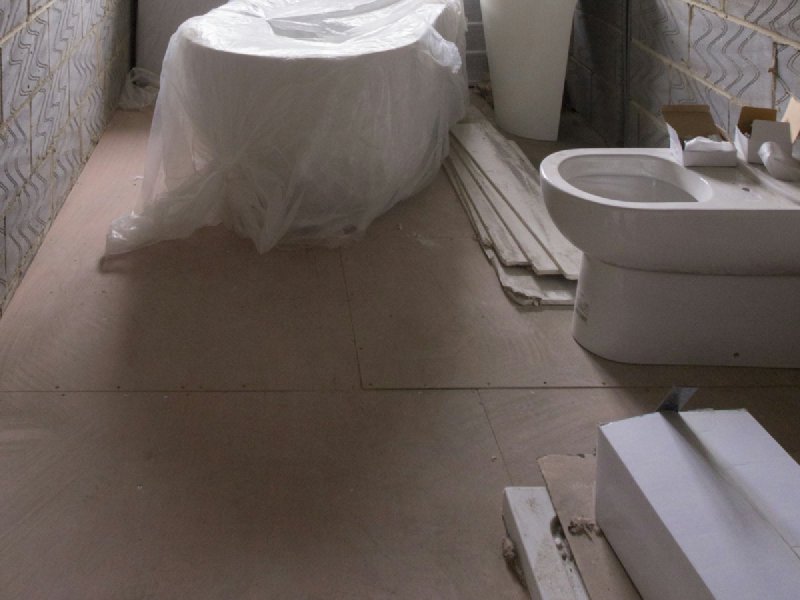
A bathroom remodel costs $3,000 to $8,000 for a cosmetic refresh, $15,000 to $30,000 for a mid-range full remodel, $35,000 to $80,000 for a high-end gut, and $80,000 to $200,000+ for a luxury spa build. The widely-quoted $12,000 national average reflects a heavy mix of small bathrooms and surface-level updates. Most homeowners hiring a contractor for a real primary bath remodel land between $20,000 and $45,000 once the new fan plus the layout tweak plus the waterproofing are priced honestly.
The numbers below come from current 2026 contractor pricing (HomeAdvisor, Angi, This Old House, Homewyse), JLC’s 2025 Cost vs Value Report, NKBA spending guidelines, the IRC plumbing and TCNA waterproofing standards that govern legal work, and the contract structures that separate a real fixed price from an open-ended bet. Skim the tier table, read the section on layout-change costs, and pay attention to the contract structure section. Those three decide whether your number holds.
For shower-only or tub-to-shower conversions, see the bathroom shower conversions cost guide . That’s a narrower scope with different math.
What each tier buys
The tier you pick before calling contractors decides almost every other number on the bid. Walking in without one is how homeowners get quotes that look randomly distributed.
| Tier | Typical Cost | What’s included | Layout change |
|---|---|---|---|
| Cosmetic refresh | $3,000–$8,000 | Paint, new vanity in same spot, faucet, mirror, lighting swap, retile floor | None |
| Mid-range full | $15,000–$30,000 | New vanity, tub, tile tub surround, tile floor, lighting, fan, all fixtures | None or minor |
| High-end gut | $35,000–$80,000 | Full demo, custom tile shower, freestanding tub, layout shift, new electrical and plumbing rough | Yes, often |
| Luxury spa | $80,000–$200,000+ | Heated floors, steam shower, double vanity, designer tile, frameless glass, smart toilet | Yes |
NKBA’s spending guideline is 5 to 10 percent of home value for a primary bath, and 3 to 5 percent for a secondary. On a $500,000 home, that’s $25,000 to $50,000 for the primary. Houzz’s 2024 study put the median spend at $13,000 across all bathroom renovations and $22,000 for major primary bath remodels, with bathrooms over 100 sq ft pushing to a $25,000 median. Per square foot, mid-range work runs $180 to $280/sf and luxury crosses $500/sf in coastal metros (San Francisco and the New York / Seattle markets).
Two scope variables drive almost the entire spread within a tier: whether plumbing moves, and whether anything gets opened past the studs. A surface remodel that keeps the existing toilet, tub, vanity, and shower drains in their current locations holds the budget down because the plumber bills two days instead of two weeks. Move the toilet across the room and the same cosmetic finish package ends up in a different tier.
Fixture and finish ranges
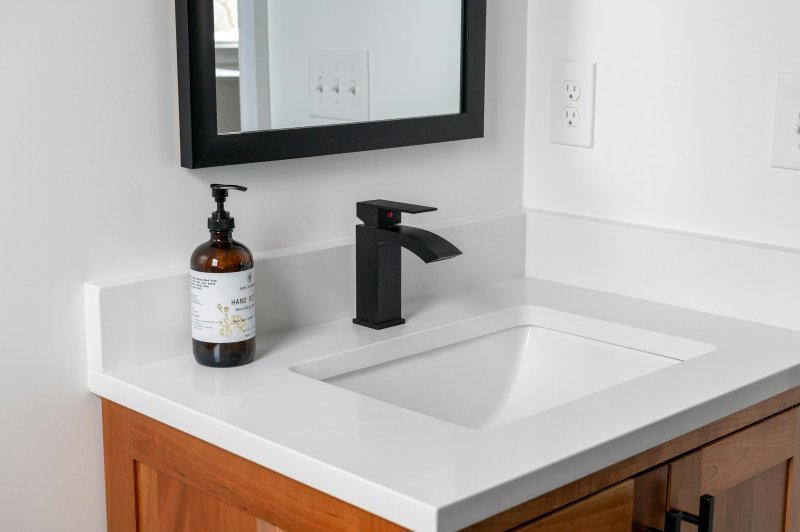
Most of the budget conversation between you and your contractor will land on these line items. Knowing the spread up front lets you push back on lowball allowances.
| Item | Budget | Mid-range | High-end |
|---|---|---|---|
| Vanity (cabinet + top) | $200–$800 | $800–$2,500 | $2,500–$5,000+ |
| Vanity install | $200–$1,000 | — | — |
| Tub (alcove drop-in) | $300–$900 | $900–$2,000 | — |
| Freestanding tub installed | — | $4,000–$6,000 | $6,000–$10,000 |
| Custom tile shower (built) | — | $3,500–$8,000 | $8,000–$15,000 |
| Toilet | $200–$500 | $500–$900 | $900–$1,500 |
| Faucet (lav or tub) | $50–$150 | $150–$350 | $350–$500+ |
| Tile (material) | $1–$5/sf | $5–$12/sf | $12–$25/sf |
| Tile install (labor) | — | $17–$22/sf | $24–$30/sf |
| Backerboard install | $5–$6/sf | — | — |
| Waterproof membrane | $1–$2/sf | — | — |
| Lighting (per fixture) | $40–$150 | $150–$400 | $400–$1,000 |
| Exhaust fan (unit) | $50–$150 | $150–$300 | $300–$400 |
Sources: Angi 2026 vanity install data, Homewyse January 2026 ceramic tile install ($17.22–$21.37/sf) and bathtub tile install ($23.78–$30.51/sf), HomeAdvisor 2026 fixture ranges. The vanity range in particular widens with countertop choice: a stone slab adds $7 to $20 per sf for material and $13 to $28 for install, often doubling the vanity total on a six-foot double sink.
When a contractor’s bid hands you an allowance number well below the mid-range column above (a $400 vanity on a $30,000 mid-range remodel, for example), that’s a change-order trap dressed up as a value engineering decision. The math always plays out the same way. You select an actual mid-grade vanity at the showroom, the price comes back at $1,800, the change order arrives for the $1,400 difference plus 15 percent contractor markup, and the contract total grows by $1,610 on a single line. Push every allowance to a realistic number before signing, not after.
Layout-change costs (where bids diverge)
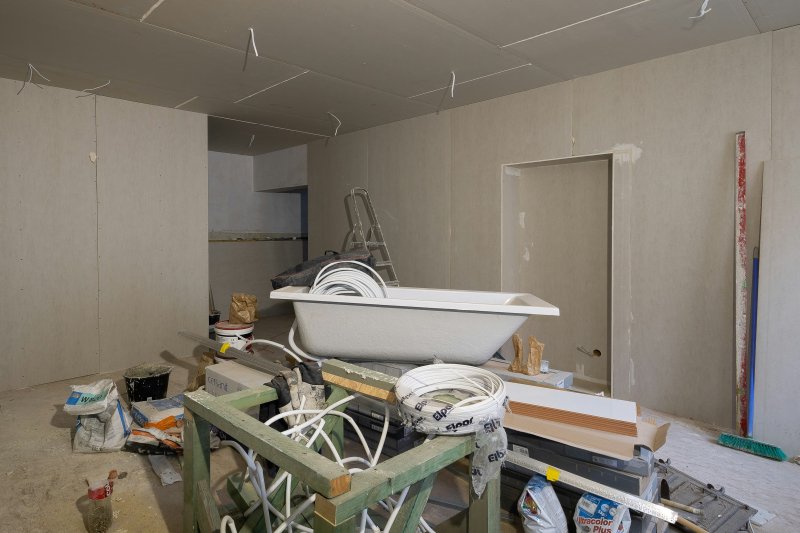
Moving plumbing is what turns a mid-range bid into a high-end one. Per Homewyse’s January 2026 data and corroborated by national contractor pricing, moving a single plumbing fixture runs $500 to $3,500 depending on distance, slab vs joist construction, and whether the drain has to come out from under concrete.
The numbers stack like this on a typical layout shift:
- Toilet relocation across the room: $1,500–$3,500. Slab homes higher; joist construction with attic access lower.
- Sink relocation (vanity wall to opposite wall): $700–$1,800.
- Tub-to-shower swap with drain shift: $1,200–$2,500 for the drain alone, plus the new shower build.
- Adding a secondary vent stack: $1,500–$3,500 because it cuts framing and roof to reach exterior.
- Removing a non-load-bearing wall: $1,000–$3,000.
- Removing a load-bearing wall: $4,000–$10,000+ with engineer-stamped beam calc.
- New window or moving an existing one: $1,500–$4,500.
- Adding a circuit or relocating a panel feed: $400–$1,500 per circuit.
- Replacing or adding an exhaust fan with new ducting to exterior: $400–$1,200.
The vent rule that gets missed: per IRC Table P3105.1 , a 1½-inch trap arm can be no more than about six feet from its vent. Move a shower drain more than 30 inches from the original location and you usually have to bring the vent along, which means opening drywall in another room or running a new stack to the roof. That’s the line that turns a casual “shift the shower a couple feet” idea into a $2,500 surprise.
Hiring: GC, design-build, or franchise

Three contractor types compete for bathroom remodel work, and the right one depends on scope and budget.
A general contractor builds against plans you supply. You hire a kitchen-and-bath designer or architect separately for $1,500 to $5,000, the GC bids off finished drawings, and you live with whatever coordination friction shows up between the two. Cheapest of the three structures by 5–15% on a mid-range project. Best when you have time to manage the design-to-construction handoff yourself.
The design-build firm carries design plus project management plus construction under a single contract. In-house designers, in-house PMs, subcontracted trades. Premium of 5–15% over design-bid-build for the same scope. The premium buys a single point of accountability when a tile order shows up in the wrong color or a fixture allowance overruns. Best for high-end and luxury tiers where coordination complexity rises faster than you can manage.
A bath specialty franchise (Re-Bath, Bath Fitter, Jacuzzi Bath Remodel) sells one-day acrylic shells over existing tubs and showers. Real product, real warranty, but it’s a cosmetic overlay, not a full remodel. If your scope is “make this bathroom look new without moving anything,” they’re competitive. If your scope includes a layout change or any plumbing move or new tile work, they’re not the right tool.
Handyman work doesn’t substitute for any of the three above on a real bath remodel. California’s CSLB caps unlicensed handyman work at $500 in combined labor plus materials per project; most other states cap at $1,000 to $3,000. A bathroom remodel exceeds those caps before the demo dumpster shows up, so any handyman taking the job is operating outside their license. That means no permit, no insurance coverage, no recourse if waterproofing fails three years in.
What to verify before signing with any of the three legitimate types:
- License number active and in good standing on the state contractor board (the CSLB in California, the Department of Labor and Industries in Washington, the DBPR in Florida).
- $1M general liability insurance plus current workers’ comp, listed on an Acord certificate naming your project address.
- References on three completed bathroom remodels of similar scope. Visit one if possible.
- Written change-order policy. Every scope shift documented and priced before work proceeds.
- Pulls permits in their name, not yours. A contractor asking you to pull the permit is asking you to take liability for their work.
Three written bids on identical itemized scope is the floor. If two come in within 10 percent of each other and the third is 30 percent lower, the cheap bid is missing scope. Usually that’s waterproofing, the fan upgrade, or a realistic fixture allowance.
Waterproofing and ventilation standards
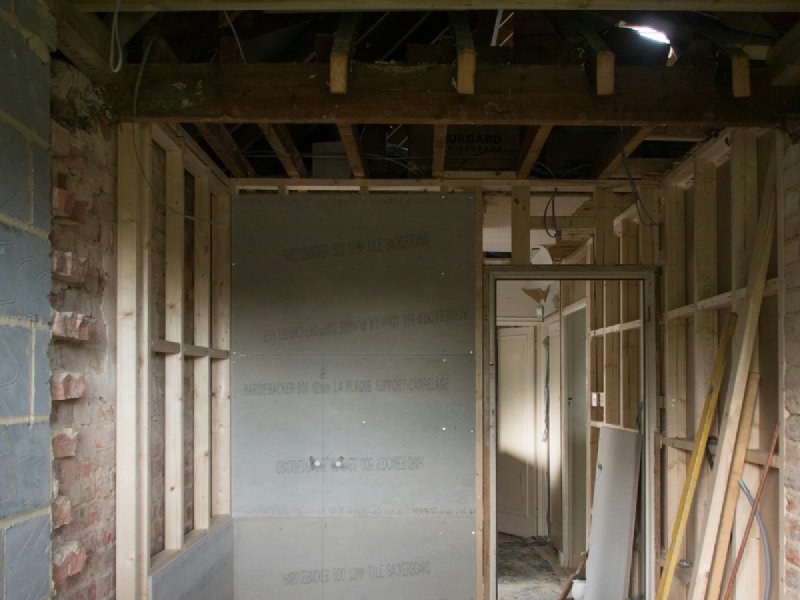
Two technical standards govern whether your finished bathroom is durable and code-legal. Cheap contractors skip both, and the failures show up in years three through seven.
Waterproofing under tile. ANSI A118.10 is the bonded-waterproof-membrane spec for showers. Compliant products withstand 14.3 PSI (330 feet of water pressure), bridge substrate cracks up to 1/8 inch, and hold up from -20°F to 180°F. The three systems any competent tile contractor knows: Schluter-KERDI (8-mil bonded sheet membrane), Laticrete Hydroban (liquid roller-applied), and RedGard (liquid roller, fabric reinforced). All three meet A118.10. The TCNA Handbook spells out the assemblies in methods B414 through B421 (the latter for curbless). A bid that says “cement board and silicone” without naming a membrane product is the bid to walk away from. Tile installed over greenboard or drywall (the standard practice in 1980s and 90s bathrooms) fails behind the wall in five to ten years and turns into a $5,000 to $15,000 mold remediation.
Ventilation. ASHRAE 62.2 requires bathroom local exhaust at 50 CFM minimum for intermittent (demand-switched) operation or 20 CFM minimum for continuous operation. The IRC adds a sound limit of 3 sones or quieter for intermittent fans, dropping to 1 sone or quieter for continuous operation. The common rule of thumb beyond the minimum is 1 CFM per square foot of bathroom floor area, with 50 CFM as the floor regardless of size. A bath bigger than 100 sq ft, or one with a separate water closet, often needs two fans or a higher-CFM unit (80–110 CFM is typical on a luxury master bath).
Hidden-cost flags that signal a contractor is cutting waterproofing or ventilation:
- Tile going up over drywall or greenboard with no membrane.
- No vapor barrier on the warm side of cement board on an exterior wall.
- Niches built without waterproofing membrane wrapping the back and sides.
- No pre-slope under a traditional shower pan liner (water pools and rots the framing).
- Existing fan undersized at 30–40 CFM and being reused on a new tile shower.
- Old non-pressure-balanced shower valve being reused (IRC P2708.4 requires ASSE 1016 compliance on new installs).
- No GFCI on bathroom outlets (NEC 210.8(A)).
Each of those is a code or standards violation and a future repair bill. None of them are visible after the drywall closes up.
Contract structure and progress payments
The contract is where money changes hands, and three clauses determine whether your number holds.
A residential bath remodel runs on a 10/25/25/25/15 progress schedule: 10 percent deposit at signing, 25 percent at rough-in inspection, 25 percent at drywall and waterproofing inspection, 25 percent at fixture set, and the final 15 percent at punch-list completion. California’s CSLB caps the deposit at $1,000 or 10 percent of the contract, whichever is less. Many other states have similar limits. A contractor asking for 30 to 50 percent up front is funding their last job with your money. When that last job blows up, so does yours.
Watch the allowances. An allowance is a dollar placeholder for an item the homeowner picks later (tile, fixtures, lighting, mirror). A hard line item is a fixed price for a specified product. Realistic allowances make the bid honest; lowball allowances make it a marketing number. If the bid lists a $400 tile allowance for an 80-sq-ft tub surround, that’s $5/sf for a job where mid-range tile starts at $5–12/sf material plus $17–22/sf install. Push every allowance to the realistic mid-range column from the fixture table above before signing.
Every change order must be written and signed before the work proceeds. A contract that allows verbal approvals or leaves change-order pricing open-ended is a blank check from you to the contractor. A change-order example done right: “Homeowner requests adding a heated floor mat in the main bath. Material $480, labor $620, electrical permit amendment $85. Total change-order: $1,185. Schedule impact: 2 days. Signed //__ by both parties.”
Lien waivers are the last layer. At each progress payment, the GC plus any subcontractors paid through them sign a conditional or unconditional lien waiver releasing their right to file a mechanics’ lien against your property for that payment period. Without lien waivers, a paid subcontractor whose check from the GC bounced can file a lien on your house, and you’re paying twice.
ROI and the 70% rule
Mid-range bath remodels recover most of their cost at resale. JLC’s 2025 Cost vs Value Report puts midrange bath remodel at $25,251 average cost and $18,613 added resale value, a 73.7% recoup. Upscale bath remodels run about $80,000 cost with 55–60% recoup; the buyer pool willing to pay for $5,000 freestanding tubs and frameless glass enclosures shrinks fast above the neighborhood’s mid-grade comp ceiling.
The 70% rule from house flipping translates to remodel decisions cleanly: don’t spend more than 70 percent of the comp delta between your home and the next-tier comp in the neighborhood. If your home would sell for $400,000 in current condition and the next-tier comp in your zip is $450,000, the comp delta is $50,000 and the recoupable budget is about $35,000. Spend $60,000 on a luxury bath in that house and you’ve added $35,000 of value at most; the remaining $25,000 is lifestyle spend. That’s fine if you’re staying ten years. It’s expensive if you’re selling in three.
The compensating data point: NAR’s Remodeling Impact Report consistently shows bath remodels with owner Joy Scores of 9.5+/10, the highest-rated discretionary remodel category, ahead of kitchens. Most homeowners do not regret a mid-range bath remodel even when the dollars don’t fully recoup at resale.
What to do next
Four steps in order:
- Walk your bathroom and write a one-page scope: which tier, what stays, what moves, what gets gutted. Vague scopes get vague bids.
- Pull comps in your zip for homes in your size range. Find the next-tier comp price. Multiply the delta by 0.7. That’s your recoupable ceiling. Anything above is lifestyle.
- Get three written, fixed-price bids on identical itemized scope. Push all allowances to realistic mid-range numbers before signing.
- For any layout change, get a plumber to walk the bathroom before the contractor finalizes the bid. A 30-minute plumber consult ($150–$300) often catches a vent-stack problem that would have arrived as a $2,500 change order in week three.
If your scope is shower-only or a tub-to-shower swap, the bathroom shower conversions guide covers that lane in detail. If you’re considering an addition that includes a new bathroom rather than remodeling an existing one, the home addition contractors guide covers per-square-foot ranges and the structural-engineering steps that come with new square footage.