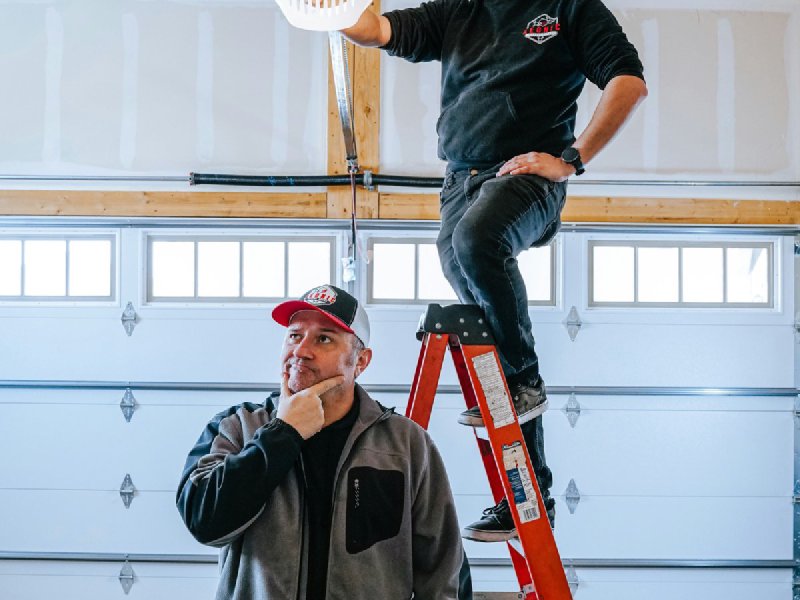
A broken garage door cable runs $150 to $300 for both cables installed, or $100 to $200 if you only replace one. The catch: cable failure almost never travels alone. If a torsion spring let go in the same incident, which is the most common cause, you’re looking at $250 to $550 for cable plus spring plus a re-balance in a single service call — the lower end is one cable and one spring on a single-spring door; the upper covers both cables plus one new spring. Replacing both cables and both springs at the same visit — the standard quote on a two-spring or high-use door — runs $400 to $700.
The numbers below cover what each piece actually costs in 2026, why “replace one cable” is almost always the wrong answer, and where the after-hours and emergency premiums are genuine versus where they’re padding.
What you’re actually paying for
The cable itself is a $10–$20 piece of galvanized aircraft cable. The cost is overwhelmingly labor and the spring system that has to be unwound and rewound to free the drum. A typical service call breaks down like this:
| Line item | Typical 2026 cost | Notes |
|---|---|---|
| Service call / trip fee | $50–$95 | Usually rolled into total if work is performed |
| Hourly labor | $75–$150 / hour | National range; metros run $125–$175 |
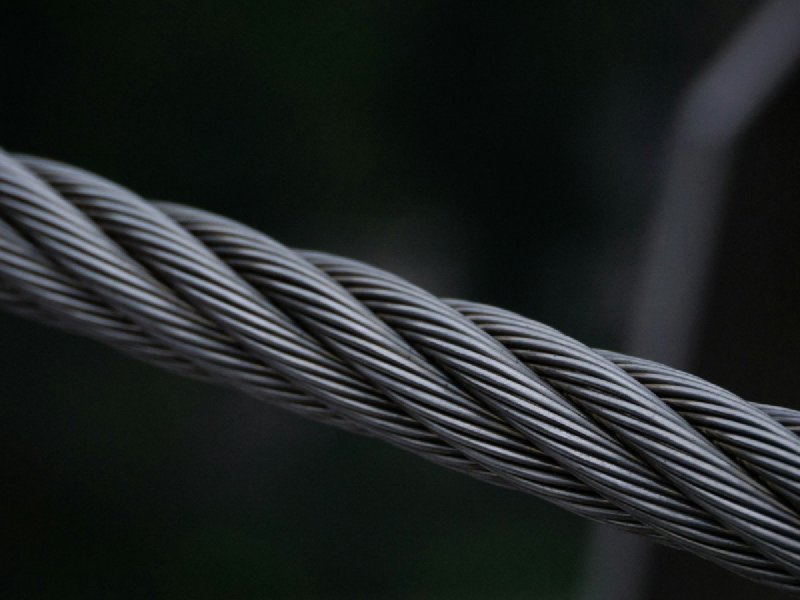
| Single cable, parts | $10–$20 | Galvanized 7x19 aircraft cable, ends swaged |
| Both cables, parts | $20–$40 | Sold as matched pair |
| Single cable installed total | $100–$200 | One service call, 30–45 min on-site |
| Both cables installed total | $150–$300 | Same trip; the second cable adds 10–15 min |
| Add: torsion spring (single) | $150–$350 | Spring + winding + balance test |
| Add: torsion springs (pair) | $200–$400 | Industry default if either has snapped |
| Combined cable + single spring | $250–$450 | Single-car garage; one cable, one spring |
| Combined cables + both springs | $400–$700 | Full-door reset on a high-use door |
| After-hours / weekend surcharge | $50–$150 | Most shops; some 2× hourly rate |
Two numbers homeowners get blindsided by. First, the service call fee usually disappears once any work is performed, so refusing the cable repair after the truck arrives still costs the trip fee, often $75–$95. Second, the “two-spring system” surcharge: a double-wide garage door has heavier springs and slightly heavier cables that cost $15–$30 more per spring than a single-car door. That’s not an upsell; it’s the actual hardware difference.
Why one broken cable means two cable replacements
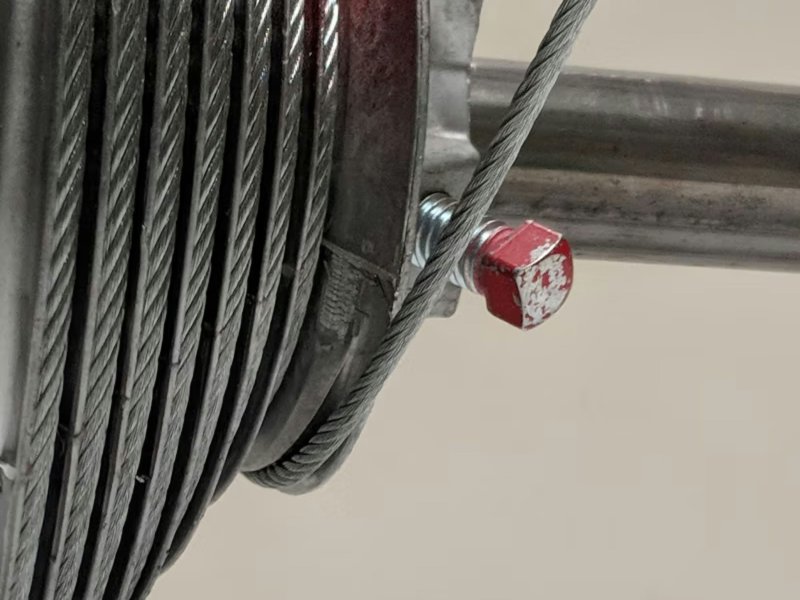
Both cables on a torsion-spring door were installed the same day, run at identical tension, and accumulate the same number of cycles. When the first one frays through, the second is statistically days to weeks behind it on the same wear curve. Replacing only the failed cable means scheduling another service call for the survivor — another $50–$95 trip fee plus labor, another half hour on the schedule.
The math: the second cable costs roughly $10–$20 in parts and adds about 15 minutes of labor on a tech who’s already on site. Even at a flat-rate shop, the upsell from “one cable” to “both cables” is usually $50–$75. Skipping it to save that $50 sets you up to spend a full second service call within the year. Reputable shops quote both as the default and explain why; shops that quote just the broken cable without explanation are usually trying to win the price comparison and will be back.
There is one legitimate exception: if both cables are visibly new (recently replaced under warranty) and only one was nicked during a recent service, swapping just the damaged one is reasonable. Otherwise, replace the pair.
When the spring went too
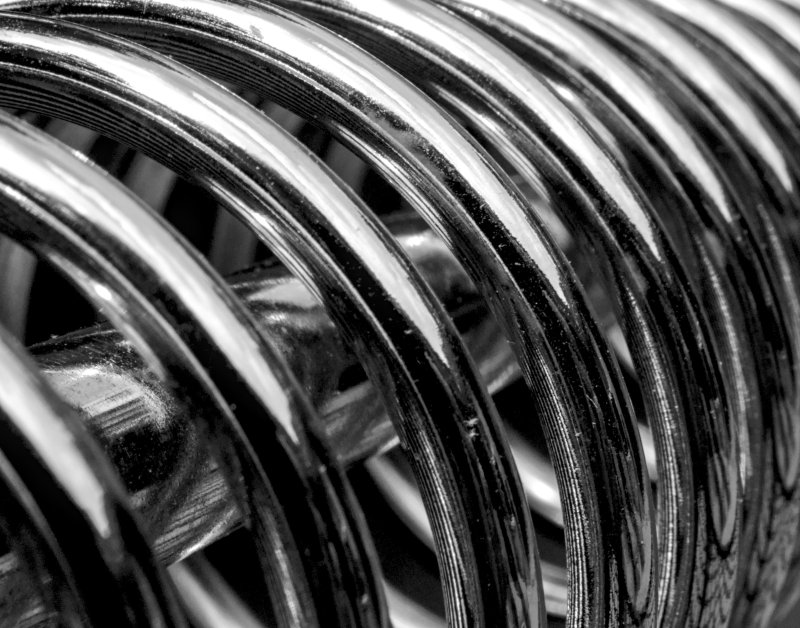
The single most common 2 a.m. garage door call is a torsion spring snapping and taking a cable off its drum on the way down. The spring releases stored energy in roughly a tenth of a second; the door slams to a stop where the safety mechanism catches it; and the cable, suddenly slack, jumps off the drum and frays.
If the door now refuses to lift and you can hear or see a broken spring above the door, you have a combined repair on your hands. The economics:
- Single cable + single torsion spring: $250–$450 installed. Common on a single-car garage where only one spring exists.
- Both cables + one new torsion spring (surviving spring left in place): $300–$550. The cheaper option, but only sensible if both springs are under 4 years old.
- Both cables + both torsion springs: $400–$700. The standard quote on a two-spring door, and the right one to take. Replacing a 9-year-old surviving spring while the door is already disassembled costs an extra $100–$150 in parts; deferring that work means paying another full service call when the second spring snaps next year.
- Cable + spring on a one-piece tilt-up or extension-spring door: $200–$450. Older doors, simpler hardware, but parts can be harder to source.
A practical test: ask the tech to lift the door manually after the new spring is wound. A correctly balanced door should hold halfway open with no opener engaged. If it slams shut or floats up, the spring tension is wrong and the cables will fray prematurely. This is a 30-second check that separates competent shops from production crews.
After-hours, weekends, and what the premium buys
Same-day, after-hours, and weekend service charges are real in this trade. Garage door techs run small fleets, and dispatching a truck to your driveway at 9 p.m. takes someone off the next morning’s schedule. Typical premiums:
- Same-day service (call before noon, on-site by evening): $0–$50 over standard rate
- After-hours weekday (evenings before 9 p.m.): $50–$75 surcharge
- Weekend service (Saturday or Sunday): $75–$100 surcharge
- Emergency / overnight (door stuck open, car trapped): $100–$150 surcharge or 1.5–2× hourly rate
The honest question: does the door have to be fixed tonight? If the door is stuck closed and the car is in the driveway, schedule for next morning and save $50–$150. If the door is stuck open and the contents of the garage are exposed, or if the car is trapped and you have a 6 a.m. flight, the emergency rate is paying for itself. A reputable shop will tell you on the phone whether the situation is genuinely an emergency.
Two scams to refuse. First, a tech who arrives and quotes $800–$1,200 for what should be a $300–$500 job, citing “high-cycle springs” or “premium aircraft cables” as upgrades you didn’t ask for — get a second quote. Second, the “free service call” that turns into a $400 minimum repair charge once the truck is in your driveway. A trip fee of $75–$95 with that fee credited to any work performed is the normal industry pricing.
Why DIY cable and spring work is genuinely dangerous
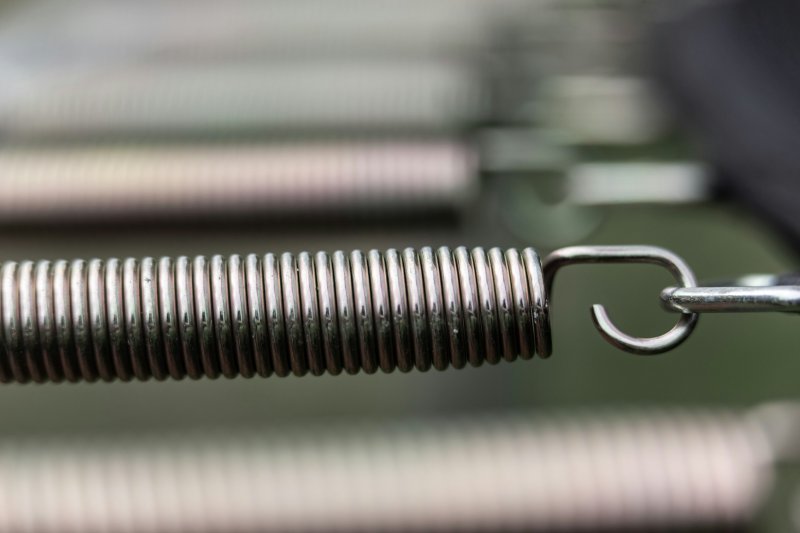
Garage door manufacturers print spring-system warnings in red because the failure mode is severe and the workaround is easy to skip. A wound residential torsion spring stores enough energy to lift a 150–250 lb door, and each turn adds another 20–50 ft-lb of torque to a winding bar — enough to send the bar through drywall or break a wrist if it slips out of the cone. Extension springs whip when they break. Cables under load can snap and lash.
Reasonable DIY tasks on a garage door system:
- Lubricating rollers and hinges with garage-door-specific lithium grease (not WD-40, which strips lubrication)
- Tightening loose track bolts on a door that’s already balanced
- Replacing a remote battery, photo-eye sensor, or a worn weatherstrip
- Adjusting opener travel limits per the unit’s instruction sheet
Tasks that send people to the ER, ranked by injury frequency:
- Winding a torsion spring with a rebar substitute for a winding bar. The bar slips out under tension and rotates with the spring.
- Removing a cable from a drum while a spring is still wound. The drum spins free and the cable whips.
- Jamming the door open with a stepladder to “test the balance,” then watching the door drop while the ladder folds.
- Replacing a spring without locking the door open with vice-grip clamps below the bottom roller.
Why does the professional rate of $250–$550 for combined cable and spring work hold up against the $30 DIY parts bill? It pays for two trained techs, calibrated winding bars, the right replacement spring sized to the door’s weight, plus a service truck stocked with the dozen variations of cable end-fitting needed to match what’s actually on your door. The U.S. Consumer Product Safety Commission’s NEISS injury database tracks thousands of garage-door ER visits each year — most from crushing and pinch injuries, but the wound-spring and snapped-cable subset is the one that lands DIYers in surgery. The labor savings rarely cover one ER copay, never mind a panel replacement when the door drops on its own opener.
How long cables and springs actually last
Both wear in cycles, not years. A “cycle” is one open-close, and the published cycle ratings tell you what the hardware was built for:
- Standard torsion spring: 10,000 cycles. On a household with two daily round-trips, that’s 7 years.
- High-cycle torsion spring: 20,000–25,000 cycles, usually a $30–$50 upgrade per spring. Worth it on a house with kids who cycle the door 6–8 times a day, or any garage with an attached ADU or home business.
- Standard galvanized cable: Rated for the spring’s life; 7–10 years typical.
- Aircraft-grade cable: Quieter and more flex-tolerant, but the longevity advantage is marginal on a residential door. Pay the upgrade only on doors over 200 lb.
If you’re replacing cables and the springs are 8+ years old, replace the springs at the same time. The labor overlap is roughly 70%, the parts add $200–$400, and you avoid the next service call. Conversely, replacing a snapped spring on a door whose cables are 8+ years old should include cable replacement in the same visit for the same reason.
For related repair pricing, see the remodeling cost guides for project-level budgeting and the HVAC cost guides if your garage is conditioned and a service tech needs to coordinate around vents.
What a fair quote looks like
A reputable garage door tech who arrives for a “broken cable” call should perform this sequence before quoting: balance test on the existing door, visual on both springs and both cables, drum and bearing check, opener safety test, and bottom-bracket inspection. The quote should itemize parts and labor separately, name the spring’s IPPT (inch-pounds-per-turn) rating or wire/diameter, and specify whether the warranty is 1-year, 3-year, or lifetime on parts.
Quotes that arrive verbally as a single number ($349 flat, take it or leave it) without the inspection are how the trade’s reputation got built. Ask for a written estimate, ask what brand and cycle rating, and don’t be embarrassed to call a second shop. The 30 minutes you spend comparing two quotes is worth more per hour than almost anything else you’ll do that week.