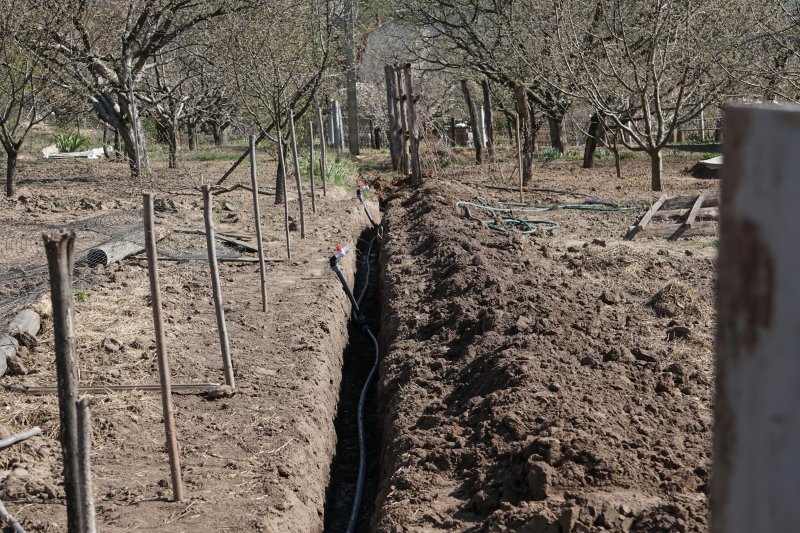
A french drain costs $500 to $18,000 to install in 2026, or roughly $10 to $100 per linear foot depending on which of three systems you actually need. A yard or curtain drain runs $10 to $35 a foot. An interior basement perimeter system lands at $40 to $100 a foot. An exterior footing drain around a buried foundation wall sits at $50 to $90 a foot. The label “french drain” gets stuck on all three, but they solve different water problems at different excavation depths.
Where your bill lands depends on which system the wet area actually calls for, whether the discharge can reach daylight by gravity, and how much hand-digging the contractor has to do around utilities and mature tree roots.
What a french drain actually costs in 2026
The numbers below come from 2026 contractor pricing reported by Angi, HomeGuide, Modernize, and Bob Vila, cross-checked against IRC R405 scoping logic. Use them to recognize whether a quote is in the right neighborhood, not as a negotiating target.
| System | Typical Cost | Per Linear Foot | Notes |
|---|---|---|---|
| Yard / curtain (shallow exterior) | $500–$8,800 | $10–$35 | Surface puddling, lawn drainage, lot-runoff redirection |
| Yard trench (deeper exterior) | $1,500–$9,000 | $30–$90 | High water table, slope cut behind house |
| Exterior perimeter footing drain | $5,000–$15,000+ | $50–$90 | IRC R405 system, requires excavation to footing |
| Interior basement perimeter | $5,000–$18,000 | $40–$100 | Slab saw-cut, baseboard channel, almost always with sump |
| Interior + sump combo (typical) | $5,500–$16,500 | — | Sump adds $500–$2,000 over the base interior price |
Material rates that the linear-foot price includes: 4-inch perforated PVC at $50 to $200 for a 100-foot run, washed pea gravel or 3/4-inch stone at $500 to $1,000 for that same job, and geotextile filter fabric at $0.50 to $1.00 per foot. Sump pumps add $100 to $400 for the unit and $150 to $300 to install if a pit already exists. Permits run $58 to $225 in most metros and can cross $1,000 in cities that classify the work as a plumbing alteration tied into the storm sewer.
Labor sits at $50 to $100 per hour and represents more than half the bill on most jobs. Excavation supervision and slope-shooting are time-intensive regardless of how many feet of pipe go in the ground; the materials are comparatively cheap. A 100-foot exterior footing drain runs roughly 30 to 50 hours of skilled labor for a two-person crew once you count restoration of the landscape.
The three systems homeowners confuse
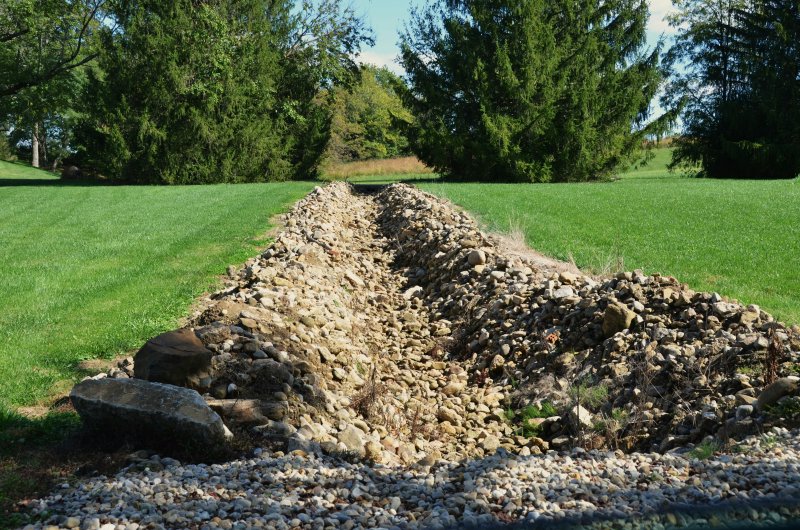
Most cost-guide pages flatten “french drain” into one line item and skip the part that decides everything else: which system fits the actual problem.
Yard or curtain drain
A shallow trench 8 to 24 inches deep, with 4-inch perforated pipe in a washed-gravel envelope, used to intercept surface water rolling toward the house from a sloped yard or to dewater a soggy lawn area. The cheapest of the three jobs and the most realistic DIY candidate. A daylight outlet at the low corner of the property eliminates the need for a sump.
Exterior perimeter footing drain
The system the IRC writes building code around. A 4-inch perforated pipe sits on washed gravel at or below the top of the footing, gets covered with at least 6 inches more of gravel or crushed rock, wraps in filter fabric, and discharges by gravity or mechanical means to an approved point. On new construction this goes in for the price of the trench because the foundation is already open. On an existing house with a finished yard, the same scope means re-excavating to footing depth — typically 6 to 8 feet on a full basement — and that’s where retrofit prices spike to $15,000 to $30,000 once you include landscaping restoration.
Interior basement perimeter drain
A baseboard channel cut into the slab around the inside of the foundation wall. The slab gets saw-cut a few inches in from the wall, the trench gets a 4-inch perforated pipe and gravel, the slab is poured back, and a sump pit collects the water at the low corner. Basement waterproofing companies sell this as a “french drain” because the components are similar, but it manages water that has already passed through the wall, not water trying to reach the wall. That’s not a flaw — for a saturated foundation where exterior excavation isn’t practical, it’s the right answer. It is, however, a different system than IRC R405 and shouldn’t be priced against it.
If the wall is leaking through a discrete crack rather than seeping along the cove joint where wall meets floor, neither system is your first move. Look at the foundation crack repair cost guide — a $400 to $1,000 polyurethane injection fixes a single leaking vertical or diagonal crack faster and cheaper than a $10,000 perimeter drain does. A horizontal crack is a different problem (lateral soil pressure, structural reinforcement scope), not an injection or drainage call.
Pipe, gravel, sock: what actually goes in the trench
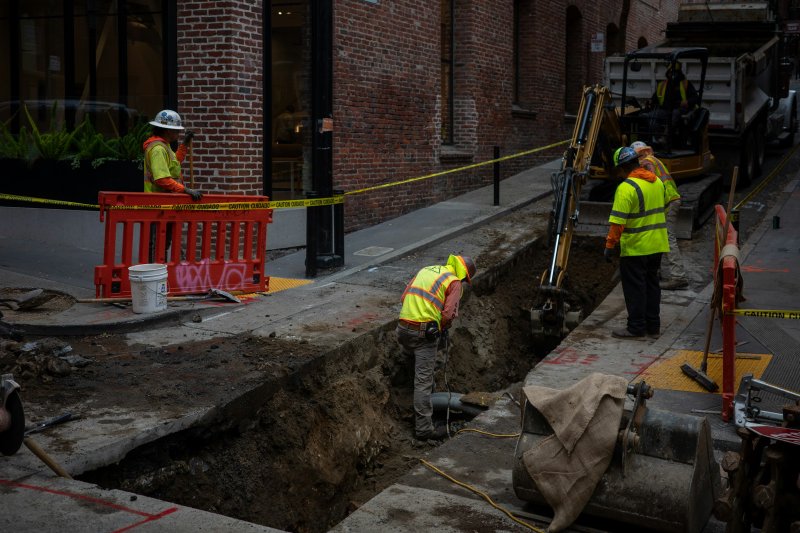
The IRC’s R405 foundation drainage section is short and specific, and almost no contractor will quote it without prompting:
Drainage tiles, gravel or crushed stone drains, perforated pipe or other approved systems or materials shall be installed at or below the top of the footing or below the bottom of the slab and shall discharge by gravity or mechanical means into an approved drainage system. The pipe shall rest on not less than 2 inches of washed gravel or crushed rock, surrounded by material that is at least one sieve size larger than the tile joint opening or perforation, and covered with not less than 6 inches of the same material.
That paragraph is the entire spec a homeowner needs to vet a quote. A bid that skips the 6-inch gravel cover, runs the pipe in raw native soil, or ties the discharge into the sanitary sewer (illegal under most municipal codes for clear-water connections) is a bid you should walk away from. The InterNACHI summary of IRC R405 lays out the inspection points if you want to push a contractor on the details.
A few specs the code doesn’t dictate but that contractor experience does:
- Pipe diameter. 4-inch perforated PVC for residential. 6-inch only when a single line collects flow from a long catchment area or an entire roof’s worth of downspout discharge.
- Slope. 1% minimum, which is 1/8 inch of drop per foot of run. Tight on a long horizontal — flatter than that and the line silts up. Above 2% the water runs faster than it can enter the perforations and the drain becomes a glorified culvert.
- Aggregate size. 3/4-inch washed stone is the contractor norm. Pea gravel works but tends to migrate into perforations on long-flat runs. “Fines”-heavy crushed stone is what makes a drain fail in five years instead of fifty.
- Sock or no sock. Filter sock around the pipe is essential in clay or silty soils where fines will migrate into perforations within a year. In clean sand, a sock just adds a clogging surface for organic matter and shortens the drain’s life. Most installers default to sock, which is fine in most yards. Push back if the soil is a clean sandy loam.
The fabric placement matters too. A common contractor-blog recommendation puts geotextile at the bottom of the trench and another layer over the gravel before topsoil, sandwiching the drainage envelope between two filter planes. That’s overkill for IRC compliance but it’s how the better installers build to last.
When DIY actually saves money
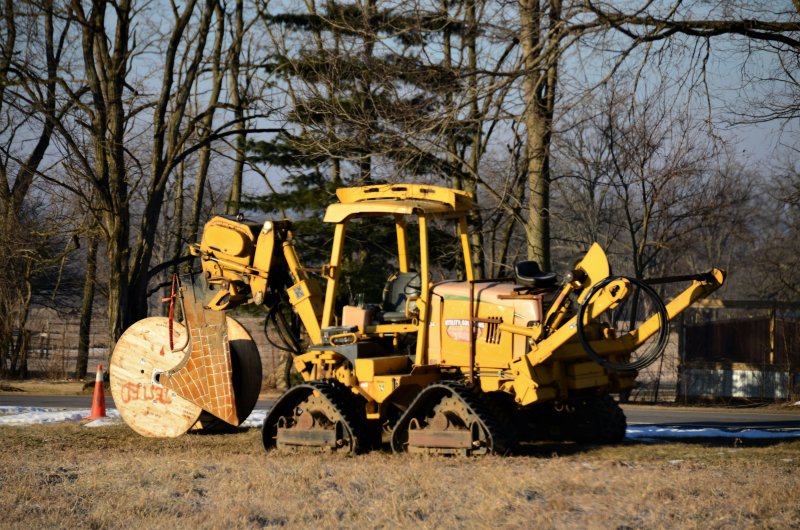
A 50-foot yard drain in clean, root-free soil is a realistic homeowner job. Materials land at $500 to $1,500 against $2,500 to $4,000 for a pro install. The trade-off is 1 to 3 weekends of hard labor and a $200-per-day walk-behind trencher rental. Mini-excavators run $200 to $450 per day if you want to move faster.
Skip DIY on:
- Perimeter footing drains on existing foundations. Excavating 6 to 8 feet deep against a foundation wall without a shoring plan is genuinely dangerous, and most municipal codes require an inspector for the work.
- Anything tying into a city storm sewer or roadside catch basin. Most cities require a licensed plumber for the tie-in, and the permit fees in some metros run over $1,000 once you add the inspection rounds.
- Interior systems in a finished basement. Saw-cutting 30 to 80 feet of slab, hauling the spoil out through a finished space, and re-pouring concrete produces silica dust plus weeks of dust migration. The $40 to $100 a foot a pro charges on this scope is mostly buying the cleanup, not the pipe.
- Anywhere within 3 feet of a buried utility. Call 811 first regardless. Hitting a gas line with a trencher blade is the most common DIY catastrophe in this category.
The realistic split: DIY the curtain drain or yard intercept that catches water before it reaches the house, hire out the work that touches the foundation or the slab. The two together often beat hiring a single contractor for the whole envelope, because the yard work is where contractors mark up the most.
Insurance, permits, and how to vet a contractor
Homeowner’s insurance covers french-drain-related work in one narrow case: the basement got wet because of a sudden plumbing failure (burst pipe, broken supply line, washing-machine hose) and the resulting damage triggers a covered claim. Gradual seepage from groundwater, which is the actual reason most homeowners install a french drain, is excluded from every standard HO-3 policy. Flood-driven basement water requires NFIP flood coverage, sold separately. Most policies that cover any water event cap mold-related cleanup at $1,000 to $10,000. None of that pays for the drain itself; it covers the damage that prompted the install.
Permits depend on jurisdiction and discharge path. A yard drain that daylights to a swale on your own property usually needs no permit. The moment the discharge ties into a storm sewer or any drainage path that crosses a property line, the permit fee jumps to $58 to $225 typically and crosses $1,000 in some metros. The reason: clean-water discharges into the sanitary sewer are illegal under the Clean Water Act in most municipalities, and inspectors enforce it harder than most homeowners expect.
Vetting a contractor on this work is mostly about catching the pricing games:
- Walk away from “lifetime warranty” pitches that skip the moisture source. A drain doesn’t fix grade or downspouts. If the bid doesn’t address how surface water reaches the foundation in the first place, the drain becomes a maintenance subscription, not a fix.
- Ask which IRC section the bid follows. A real foundation contractor will name R405. A waterproofing salesperson selling the interior baseboard system will say it’s a different code path — that’s accurate, but the answer should not be “don’t worry about codes.”
- Confirm the discharge point in writing. “Discharges to grade” is fine if there’s a real grade to discharge to. “Discharges to existing drainage” is the line that hides illegal sewer connections.
- Get a separate quote on the sump pump if interior. Bundling the pump into a $12,000 line item makes it impossible to compare against a $700 standalone install with a $1,500 battery backup, which is what a competent independent installer charges. The same pump and pit, separately bid, often saves $1,500 to $3,000 against the all-in waterproofing-company quote.
For homes where the underlying problem is chronic moisture and surface mold, the mold damage cost guide covers the basement remediation scope ($500 to $3,000) that often runs in parallel with a french drain install. For older homes with crawl-space drainage problems instead of basement water, the foundation and crawl space repair guide covers the encapsulation and crawl-space drainage variants of the same job.
The bottom line on french drain spending
A french drain is two decisions priced as one: which system the water problem actually calls for, and whether your topography supports a gravity discharge. Get those right and a yard drain costs $1,500, a perimeter system costs $8,000, and an interior basement combo costs $12,000 — all defensible numbers that match the scope.
Get them wrong and you end up with a $15,000 interior system that manages water you could have intercepted upstream for $2,500, or a $4,000 yard drain that doesn’t address the actual leak coming through a horizontal crack in the foundation wall. The cost-guide pages quoting one blended per-foot range skip the system-selection question that decides which job you’re buying. The IRC R405 spec is the homeowner’s check on that decision: if the contractor can’t tell you which code the bid follows, find one who can.