Emergency water removal runs $3 to $15 per square foot depending on water category, plus a $150 to $500 dispatch fee, a 1- to 2-hour billing minimum at $70 to $200 an hour, and a 1.5x to 2x premium when the call comes in after business hours. A typical 1,000 sq ft clean-water extraction lands at $3,000 to $6,000 for the removal phase alone, before any drying equipment day-rates or structural repairs.
The math has four moving parts that show up stacked on the invoice, not a single rate. Most consumer pages quote one of them as if it were the whole job, which is why the bill surprises homeowners. This guide walks through the full fee structure, the IICRC S500 framework that drives category pricing, the 48-hour mold window that turns hour zero into the most expensive minute of the project, plus the homeowners insurance reality waiting when the dispatcher asks for your policy number.
What emergency extraction actually costs in 2026
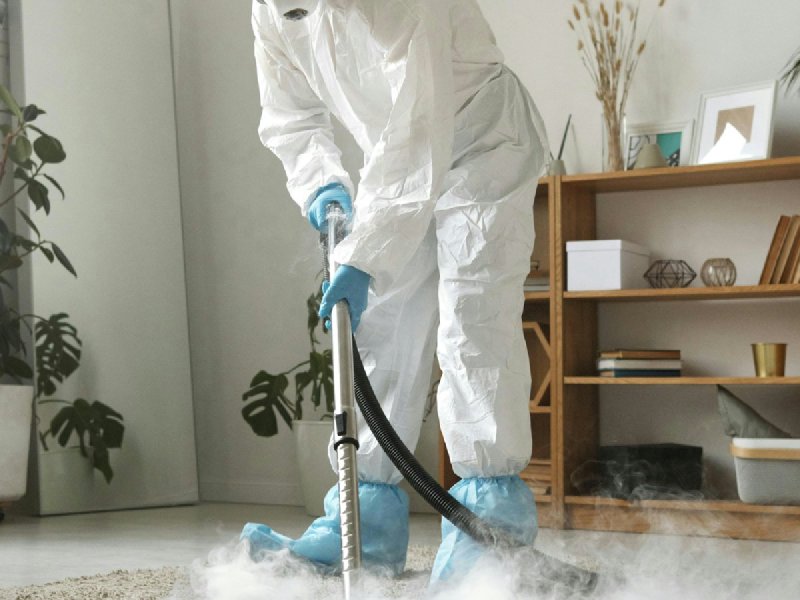
Pricing splits across the IICRC’s three water categories. Category 1 is clean water from a sanitary source: a supply-line break, ice melt, rainwater through a window, or a tub overflow without contaminants. The next tier up, Category 2, is gray water with significant contamination but no immediate health risk, like appliance discharge or a toilet overflow without feces. Black water (Category 3) is the worst case: sewage backup, ground-surface storm flooding, or any prolonged Cat 2 left to fester. Cleanup pricing roughly doubles between Cat 1 and Cat 3 because Cat 3 work demands biohazard PPE, antimicrobial treatment, mandatory removal of every porous material in the contamination footprint, plus EPA-regulated disposal.
| Category | Source water | Per sq ft (extraction only) |
|---|---|---|
| Cat 1 (clean) | Supply-line break, rainwater, melting snow, tub overflow | $3 – $6 |
| Cat 2 (gray) | Dishwasher / washer discharge, toilet bowl overflow w/o feces, aquarium leak | $6 – $9 |
| Cat 3 (black) | Sewage backup, storm water, river or ground-surface flooding | $7 – $15 |
Synthesized from Angi’s 2026 water damage data and HomeGuide’s 2026 cost guide. The rate covers extraction, removal of soft contaminated material on Cat 2 and Cat 3 jobs, plus initial sanitation. It does not cover the 3- to 5-day drying cycle that follows. That’s a separate phase billed by equipment day-rates ($40 to $100 per air mover or dehumidifier per day) and tech labor. For the full mitigation-through-rebuild scope and Class 1-4 totals, our water damage restoration cost guide covers the post-extraction work.
A 1,000 sq ft Cat 1 burst-pipe loss at the lower end of the range runs roughly $3,000 to $6,000 in extraction. The same loss as Cat 3 sewage is $7,000 to $15,000, because every soft material has to come out and the disposal stream is regulated.
The four-stack fee structure
| Component | Typical range | Notes |
|---|---|---|
| Minimum dispatch / inspection fee | $150 – $500 | Charged to roll the truck regardless of work performed; many companies credit this against the extraction bill if the contract is signed |
| Hourly labor minimum | $70 – $200/hr (1-2 hr minimum) | Restoration tech billing rate; metros (NYC, SF, Boston, Seattle) push the upper end |
| After-hours / weekend premium | 1.5x – 2x base rate | Industry standard; some carriers charge up to 3x for holiday overnight |
| Per-sq-ft extraction | $3 – $15 (by category) | Layered on top of dispatch + hourly |
A homeowner who calls at 11 PM on a Saturday for a 600 sq ft Cat 2 washing-machine flood will see something like: $300 dispatch + 2 hours × $150/hr × 1.75 weekend multiplier ($525) + 600 sq ft × $7/sq ft ($4,200) = roughly $5,025 for the extraction night. The drying phase the following week tacks on equipment day-rates plus a few more hours of monitoring labor. The bill is stacked rather than bundled. Contractors who present it as a single per-foot number are hiding the math.
Ask for each component spelled out on the work authorization before signing. A reputable IICRC-certified contractor will write it line by line; one that wants to keep the math fuzzy is the one that surprises you on the invoice.
Arrival window: why the first hour matters more than the hourly rate
Industry response benchmarks for the major franchises:
- SERVPRO: within one hour of the call, 97% of US ZIP codes covered within two hours, 2,380+ locations
- PuroClean: under two hours
- AdvantaClean: within eight hours
- Roto-Rooter: 24/7 emergency dispatch, no specific hour target on the consumer page
Local independents range from 30 minutes (small markets, owner-operator) to overnight (“first thing tomorrow morning”). The hour-zero time stamp matters because IICRC S500 categorizes water dynamically. Cat 1 clean water reverts to Cat 2 in roughly 24 hours at room temperature; Cat 2 to Cat 3 by 48 hours. A burst-pipe loss caught at hour two is a $4 per sq ft Cat 1 job. The same loss neglected until hour 30 is a $6 to $7 per sq ft Cat 2 job. Past 48 hours, it crosses into Cat 3 scope at $9 to $15 per sq ft plus mold remediation.
Translation: the per-foot rate at hour 30 is roughly 50% to 75% higher than at hour two on the same loss, and Cat 3 territory past 48 hours runs more than double. The arrival window, not the hourly tech rate, is the cost lever. When you have standing water, call two providers simultaneously and let the first truck on the curb earn the job. Nobody refuses the second crew politely; the dispatcher will move on.
What a truck-mount actually does that a portable can’t
Truck-mounted extractors run 400 to 1,200 PSI of vacuum-assisted lift with 15 to 40 GPM residential extraction capacity (industrial flood pumpers reach 100 to 500+ GPM). Recovery tanks hold 100 gallons or more. The HydraMaster Titan H20 carries a 100-gallon MaxAir recovery tank on a 32.5 HP liquid-cooled engine and pulls over 400 CFM of airflow. Portable units run 100 to 300 PSI with 1 to 5 GPM and 5 to 17 gallon tanks. The capex difference is 3x to 5x, and the speed difference is 2x to 4x on equivalent scope.
| Spec | Truck-mount | Portable (residential) |
|---|---|---|
| Water pressure | 400 – 1,200 PSI | 100 – 300 PSI |
| Pump capacity (residential) | 15 – 40 GPM | 1 – 5 GPM |
| Recovery tank | 100 – 200+ gal | 5 – 17 gal |
| Speed on equivalent scope | 2 – 4x faster | baseline |
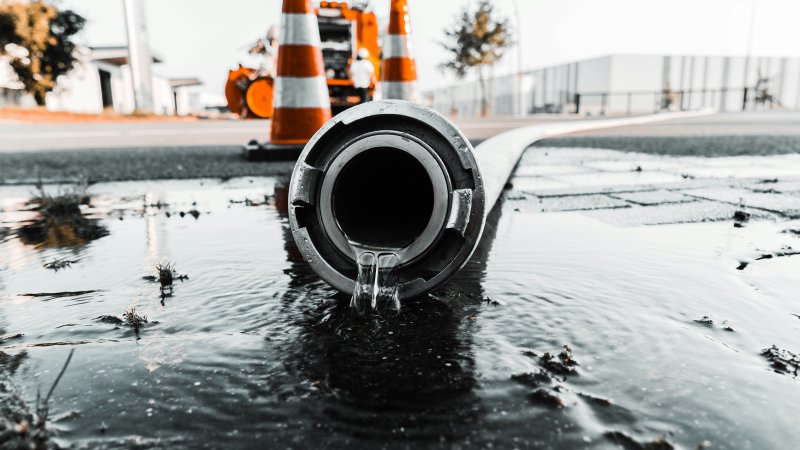
For a 1,000 sq ft basement with two inches of standing water (about 1,250 gallons), a 5 GPM rental pump nominally clears the standing layer in roughly four hours of pumping time. A 25 GPM truck-mount clears the same load in under an hour, then transitions immediately to extraction from carpet pad and substrate underneath. The remaining 90% of the work, pulling water out of porous materials before it migrates upward into drywall, is where truck-mount vacuum lift earns the bill. A homeowner running a wet/dry vac will get the visible water but miss what’s wicked into the wall cavity, which is what causes the Cat 1-to-Cat 2 drift inside the 24-hour window.
Ask the dispatcher: “Truck-mount or portable?” If the answer is truck-mount, the right tool is rolling. If portable, push back and ask whether they can bring the truck-mount instead. Some companies dispatch portables to small jobs to save fuel; on a 1,000+ sq ft loss that’s the wrong call.
The 48-hour mold window
Mold colonies establish on wet cellulose and gypsum (drywall, framing, paper-faced backing, MDF, particle board) within 24 to 48 hours of saturation. EPA and IICRC industry guidance both treat 48 hours as the operational deadline for drying — past that point, the working assumption is that mold has started, and the project crosses from water restoration scope (IICRC S500) into mold remediation scope (ANSI/IICRC S520:2024). HomeGuide’s 2026 basement-flood guide puts it concretely: “you can clean up small amounts of clean (Category 1) water if you do so within 24 hours, before it has a chance to potentially grow mold.”
Hour zero is when the water first sat. Not when you noticed the leak, not when the contractor arrived, not when the adjuster opened the claim. A supply line that broke at 3 AM and was discovered at 9 AM is already at hour six when the call goes out. By the time the crew is on site at hour eight, you have 40 hours left before mold scope kicks in. That’s why the dispatcher pushes hard for an immediate work authorization — every additional hour past hour 24 multiplies the eventual bill.
What it costs to miss the 48-hour window:
- Mold remediation runs $15 to $30 per sq ft added to the project (per HomeGuide 2026 and our mold damage cost guide )
- Standard HO-3 mold sublimit is $1,000 to $10,000 — well below a typical full-house remediation
- Project timeline jumps from 3-5 days drying to 1-3 weeks for full S520 scope
- Anything porous in the contamination footprint (drywall, insulation, carpet pad, particle-board cabinetry) has to come out
For a 600 sq ft Cat 2 washing-machine event extracted at hour six, the project is a two-night extraction plus a three-day drying cycle, all under HO-3. The same event sitting until hour 60 is a $9,000 to $18,000 mold remediation scope on top of the original water bill, with the mold work potentially capped at the policy sublimit if the carrier rules the homeowner waited too long. The 48-hour window isn’t a guideline. It’s where the cost curve breaks.
Insurance: HO-3 sudden-and-accidental versus everything else
Standard homeowners policies pay for emergency extraction when the cause is sudden and accidental. The Texas Department of Insurance writes it cleanly: “Most homeowner and renters policies cover sudden and accidental water damage. Examples would include a burst pipe, toilet overflow, or broken washer hose.” That includes the dispatch fee, the hourly labor, the per-square-foot extraction, and most of the drying cycle. The extraction crew can usually bill the carrier directly under a “preferred vendor” arrangement, leaving the homeowner responsible only for the deductible.
What’s NOT covered under standard HO-3:
- Gradual leaks and seepage. The slow shower-pan leak that wet the subfloor over six months. TDI: “Most home policies don’t cover water damage from gradual leaks or seepage, and that includes damage from mold.”
- Flood / external ground-surface water. Storm runoff, river overflow, hurricane surge, groundwater rising through a slab. NFIP territory; see our flood restoration cost guide for the federal program.
- Sewer backup. Requires a separate sewer/water-backup endorsement at $40 to $250 a year extra for $5,000 to $25,000 of coverage.
- Sump-pump failure. Usually bundled with the sewer endorsement; check the policy language.
A sudden burst pipe at 2 AM is an HO-3 claim and the extraction crew is paid by the carrier. The same basement filling with storm water two hours later is an NFIP claim against a policy you may or may not have. Many homeowners learn the difference when the adjuster denies the claim because what looked like a single event was two events with two coverage paths.
What the dispatcher will ask about your insurance
When you call, the dispatcher asks for your insurance carrier and policy number before quoting a price. This isn’t gatekeeping. The answer determines whether the crew can do direct billing or whether the homeowner is paying out of pocket up front. Most national franchises and reputable independents have direct-bill arrangements with major carriers (State Farm, Allstate, USAA, Liberty Mutual, Travelers) and can submit the Xactimate-priced bill straight to the adjuster. You sign a work authorization assigning insurance proceeds to the contractor.
If the loss looks like flood or gradual seepage, the dispatcher will tell you that direct-bill probably won’t apply and ask how you want to proceed. Some homeowners pay out of pocket and pursue an NFIP claim afterward; others choose to wait for the adjuster’s site visit before authorizing extraction, which usually costs a day on the 48-hour mold clock. The economically rational call is to authorize extraction immediately at the homeowner’s expense and recover via insurance later. The cost of waiting almost always exceeds the cost of paying up front.
How to vet the contractor at 2 AM
Four checks, none of which take more than 90 seconds on the phone:
- IICRC certification. Ask for the lead technician’s IICRC WRT (Water Damage Restoration Technician) number. Look it up on iicrc.org’s public registry . The WRT is foundational: 84-question exam, 14 CECs every 4 years to maintain. A crew without an IICRC-certified technician on site can’t legally invoice as IICRC-compliant under most adjuster preferred-vendor agreements.
- Direct-bill experience with your carrier. Ask which adjusters at your insurer they’ve worked with. Real answer: a specific name and a region. Vague answer: “yeah, all the major carriers.”
- Equipment commitment. Ask whether they’re sending a truck-mount or a portable, plus how many air movers and dehumidifiers will be on site for the dry-out phase. A reasonable answer for a 1,000 sq ft loss is one XL dehumidifier plus 7-8 air movers (the standard Reets Drying Academy ratio referenced in our water damage restoration process guide ).
- Written scope before signing. Get the dispatch fee, hourly rate, after-hours multiplier, and per-square-foot extraction figures on the work authorization in writing. Verbal quotes drift between the call and the invoice.
Skip any company that wants payment in cash before the crew arrives, refuses to commit to a written scope, or won’t put the dispatch fee in writing. Emergency restoration is a regulated trade with a national standard. Reputable contractors operate transparently because their business model depends on adjuster relationships, and adjusters audit Xactimate-priced bids line by line.
Bottom line
For most sudden-event extractions, expect a first-night invoice in the $2,000 to $5,000 range. Total project cost, including the 3-5 day drying phase, lands somewhere between $4,000 and $12,000 under HO-3 coverage. The deductible (typically $1,000 to $2,500) is what comes out of pocket; the rest is paid by the carrier on a direct-bill basis if the contractor has the right paperwork.
The cost discipline isn’t shopping for the cheapest hourly rate — the rates are tightly clustered across reputable IICRC-certified providers. The discipline is acting fast enough to keep the loss inside the 48-hour mold window and inside Cat 1 or Cat 2 pricing. Every hour of dithering past hour zero costs more than any negotiation could save.