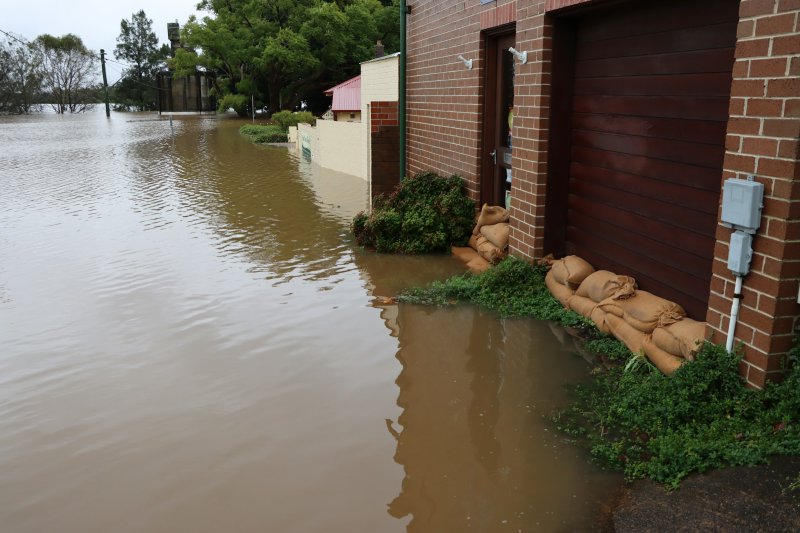
Flood restoration runs $7 to $15+ per square foot for Category 3 black water, the kind of water present when storm runoff or sewage backup puts standing water in your house. A typical basement flood cleanup totals $2,000 to $15,000 depending on size and contamination level, with Angi’s 2026 data putting the average at $4,000 for a residential cleanup. Storm and groundwater events that saturate multiple floors easily clear $30,000 once mold remediation and rebuild are added in.
Two facts drive the entire cost conversation. First, your homeowners policy excludes flood. Every standard HO-3 in the U.S. carves out ground-surface water, and most homeowners learn this for the first time the morning after the flood. Second, the IICRC categorizes the water you’re standing in as Category 3 black water by default, because sewage as well as storm runoff are contaminated at the source. Cat 3 cleanup runs at roughly double the per-square-foot rate of clean-water work, follows a stricter IICRC S500 protocol, and triggers ANSI/IICRC S520:2024 mold remediation if the water sits past 48 hours.
What flood restoration actually costs in 2026
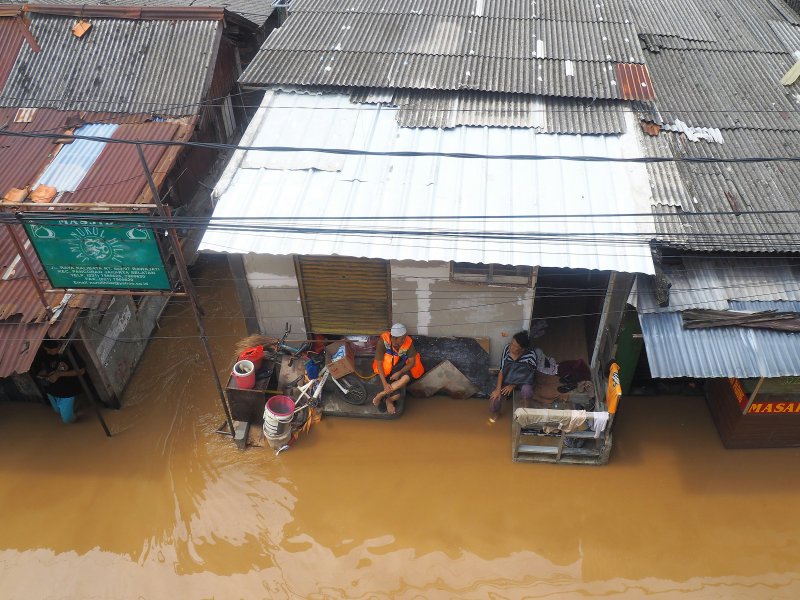
Cleanup pricing splits two ways: by water category (Cat 1 clean, Cat 2 gray, Cat 3 black) and by basement or affected-area size. Both numbers come from contractor surveys at Angi and HomeGuide, cross-checked against IICRC S500 scoping logic. Use the ranges to recognize whether a bid is in the right neighborhood, not to negotiate a contractor down on what is fundamentally an insurance-priced job written against Xactimate.
| Affected area | Scenario | Total cleanup cost |
|---|---|---|
| 500 sq ft | Small finished basement, minor flooding | $1,500 – $3,800 |
| 1,000 sq ft | Medium basement, moderate water intrusion | $3,000 – $7,500 |
| 2,000 sq ft | Large basement, severe flooding | $6,000 – $15,000 |
| Any size | Black water (sewage / floodwater) | $7,000 – $15,000+ |
The size table assumes Cat 1 or Cat 2 water and a clean dry-out path. Once Cat 3 enters the picture, and almost every actual flood is Cat 3, the per-square-foot rate jumps. HomeGuide pegs basement flood cleanup at $4 to $12 per sq ft across all categories, with Cat 3 work landing at the top of that range and pushing into $15+ per sq ft for sewage-specific scopes. Angi’s basement-specific average lands at $4,000 with most projects running $2,000 to $7,000.
Contamination level matters more than water depth or basement size on the per-foot rate. A 1,000 sq ft basement with a foot of clean rainwater from a window leak might run $3,000 to $7,500. The same basement with a foot of sewer-line backup runs $7,000 to $15,000 because every soft material (drywall, insulation, carpet pad, baseboards, particle-board cabinetry) has to come out and be disposed of as biohazard waste rather than ordinary debris. Hard surfaces get HEPA-vacuumed, pressure-washed, then antimicrobially treated. PPE costs more. Disposal costs more. The crew bills more hours on protocol.
Cost per square foot by water category
| Category | Source water | Per sq ft (cleanup only) |
|---|---|---|
| Cat 1 (clean) | Rainwater intrusion, supply-line break, melted snow | $3 – $6 |
| Cat 2 (gray) | Appliance overflow, washing-machine discharge | $6 – $9 |
| Cat 3 (black) | Sewage backup, storm water, river or groundwater | $7 – $15+ |
Flood events almost always start as Cat 3 or degrade into Cat 3 fast. Storm runoff has picked up whatever’s on the ground between the gutter and your foundation: pesticides, motor oil, animal waste, lawn chemicals. River overflow carries upstream sewage and agricultural runoff. Groundwater rising through a slab passes through everything in the soil column. The Cat 3 designation isn’t pessimism. It’s the IICRC’s reading of what’s in the water. A roof leak from a fresh rainstorm caught within hours stays Cat 1. A sump-pump failure that backed up clean water into the basement is Cat 1 if caught inside 24 hours, Cat 2 between 24 and 48, Cat 3 thereafter.
For broader pricing context across non-flood water events, our water damage restoration service cost guide breaks down Class 1 through Class 4 totals, Xactimate line-item pricing, and how the mitigation-versus-rebuild contract split works on insurance-paid jobs.
Why standard homeowners insurance won’t pay
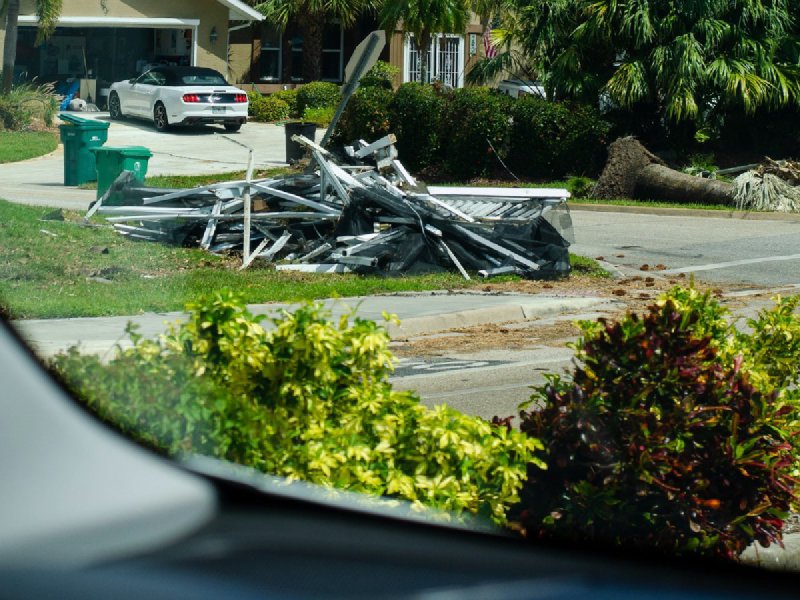
Every standard homeowners policy sold in the U.S. excludes flood. Not “flood is limited to a sublimit.” Excluded entirely. The exclusion language traces to NFIP’s creation in 1968, when Congress wanted private insurers out of flood, so the federal government wrote a separate program for it.
Four loss types, three different insurance products:
- Burst pipe inside the house. Covered by standard HO-3. Your toilet supply line let go at 2 a.m., the bathroom and the kitchen ceiling below are wet. This is what insurers mean by “sudden and accidental water damage.” See our water damage restoration cost guide for the full HO-3 picture.
- Sewer line backup. Excluded under standard HO-3. Requires a sewer/water-backup endorsement at $40 to $250 a year extra for $5,000 to $25,000 of coverage. Some carriers offer up to $50,000.
- Sump-pump failure. Same endorsement as sewer backup on most carriers, sometimes split into a separate sump-pump rider. Read the language: a few endorsements cover one and not the other.
- External flood (storm, river, hurricane surge, surface runoff, groundwater rising through the slab). Excluded entirely under standard HO-3 and under the sewer endorsement. Requires NFIP or a private flood policy.
The trap most basement-flood claimants fall into: they call their homeowners adjuster, the adjuster denies the claim because it was groundwater, they then call FEMA, and FEMA tells them they don’t have an active NFIP policy. Even if a fresh policy gets bought tomorrow, the 30-day waiting period means it wouldn’t cover this event. The waiting period is on the FloodSmart policy terms page : “Your flood insurance coverage will go into effect 30 days after your date of purchase.” A few exceptions exist (mortgage origination, policy renewal changes), but for a homeowner buying a fresh policy because the weather forecast looks bad, 30 days is 30 days.
NFIP coverage limits and what’s excluded
NFIP’s standard residential policy caps building coverage at $250,000 and contents coverage at $100,000. That’s the federal program’s hard ceiling for a one-to-four family home. Above those limits a homeowner needs an excess-flood endorsement from a private carrier or supplemental private flood coverage entirely.
Inside the policy, the exclusions are sharper than most homeowners realize:
- Personal property kept in basements is not covered under contents coverage. Read that twice. The room most likely to flood is the room NFIP won’t pay to refurnish. The drywall and the furnace are covered as building components; the couch, the rec-room TV, and stored holiday decorations are not.
- Vehicles, landscaping, decks, patios, fences, swimming pools, temporary housing costs, business interruption are all excluded.
- “Moisture, mildew, or mold that could have been avoided by the property owner” is excluded. If you knew the basement leaked and didn’t fix it, NFIP isn’t paying for the resulting mold.
- Belongings are paid at Actual Cash Value, not replacement cost. The five-year-old washer that cost $900 new pays out at maybe $400.
Flood claims also pay slowly compared to homeowners claims. Adjuster site visits plus federal documentation plus the proof-of-loss process commonly take six to twelve weeks before the first check arrives, sometimes longer after a regional disaster when adjusters are stretched thin. Plan on covering the cleanup contractor out of pocket and getting reimbursed.
Floods don’t only happen in flood zones
About 40 percent of NFIP claims come from properties outside high-risk flood zones, meaning outside the FEMA-mapped Special Flood Hazard Areas where federally-backed mortgages require flood insurance. Most homeowners outside those zones never look at their flood map and never buy a policy. National coverage rates back this up: roughly 3.3 percent of U.S. households carry NFIP, and only about 1 in 10 single-family homeowners have any flood insurance at all. Louisiana leads the country at around 25 percent coverage; Minnesota sits at 0.33 percent.
For properties outside Special Flood Hazard Areas, FEMA’s Preferred Risk Policy runs about $439 a year on average — less than what most homeowners spend on a single basement waterproofing service call. The PRP is available for moderate-to-low-risk properties and covers the same building/contents limits as a standard NFIP policy. Worth pricing if your basement has flooded once already, if you live downhill from a road that ponds during heavy rain, or if you’re within a few miles of a creek or storm-sewer outfall that backs up in 100-year events.
The IICRC S500 process for Category 3 cleanup
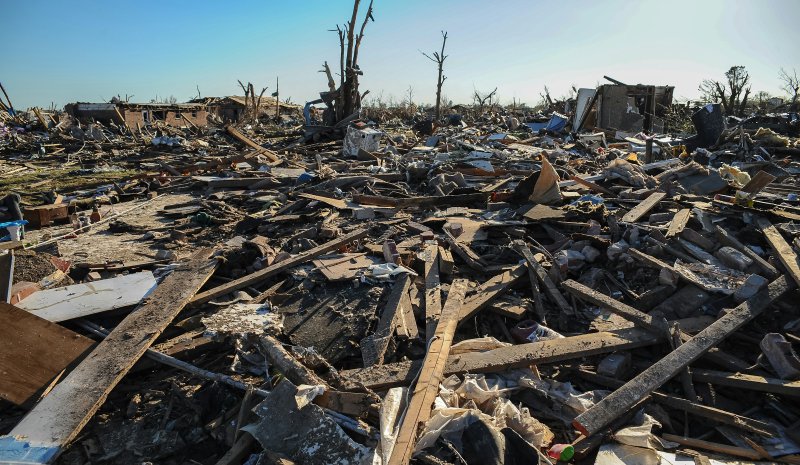
A flood cleanup follows the same general S500 sequence as any water loss (assessment, extraction, demo, drying, sanitization, monitoring, clearance), but Cat 3 work adds protocol layers. Our water damage restoration process guide walks the full seven-step workflow with equipment specs. What changes for floods:
- PPE upgrades. Tyvek suits, full-face respirators with P100 cartridges, nitrile gloves, dedicated boot covers. Crew can’t enter the affected zone in street clothes.
- Containment. Plastic sheeting and HEPA-filtered negative air machines isolate the contaminated area from the rest of the house, especially if HVAC supply or return ducts run through the flooded space. Cross-contamination is the single most expensive failure mode here.
- Aggressive material removal. Anything porous that touched Cat 3 water comes out and gets bagged as regulated waste — drywall (cut at least 12 inches above the highest waterline), insulation, carpet, carpet pad, particle-board cabinetry, soaked subflooring, baseboards, paper-faced gypsum. Hard surfaces (sealed concrete, glazed tile, stainless steel) can be cleaned in place. The HomeGuide page is direct about it: anything contaminated by Cat 3 water that can’t be cleaned and disinfected to defensible standards “MUST be removed and replaced.”
- Antimicrobial treatment. EPA-registered disinfectants applied to all hard surfaces post-extraction. The crew documents application rate and dwell time; this is the line item that survives an insurance audit.
- Structural drying with moisture-content verification. Same air movers and LGR dehumidifiers as a Cat 1 job, but the clearance benchmark is stricter and the moisture-meter log has to back it up. Framing must read under 16 percent moisture content before drywall can go back.
- Post-cleanup mold inspection. On any Cat 3 scope past 48 hours of standing water, the contractor should sample for mold growth before clearing the job. If samples come back positive, the project crosses into S520 mold remediation as a separate scope.
Why mold remediation is a separate ANSI standard
The IICRC publishes ANSI/IICRC S520, Fourth Edition (2024) specifically for mold remediation. It’s a different document from S500 and requires a separate technician certification: AMRT (Applied Microbial Remediation Technician). The 2024 fourth edition reworked the contamination-condition definitions: Condition 1 (normal indoor fungal ecology), Condition 2 (elevated airborne or surface contamination, often confirmed by analytical methods), Condition 3 (visible mold growth). Cat 3 floodwater that sits past 48 hours typically produces Condition 2 or 3 results.
The cost translation is direct. Mold remediation runs $15 to $30 per square foot on top of any water restoration scope, with total project costs of $1,500 to $15,000+ depending on extent. Our mold damage cost guide covers the full pricing breakdown plus the EPA’s 10-square-foot DIY threshold (which does not apply to flood water — sewage and groundwater are explicit professional-only carve-outs in EPA’s mold cleanup guidance).
Hidden line items that show up after the bid
Four costs get under-quoted on initial flood-cleanup bids. Ask about each before signing:
- Initial assessment fee. $100 to $500 separate from the cleanup bid, often credited toward the work if you sign with the same contractor. Some companies waive it on insurance-engaged jobs.
- Emergency pump-out for standing water deeper than 6 inches. $300 to $2,000 depending on volume, billed as a separate Xactimate line item before the per-square-foot cleanup math even starts. Crews use 2-inch trash pumps or truck-mount extractors.
- Hazardous-material disposal surcharge. Cat 3 demo waste goes to a regulated landfill at higher tipping fees than ordinary construction debris. Often passed through as a $200 to $800 line item. Worth asking the contractor to itemize so the adjuster sees it as documented Cat 3 scope rather than padded debris.
- Equipment day-rate beyond Day 5. Air movers and dehumidifiers run on a daily rental clock. If the structure isn’t dry by the standard 3- to 5-day cycle, expect a per-machine, per-day extension charge plus a fresh moisture-mapping fee. Common gotcha on Cat 3 jobs that started slow because of demo delays.
The restoration company also doesn’t fix the underlying source. A failed sump pump replacement runs $600 to $2,500 for a full project per Angi. Foundation crack repair and full basement waterproofing land at $1,000 to $10,000. A French drain costs $40 to $80 per linear foot. None of those are inside the flood-cleanup scope; they’re separate trades you contract afterward to keep the next storm from doing this all over again. For a deeper look at how restoration scopes price out across other disaster types, our fire damage restoration guide walks the same mitigation-content-rebuild contract split for fire scope.
Hiring criteria you can verify in 90 seconds
Cat 3 work has a much higher floor for what counts as competent. Anyone with a wet-vac and a few air movers can call themselves a flood-cleanup company. Few of them know the S500 Category 3 protocol or carry the right insurance for sewage exposure.
Four checks every flood-restoration contractor should pass:
- IICRC WRT plus AMRT certification on the lead technician. The Water Damage Restoration Technician credential is foundational, but for any flood scope you also want Applied Microbial Remediation Technician on at least one crew member. Ask for the technician’s IICRC number and search it on the iicrc.org public registry .
- Pollution-liability insurance. Cat 3 sewage work without pollution-liability coverage is a nightmare if anything goes wrong — a contaminated sub-floor missed during demo, an HVAC duct that wasn’t isolated, mold appearing in a neighboring room six weeks later. Ask for a Certificate of Insurance naming the homeowner as additional insured.
- Direct-bill capability with NFIP and with your homeowners carrier. “Will you bill mitigation directly to the insurer?” Yes is the answer. NFIP claims paperwork is its own beast; contractors who handle it routinely save you weeks.
- A written scope split between mitigation and rebuild. A bid that bundles everything into one number is a bid that’s planning to ride the mitigation line item into the reconstruction without a separate authorization. The adjuster will balk and the homeowner will be left arguing over it.
Walk away from any contractor who promises insurance will cover everything before they’ve seen your declarations page, or who pushes you to sign a contract before any documentation is taken. Both are red flags that show up on bad jobs after the fact.
Bottom line on flood restoration
The bid signed in the first 24 hours after a flood is the most expensive contract most homeowners will negotiate while exhausted and standing in damp socks. Two things make it survivable: knowing the price ranges so an off-market bid stands out, and knowing the insurance picture before the call (which means buying NFIP and the sewer endorsement before they’re needed). Verifying the technician’s IICRC credentials is the last 90-second check before equipment runs.
If your basement has ever flooded, ever come close to flooding, or sits in any topography where water collects after a heavy rain, the year-ahead decisions cluster around three small line items. NFIP Preferred Risk Policy at $439 a year. Sewer-backup endorsement at $40 to $250 a year. A battery or water-powered backup sump pump for $400 to $900 installed. Together they cost less than a single flood-cleanup deductible. The choice is whether to make it now or in the receiving line at the next storm.