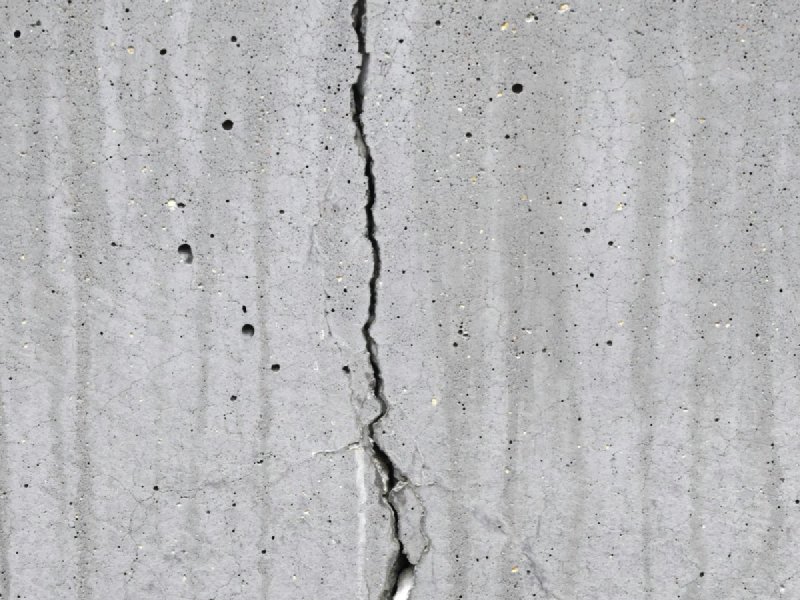
Foundation crack repair costs $350 to $1,500 per crack in 2026 for interior injection, the most common scope. Exterior excavation and waterproof sealing on the same crack runs $2,000 to $7,000. Structural reinforcement with carbon fiber straps adds $800 to $1,500 per strap, and active settlement pushed past the crack stage runs $10,000 to $30,000 or more for pier underpinning. Where your bill lands depends almost entirely on which crack pattern you have, not which contractor you call.
The trap with searching “foundation crack repair near me” is that the contractor who shows up is usually paid to sell you the most expensive method that fits the symptom. A vertical hairline crack and a horizontal bow are diagnosed by the same eyeball, priced 50x apart, and a sales rep will happily quote piers on the hairline if you let them.
What it costs by repair method
The numbers below come from 2026 contractor pricing reported by HomeGuide, thebasement.guide, Fixr, This Old House, plus several regional foundation specialists. Use them to understand the shape of a quote, not to negotiate a contractor down by a few hundred dollars on a structural job.
| Method | Typical Price | When it fits |
|---|---|---|
| Epoxy injection (interior, dry crack) | $350–$800 per crack | Vertical cracks, no active leak, structural rebond |
| Polyurethane foam injection | $400–$1,000 per crack | Active leaks, wet cracks, hydrostatic pressure |
| Reinforcing staples (added to injection) | $100–$200 per crack | Cracks wider than 1/8" needing extra hold |
| Carbon fiber strap | $800–$1,500 per strap installed | Bowing walls, post-engineer reinforcement |
| Steel beam bracing | $1,000–$3,000 per beam | Heavy bowing, severe lateral loads |
| Exterior excavation + waterproof seal | $2,000–$7,000 per crack | Persistent leaks injection cannot stop |
| Pier underpinning (3–8 piers) | $5,000–$15,000 | Active settlement causing the crack |
| Structural engineer evaluation | $300–$700 | Any horizontal, wide, or moving crack |
Pricing for a single crack is highly local. The Sun Belt runs 10 to 20 percent below the Northeast and West Coast on injection labor, and basement-heavy regions like the Midwest have more competition (and lower prices) than slab-on-grade markets where most contractors specialize in piers and have to learn injection on the side.
What kind of crack is this, actually
Most pricing decisions get made the wrong way around. Homeowner sees a crack, calls three contractors, picks the middle quote. Better order: identify the crack pattern, decide if you need an engineer, then call the contractor with the engineer’s report in hand.
Hairline vertical (under 1/16 inch)
Concrete shrinks roughly 1/16 inch per 10 feet during its first year of cure. Almost every poured concrete foundation in the country has at least one hairline vertical crack from this. If it’s not leaking and not growing, it’s cosmetic. A $20 tube of polyurethane sealant from the home center handles it.
Vertical 1/16 to 1/4 inch
Common from settlement during the first decade or from thermal/moisture cycling. Seal it before water finds it: $350 to $800 for a contractor-grade epoxy injection that bonds the concrete back to roughly its original strength. A wet crack in this width range gets polyurethane foam instead at $400 to $1,000, because epoxy will not bond to wet concrete and the bond is the whole point.
Diagonal above windows and doors
These follow stress concentrations at the corners of openings. A single short diagonal at 30 to 70 degrees with no measurable growth or displacement gets the same injection treatment as a vertical: $400 to $1,000. Multiple diagonals or one that’s growing month over month means the foundation is moving and you need an engineer before any injection.
Stair-step in block or brick
Cracks that follow the mortar joints in a block or brick foundation are tracking differential settlement. One corner of the house is sinking faster than the others. Sealing the mortar buys you time but does not fix the cause. If the underlying soil issue continues, the same crack reopens within a year or two. Engineer’s evaluation first ($300 to $700), then either pier underpinning if settlement is active ($10,000+) or simple repointing if the movement has stopped ($500 to $1,500).
Horizontal cracks
Stop. Do not call a crack injection contractor. Do not buy a kit. A horizontal crack means lateral soil pressure is pushing the foundation wall inward, and the wall is starting to fail in bending. Every horizontal crack is a structural engineer call. The fix is reinforcement (carbon fiber straps, steel beams, or wall anchors driven into the soil from outside), not injection. Costs run $1,500 to $15,000 or more depending on how many straps or beams the engineer specifies. Inject without reinforcement and the wall keeps moving until it fails.
Cracks with displacement
If you can lay a straight edge across the crack and one side sits higher than the other by even 1/8 inch, that’s shear movement — the foundation is actively moving. Same rule as horizontal: engineer first, contractor second. Costs from there depend on what the engineer finds.
Epoxy or polyurethane
The choice is not preference, it’s chemistry. Epoxy bonds to clean dry concrete and rebuilds the cracked section to roughly the strength of the original wall. It needs a dry, prepped crack, a surface seal that cures fingernail-hard before injection (usually 15 to 60 minutes), and 24 to 48 hours full cure. Ports knock off after 3 to 4 hours. A trained contractor places ports about 6 to 8 inches apart, or roughly 1 inch of spacing per inch of wall thickness, so the resin reaches the back of the crack from both directions.
Polyurethane foam is the wet-crack solution. It will not restore structural strength, but it expands as it cures, fills irregular voids better than epoxy, and stops water flow under hydrostatic pressure. Port spacing runs wider, 8 to 12 inches, because the foam pushes laterally as it expands. If the crack is leaking and you need it sealed before tomorrow’s rain, polyurethane finishes the job in a few hours.
Most contractors carry both and pick on the day. Be skeptical of anyone who pushes one method for everything.
DIY: when the kit actually works
DIY epoxy or polyurethane kits run $50 to $180 and look great on the box. They work — on the cracks they are designed for, which is hairline (under 1/8 inch) and vertical and dry. Outside that envelope, two things go wrong.
The kit resin is lower viscosity than contractor-grade material because the ports come pre-loaded and the kit assumes a homeowner with no pump. That viscosity is fine for thin cracks where the resin can flow on its own, useless on wider cracks where the resin needs pressure to get to the back of the wall. The surface seal in the kit also cures fast — good for impatience, bad for adhesion to a poorly prepped crack. A dusty or damp crack delaminates the seal and the injection blows out the side instead of going where you want.
The kit also fails silently on horizontal cracks. The seal holds, the resin goes in, the crack looks fixed. It isn’t. The wall keeps bowing because injection without reinforcement does nothing for lateral load. Six months later you have a worse crack with a $90 cosmetic patch in front of it that the next contractor has to grind off before they can do real work.
DIY rules of thumb: vertical only, under 1/8 inch only, dry only, single crack only, under 6 ft long only. Anything else, hire it out.
Carbon fiber, steel, and the bowing wall
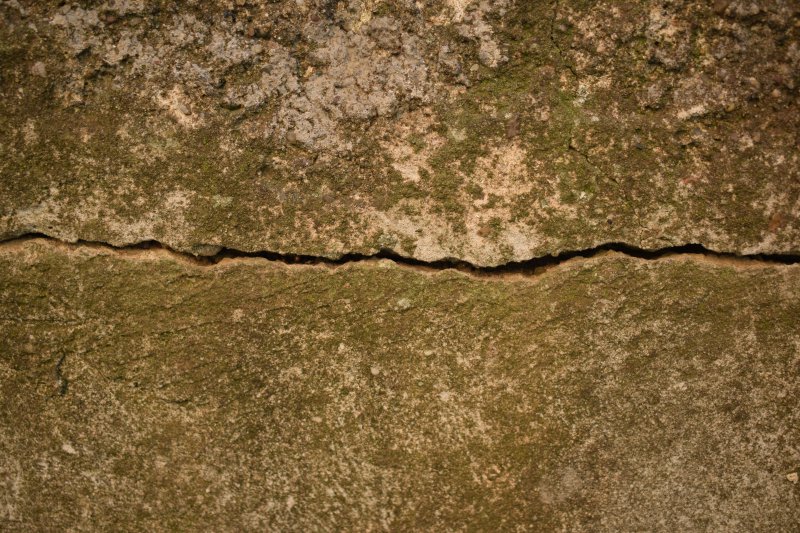
Once a horizontal crack has formed, the wall is in bending. Reinforcement is what stops further movement. Two main options:
Carbon fiber straps cost $800 to $1,500 each installed. Material alone runs about $725 to $800 per strap from the manufacturer, with the rest going to surface prep, anchor hardware, and labor. A typical 24-foot bowed section needs five straps spaced roughly every 4 to 5 feet on center, anchored to the rim joist at the top and the floor slab at the bottom. Total for a single bowing wall section: $4,000 to $7,500. Carbon fiber is fast, clean, installs entirely from the inside, and does not straighten the wall — it locks it where it is and prevents further movement. Match the strap count to the engineer’s report, not the foundation salesman’s quote.
Steel beam bracing runs $1,000 to $3,000 per beam, takes more interior space, and is the move when the bow is severe enough that carbon fiber’s bond strength to a curving substrate becomes a question. Wall anchors driven from outside through the soil are the third option for serious bowing — they let you push the wall back over time. Anchor systems run $5,000 to $15,000 per wall and require yard demolition.
If the wall is leaking through the same horizontal crack, the reinforcement does not stop the leak. You still need either polyurethane injection on the inside or exterior excavation and waterproofing on the outside. Bundle the two scopes and price them together so a contractor cannot mix-and-match line items.
Exterior excavation: when interior repair will not hold
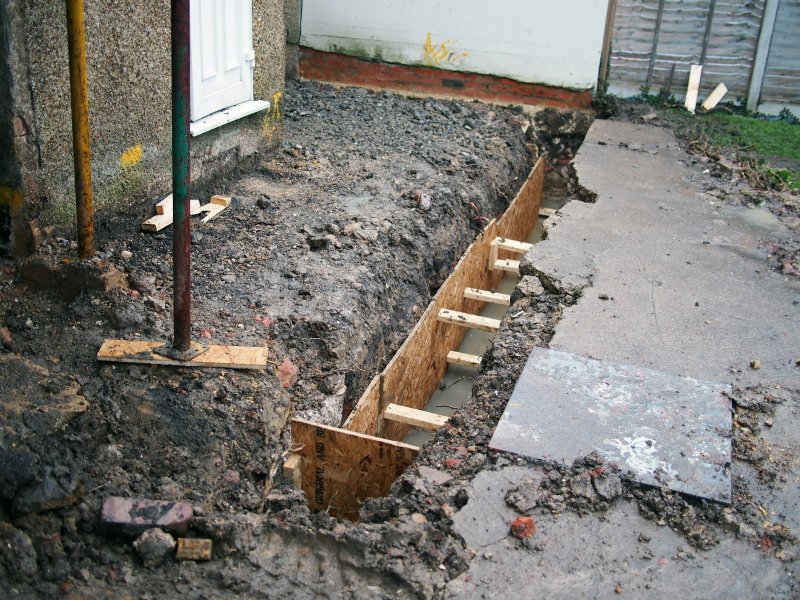
Sometimes the crack keeps leaking after injection. Sometimes the soil on the outside is the problem (poor drainage, downspouts dumping at the foundation, hydrostatic pressure that defeats any internal seal). Exterior excavation runs $2,000 to $7,000 per crack and includes digging down to the footing on the affected side, cleaning the crack from outside, applying hydraulic cement or a polymer-modified waterproof membrane, often adding a drainage board, and backfilling with gravel.
Done right, exterior repair addresses the actual water source. Done wrong, you’ve spent $5,000 and disrupted landscaping for a fix the interior could have handled with a $600 polyurethane injection. The decision rule: interior first if the crack is dry or moderately wet. Exterior when interior repair has already failed once, when the leak is severe enough that injection cannot keep up with the inflow, or when site drainage needs fixing anyway. If the crack is paired with chronic basement moisture, an exterior approach paired with a perimeter french drain usually outperforms an interior-only repair on long-term dry-out.
When to call an engineer first
A structural engineer evaluation costs $300 to $700 and is independent of any contractor who would benefit from quoting more expensive work. Five triggers that should send you to the engineer before the contractor:
- Any horizontal crack on any foundation wall
- Any crack wider than 1/4 inch (about the width of a wooden pencil)
- Any crack with visible displacement (one side offset from the other)
- Cracks that grew measurably between two photographs taken a month apart
- Multiple stair-step cracks in a block foundation, especially clustered at one corner
The engineer measures crack width, checks for floor differential across the affected room, looks for soil bearing depth, and writes a stamped report that tells you what reinforcement is needed and how many piers if any. That report is what survives a second-opinion bid. A contractor’s pier count without an engineer’s stamp is a sales number.
Insurance: what’s covered, what isn’t
Standard HO-3 policies almost never cover crack repair. The exclusions are explicit:
- Gradual settlement cracks: not covered. Soil shrinks and swells, the foundation moves, the policy says “wear and tear.”
- Expansive clay or frost heave cracks: not covered. Same reasoning.
- Hydrostatic pressure cracks from groundwater: not covered without flood insurance, which is a separate NFIP policy with its own rules.
- Sudden plumbing failure that washed out soil and caused a crack: sometimes covered, especially if reported quickly.
- Tree falling on a foundation wall: typically covered (sudden, accidental, external force).
Even when the underlying loss is covered, the policy pays for resulting damage to drywall, flooring, baseboards, and personal property — not for repairing the concrete itself. If the crack let in water that grew mold, the mold remediation cost gets handled under the mold sublimit on most HO-3 policies, typically $1,000 to $10,000 unless you bought a higher-limit endorsement.
Document everything. Photograph the crack with a ruler in frame, save dated images, and keep the engineer’s report. If you ever do file, the carrier wants proof the loss was sudden, not gradual.
Picking the contractor (after the engineer)
Four filters that screen out the worst quotes:
- Itemized estimate. Surface prep, ports, resin, labor, and any reinforcement should each be a separate line. A single lump-sum quote hides the markup, and on a $3,000 job that markup is usually $800 of pure margin on top of the actual material and labor.
- Method matched to crack pattern. A contractor who quotes piers on a single vertical hairline is selling, not diagnosing. A contractor who quotes injection on a horizontal crack is incompetent. Either way, walk.
- Engineer’s stamp acknowledged. Hand the engineer’s report over and watch the contractor’s reaction. A reputable foundation specialist reads the report, asks one or two clarifying questions, and prices to the spec. A salesman pushes back on the engineer’s count.
- Warranty in writing. Crack injection should carry a transferable lifetime warranty against re-leak on the repaired section. If it doesn’t, the contractor has reservations about their own seal.
For broader scope when cracks are paired with crawl-space or settlement issues, the foundation and crawl space repair cost guide covers piers, joists, encapsulation, and the moisture work that often accompanies crack repair. If the cracks are letting in groundwater on a regular basis, the french drain installation cost guide walks through the perimeter drainage scope and how it pairs with exterior crack work.
Pricing here was cross-checked against the HomeGuide 2026 foundation crack repair cost report and the Acculevel carbon fiber strap pricing breakdown .