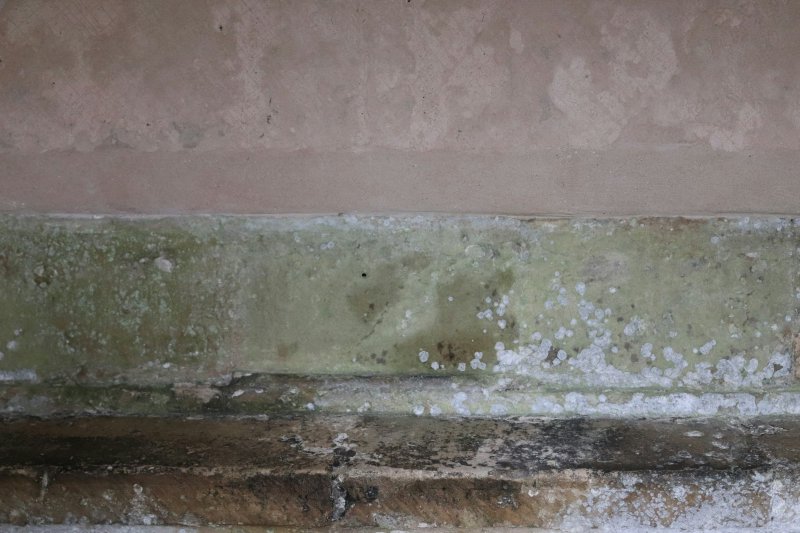
Mold damage remediation costs $1,200 to $3,750 for a typical residential job in 2026, or roughly $10 to $25 per square foot of affected material. A bathroom patch runs $500 to $1,000; a contaminated attic, $1,000 to $4,000. Whole-house remediation after a chronic moisture problem can hit $10,000 to $30,000. Where your bill lands depends on contaminated area, mold location, and whether anyone has actually fixed the moisture source feeding it.
The per-square-foot number gets quoted everywhere, but it’s misleading on its own. What contractors are actually pricing is access difficulty plus containment scope plus how much building material has to come out and be rebuilt. Surface mold on tile is one job. Mold inside a wall cavity behind drywall is a different job at the same square footage.
What mold remediation costs in 2026
The numbers below come from 2026 contractor pricing reported by Angi, This Old House, and HomeGuide, cross-checked against IICRC S520 scoping logic. Use them to recognize whether a quote is in the right neighborhood, not to negotiate a contractor down by a few hundred dollars.
| Location | Typical Cost | Notes |
|---|---|---|
| Bathroom (visible patch under 10 sq ft) | $500–$1,000 | Often DIY-eligible per EPA |
| Crawl space | $500–$2,000 (light) / $1,500–$6,000 (full scope) | Tight access drives upper end |
| Basement | $500–$3,000 | Depends on finished vs. unfinished |
| Attic | $1,000–$4,000 | Insulation removal + decking treatment |
| HVAC system | $3,000–$10,000 | Duct cleaning + coil + plenum work |
| Whole house | $10,000–$30,000 | Multi-room contamination, demo + rebuild |
Square-footage figures track the per-foot range cleanly: 50 sq ft runs $500 to $1,250, 100 sq ft runs $1,000 to $2,500, and a 500 sq ft job lands at $5,000 to $12,500. Hidden mold inside walls, sub-flooring, or ductwork bumps the per-foot rate to $15 to $30, because the labor count to access it roughly doubles.
A mold inspection by a separate, independent inspector runs $300 to $800 for most homes, with $450 to $650 typical when a couple of air samples are included. Houses over 4,000 sq ft go $700 to $1,000. DIY petri-dish kits cost $10 to $30 and tell you almost nothing useful, because they confirm what the EPA already states: spores are everywhere indoors and outdoors. Identification of species rarely changes what the cleanup looks like.
What pros are actually pricing
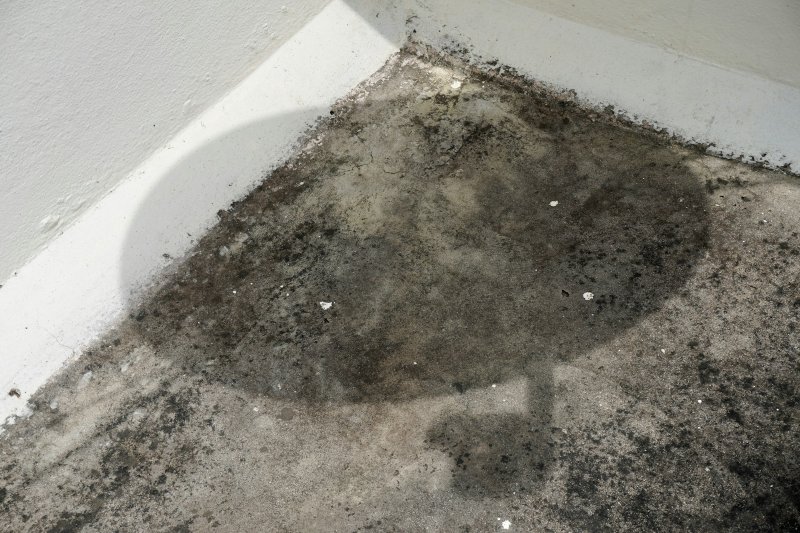
The contractor’s price tag isn’t really tied to square footage. It’s tied to how the IICRC S520 standard categorizes the contamination. S520 is the ANSI-recognized standard most reputable remediators follow, and its 4th Edition (2024) defines three conditions of building contamination. Condition 1 is the goal state: a normal fungal ecology with indoor spore counts comparable to outdoor or to an unaffected zone of the same building. Condition 2 describes settled spores or fungal fragments from a Condition 3 source, which the 4th edition expanded to include airborne contamination plus mycotoxins plus extracellular matrix material. Condition 3 is actual visible mold growth on a surface or material — the fuzzy or discolored patch you can see and point at.
A 4-square-foot Condition 3 patch in a bathroom and a 4-square-foot Condition 3 patch behind a kitchen wall produce different bids because the second one usually means a Condition 2 zone surrounds it. Settled spores from the visible source have spread through wall cavities and HVAC returns into adjacent rooms. Pricing the visible patch alone misses 80 percent of the actual scope.
The 10-square-foot EPA threshold kicks in once you know the Condition. Below 10 sq ft of Condition 3 growth on hard, non-porous surfaces, EPA’s mold cleanup guidance explicitly says you can handle it yourself: scrub with detergent and water, then dry completely while fixing the moisture source. Above 10 sq ft, or anywhere porous materials are involved (drywall, insulation, carpet, ceiling tile), you need professional containment with negative-pressure HEPA filtration plus source removal. None of that comes cheap.
What you’re paying for at $10 to $25 per square foot
A standard mid-size bathroom job, say 30 to 50 sq ft of visible mold from a long-running shower leak, typically includes:
- Plastic-sheet containment around the work zone with zippered entry
- Negative-air machine running HEPA filtration during demo and cleaning
- Removal of contaminated drywall plus baseboards plus any soaked sub-floor
- HEPA vacuum and antimicrobial wipe-down of all framing and adjacent surfaces
- Drying with industrial dehumidifiers and air movers for 1 to 3 days
- Post-remediation verification (PRV) using visual or air-sample-based clearance
Labor runs more than half the bill on a typical job. Containment setup and drying supervision are time-intensive regardless of the square footage; the materials — poly sheeting, negative-air machines, HEPA filters — are comparatively cheap.
The EPA’s brief guide on mold and moisture is unambiguous: “If you clean up the mold, but don’t fix the water problem, then, most likely, the mold problem will come back.” A remediator who quotes $4,000 to clean up visible growth without identifying and fixing the moisture source, or who refuses to coordinate with a plumber, is selling you a re-do in eight months.
How long it takes
Timeline scales roughly with affected area:
- Under 10 sq ft: 1 to 2 days, including drying.
- 10 to 30 sq ft: 2 to 4 days for a typical bathroom or laundry-room scope.
- 30 to 100 sq ft: 3 to 5 days. Containment setup runs about a day on its own.
- Over 100 sq ft: 1 to 2 weeks, sometimes longer if structural drying is extensive.
You can usually re-enter the space 24 to 48 hours after work completes — the industry-standard buffer to let any disturbed airborne spores settle. Black mold doesn’t change the timeline meaningfully — the popular claim that Stachybotrys-specific jobs take twice as long isn’t supported by the actual containment protocol, which doesn’t vary by species.
Insurance: what’s actually covered
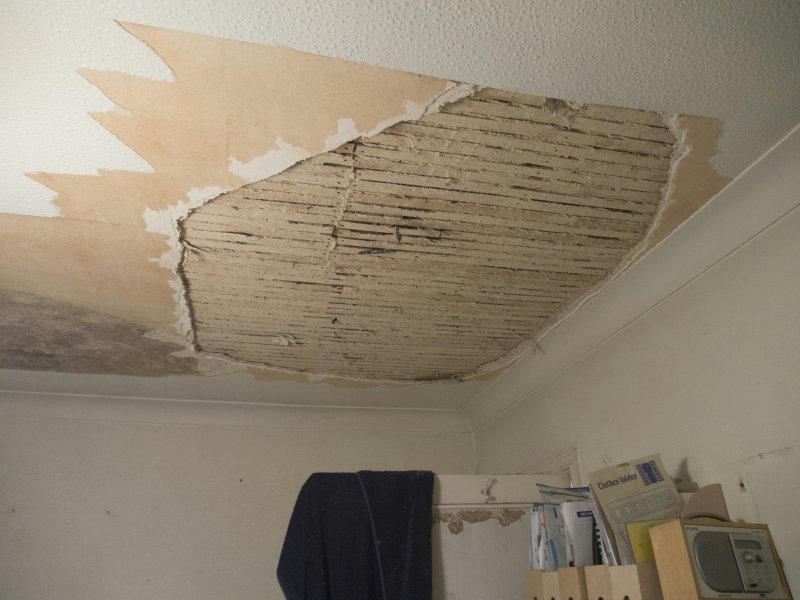
Mold coverage is the part of homeowners insurance most people misread. Standard HO-3 policies cover mold only when it’s caused by a sudden, accidental peril your policy already covers: a burst pipe, a broken supply line, a washing machine hose that let go, or a toilet overflow. The Texas Department of Insurance’s plain-English summary captures it well: “Most home policies don’t cover water damage from gradual leaks or seepage.”
The coverage distinction turns on how the water started:
- Burst pipe in the kitchen wall, mold appears two weeks later → typically covered, including the mold remediation up to the policy’s mold sublimit.
- Slab leak that ran for six months before you noticed it → almost never covered. Insurers classify long-running leaks as a maintenance failure.
- Bathroom mold from a shower that’s been leaking for years → not covered. Maintenance issue.
- Flooded basement after a storm → not covered under standard HO-3, even if mold follows. Requires a separate NFIP flood policy.
Most policies cap mold-specific payouts at $1,000 to $10,000 even when the underlying water loss is covered. That cap is the line you should look for on your declarations page before assuming a $15,000 mold quote will be reimbursed. A rider that raises the mold sublimit to $25,000 or $50,000 typically costs $50 to $150 a year in mold-prone climates. It’s worth pricing for anyone in the Gulf Coast or Southeast where indoor humidity holds above 60 percent for months at a time.
When the underlying event is covered, document the timeline aggressively: photos of the burst pipe within hours, contractor invoice for the plumbing repair, dated drying logs, plus a remediation report that ties the mold growth back to the water event. Insurers deny mold claims primarily on causation. The burden of proof that this mold came from that pipe sits with you.
The black mold question, deflated
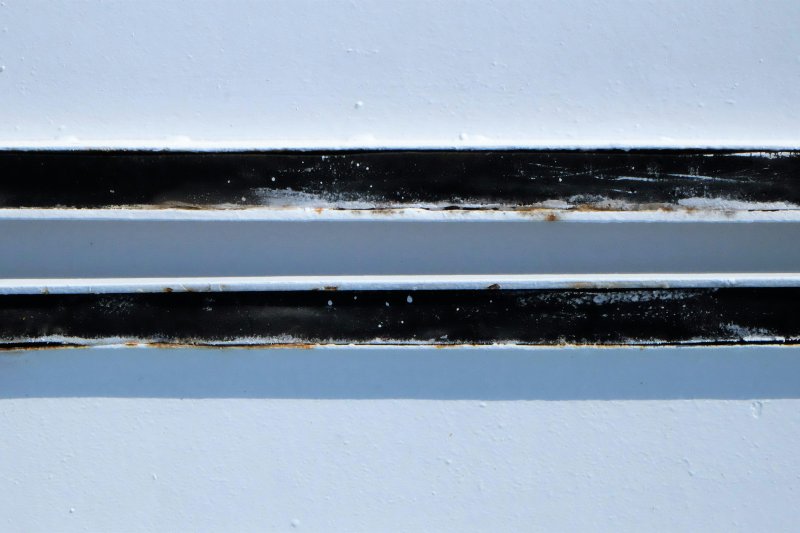
Most homeowners panic about “toxic black mold” (Stachybotrys chartarum) because of two decades of local-news segments. The CDC’s actual position is more sober than the panic suggests. The agency states plainly: “It is not necessary to determine what type of mold you may have growing in your home or other building. All molds should be treated the same.” On the specific health-effects question, CDC’s published facts page is equally direct: “A possible association between acute idiopathic pulmonary hemorrhage among infants and Stachybotrys chartarum has not been proven,” and “at present, no test exists that proves an association between Stachybotrys chartarum and particular health symptoms.”
Both the Institute of Medicine and the WHO have reviewed the evidence and concluded there’s insufficient support for the dramatic “toxic mold syndrome” claims that drive a chunk of overpriced remediation quotes. Real adverse health effects from indoor mold exposure are well-documented for people with allergies, asthma, or compromised immune systems. Those effects come from any mold, not uniquely from Stachybotrys, and the cleanup protocol is identical regardless of species.
If a remediator quotes you a 2x premium because “this is black mold,” you’re being charged for the consumer panic, not for additional containment scope. Walk away and call a different IICRC-certified company.
When DIY is fine and when it isn’t
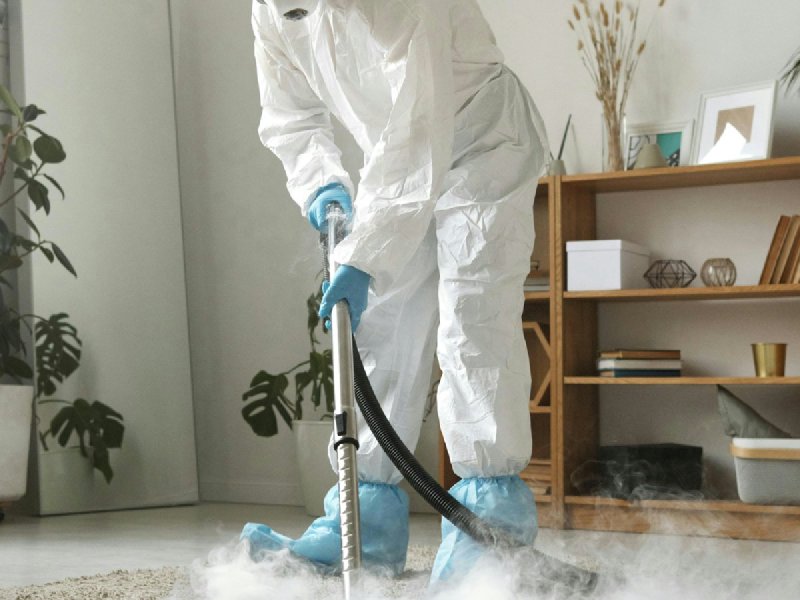
The EPA’s 10-square-foot rule is the simplest sane line. Below it, on hard surfaces, with the moisture source identified and fixed:
- N-95 respirator plus nitrile gloves plus goggles
- Detergent and water (bleach is unnecessary on non-porous surfaces and can damage some materials)
- HEPA-vacuum after scrubbing if you have one
- Discard any porous materials that absorbed water. Moldy drywall, insulation, and carpet padding cannot be cleaned. They have to be replaced.
- Run a dehumidifier until the area sits at 30 to 50 percent RH for several days
Skip DIY when any of the following is true:
- Affected area exceeds 10 sq ft of contiguous Condition 3 growth
- Mold is in HVAC ductwork or near return vents (cross-contamination risk)
- Hidden mold is suspected behind a wall or above a ceiling (moisture meter reads high without visible cause)
- Anyone in the home has a serious respiratory condition or a compromised immune system, or there’s an infant under one year old
- Major water damage event such as a flood or multi-day leak. Drying is the controlling problem, not just visible cleanup.
The instinct most homeowners get wrong is starting with cleanup before drying. If the wall cavity behind your bathroom is still at 60 percent moisture content when you wipe the visible patch, you’ve delayed the problem by two weeks. Industrial drying with air movers plus a desiccant or LGR dehumidifier running 48 to 72 hours is what actually stops regrowth. The EPA’s own framing: “If wet or damp materials or areas are dried 24-48 hours after a leak or spill happens, in most cases mold will not grow.”
Vetting a remediator without getting upsold
A real IICRC-S520 remediator differs from a sales-driven outfit pushing scare tactics:
- Independent inspector first. Never let the same company test your air, declare the problem, and bid the cleanup. The conflict is structural. Hire an independent mold inspector for the assessment, then bid the remediation separately. The $400 you spend on the inspector saves several thousand on inflated scope.
- Written scope tied to S520 Conditions. A real bid identifies the Condition 3 source area, the Condition 2 zones, the containment plan, the source-removal method, and the post-remediation verification approach. A bid that just says “remediate mold in master bathroom: $4,500” is not a bid; it’s a number on a piece of paper.
- Moisture source on the contract. If the bid doesn’t reference the moisture cause and how it’s being addressed (separately or in coordination with a plumber or roofer), the job will fail. The remediator should refuse to schedule until that fix is documented.
- Post-remediation verification. Reputable shops include a clearance step: visual inspection by an independent third party, optionally with air sampling that compares post-work indoor counts against an outdoor reference. If the bid skips PRV, the remediator is hoping you won’t ask.
For related repairs, the foundation and crawl space repair guide covers crawl-space mold scope at $1,500 to $6,000, which is one of the most common mold sub-jobs in older homes. The slab leak repair guide explains the underlying water cause behind a chunk of “sudden mold” insurance claims. For homes with chronic humidity from envelope leakage, blower door testing identifies the air-infiltration paths that keep moisture cycling through wall cavities.
Bottom line on mold damage spending
Mold damage is two problems priced as one: a moisture problem and a contamination problem. The cost guides that quote a flat per-sq-ft number skip the part that decides your final bill — whether the underlying leak is identified and fixed, and whether the contamination has spread beyond what you can see into wall cavities or HVAC returns. That spread is the line between a $1,500 bathroom job and a $12,000 whole-floor scope at the same visible square footage.
An independent inspection before you take a remediation bid is the single best money you’ll spend on this problem. Check your policy’s mold sublimit too — most homeowners discover the cap after the invoice arrives, not before. If a contractor is selling you on the species name on your wall instead of the moisture source behind it, you’re talking to the wrong contractor.