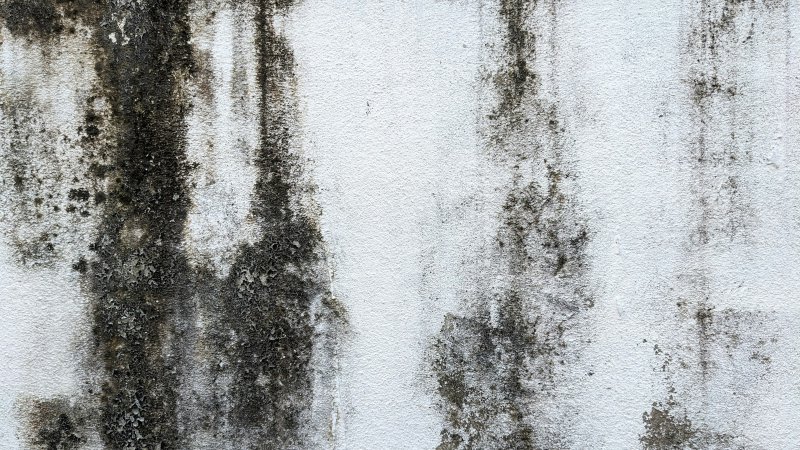
A mold removal service costs $10 to $25 per square foot for visible surface mold and $15 to $30 per square foot when the contamination is hidden inside wall cavities or HVAC ductwork. Total project pricing tracks scope: $500 to $1,500 for a small bathroom patch, $1,500 to $6,000 for a single room with drywall demolition, $15,000 or more for whole-house contamination after a major water event. Where your bill lands depends on visibility, square footage, scope of demolition, and which of the IICRC S520 process steps the contractor actually performs.
The per-square-foot number gets quoted as if it were the whole story. It isn’t. A 30-square-foot patch on a tile shower wall and a 30-square-foot patch behind a kitchen cabinet produce different bids because the second one means containment, demolition, framing access, and cleanup of whatever the moisture spread to behind the wall. Visibility is the cost driver.
What a mold removal service charges in 2026
The pricing matrix below comes from 2026 contractor data reported by Angi, This Old House, and HomeGuide, cross-checked against IICRC S520 scoping logic and the state licensing rules that drive regional variance. The visibility split is the part most consumer guides flatten into one range.
| Mold location | Per sq ft | Where you’ll see it |
|---|---|---|
| Visible surface mold (Condition 3 patch) | $10–$25 | Bathroom tile, exposed drywall face, basement wall surface |
| Hidden / behind-wall (cavity work required) | $15–$30 | Behind cabinets, inside framing, beneath baseboards |
| Specialty (HVAC ducts, hardwood saturation, masonry) | $25–$75+ | Duct cleaning + coil + plenum, rotted hardwood subfloor |
Total project tiers track scope rather than location:
| Scope tier | Project total | Typical job |
|---|---|---|
| Small visible patch | $500–$1,500 | Bathroom shower wall, single-room <30 sq ft |
| Single room with cavity work | $1,500–$6,000 | Bathroom + adjacent wall, 30–100 sq ft |
| Multi-room or whole floor | $6,000–$15,000 | 100–500 sq ft, two or more rooms, structural drying |
| Whole house after major water event | $15,000–$30,000+ | Multi-floor contamination, post-flood Category 3 with S520 handoff |
Labor accounts for more than half of any of those numbers. The materials a remediator uses on a typical job are surprisingly cheap. A roll of 6-mil polyethylene runs $25 to $50 per 100 square feet, an N-100 respirator costs about $40, antimicrobial cleaner is priced like industrial-strength bathroom spray. What you’re paying for is technician hours at $75 to $120 each. Add the daily rental on a HEPA air filtration device at $90 to $150 per machine, plus a low-grain refrigerant dehumidifier at $75 to $140 per machine running for two to four days, and the equipment line on the bid still trails the labor line.
The deepest pricing premium comes from hidden mold. Locating it adds inspection hours. Opening the wall adds demolition labor. The assumption that visible square footage equals total contamination almost always understates the scope. A remediator quoting based only on what’s visible without using a moisture meter behind the wall is quoting a number that’s going to grow once demo starts. The legitimate operators bake a contingency into the original bid; the bidders who win on price the first time write change orders three days into the job.
Why visibility drives the per-square-foot rate
A 30 sq ft visible patch on a tile shower wall takes a single tech, a few hours, basic containment, and produces minimal demo waste. The same 30 sq ft pulled out of a wall cavity behind kitchen base cabinets takes two techs, half a day of demo and reframing, double the containment scope (cabinet uppers and adjacent rooms), and a Condition 2 cleaning of every surface within a fifteen-foot radius. Visible scope is identical between those jobs. Labor and disposal costs are not. That spread is the gap between $10 and $30 per square foot in a single number.
HVAC mold pulls a third premium beyond hidden-cavity pricing. Duct cleaning under S520 contamination protocol is not the same as the $300 promotional duct cleaning; it requires HEPA-vac of every accessible duct surface, sealed encapsulation if porous duct board is present, and often the air handler coil and drain pan. That work runs $2,000 to $10,000 by itself before any drywall comes off in the rooms the ducts serve.
The four-step S520 process you’re paying for
ANSI/IICRC S520 is the standard the legitimate end of the industry follows. Its Fourth Edition (2024) is the one in force, and it codifies what a mold remediation project should look like across twelve sections covering principles, qualifications and safety, structural and HVAC remediation work, and the post-remediation verification chapter that anchors the homeowner’s clearance file. The work itself condenses into four steps.
Step 1: Engineering controls and containment
Before any cleanup starts, the work zone gets isolated. For projects over 100 square feet, that means full containment: 6-mil polyethylene sheeting taped floor-to-ceiling, a zippered decontamination chamber at the entry, and a negative-air machine pulling four to six air changes per hour through a HEPA filter that exhausts outside the structure. The HEPA AFD (air filtration device) sizing is what determines whether containment actually contains. A bid that lists one machine for a 400 sq ft contained zone is undersized; the room needs two.
For 10 to 100 sq ft jobs, EPA’s parallel guidance allows limited containment — a poly sheet over the work area without a chamber. Below 10 sq ft, EPA says no containment system is needed, which is also where the DIY threshold from the mold damage cost guide lives.
Step 2: Source removal
Porous materials that absorbed mold growth get demolished and bagged for disposal. That category includes drywall, fiberglass insulation, carpet padding, ceiling tile, particleboard, MDF trim. None of those are cleanable. The S520 standard is unambiguous on this point: porous materials with active growth are removed, period.
Non-porous materials inside the contained zone (framing studs, concrete, metal, glass) get HEPA-vacuumed and then wiped with an antimicrobial cleaner that meets the standard’s biocide criteria. The vacuum has to be a true HEPA unit, not a shop vac with a fine filter pretending to be one. A consumer-grade vacuum will redistribute spores throughout the rest of the house faster than the homeowner can pay for cleanup.
Step 3: Cleaning of contents and adjacent areas
Anything within the Condition 2 zone (settled spores and fragments from the visible source) gets cleaned: surfaces wiped, soft contents HEPA-vacuumed or laundered, HVAC supply diffusers and return grilles wiped down. The 4th edition of S520 added explicit attention to mycotoxins and extracellular matrix material, which means the cleaning protocol now expects more than visible spore removal. Practically, that means more wipe-downs across the room rather than just the contained zone, and longer technician hours on a job that looked small on the bid line.
Step 4: Post-remediation verification
PRV is the step bids most often quietly drop. The clearance check is performed by an independent indoor environmental professional, typically a Certified Industrial Hygienist, after the remediator says the work is done. Visual inspection alone runs $300 to $500. Add three or four air samples sent to a lab and you’re at $500 to $1,000. For projects above $5,000 or any claim where an insurer is involved, PRV is what closes the file.
Note the language carefully. PRV (Post-Remediation Verification) is independent. The remediator’s own self-check is called PRE (Post-Remediation Evaluation), and it’s not the same product. If a contractor offers to “handle the verification in-house,” that’s PRE being sold as PRV. The AIHA Mold Guideline and S520 Section 12 are both clear on the distinction. Your insurer will be too, when the claim is reviewed.
How to vet a mold removal service
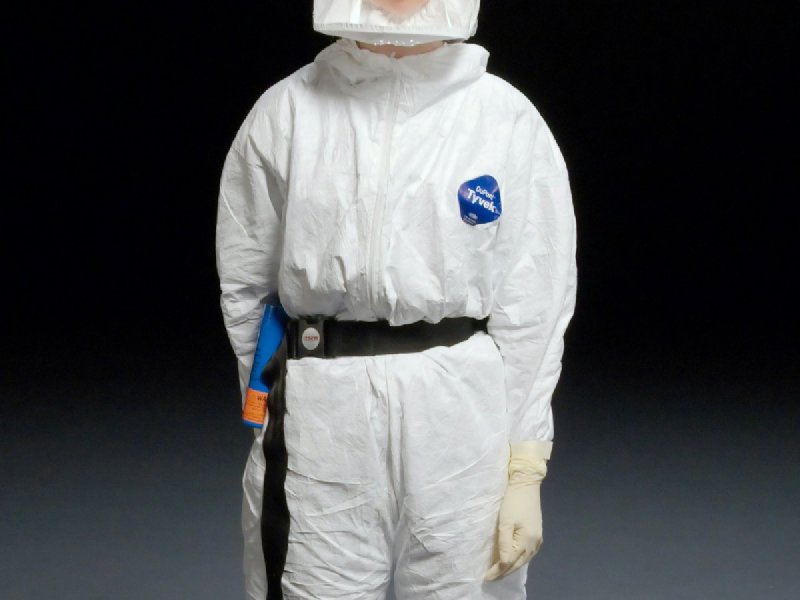
Four concrete asks separate a real S520-trained service from a sales-driven outfit pushing scare tactics:
- AMRT certification, by number. The Applied Microbial Remediation Technician credential is the IICRC certification built around S520. It requires the WRT certification as a prerequisite, then a four-day in-person course and a closed-book exam at $150 paid to IICRC. “IICRC certified” on a truck door does not mean AMRT — it could be WRT, ASD, or another credential. Ask for the technician’s certification number, then look it up on the IICRC certified technician registry to confirm AMRT is current.
- Written scope tied to S520 Conditions. A real bid identifies the Condition 3 source area, the Condition 2 zones, the containment plan, the source-removal method, and the verification approach. A bid that says “remediate mold in master bathroom: $4,500” is a number on a page, not a contract you can hold a remediator to.
- Independent assessor on the front end. Florida statute, New York Article 32, and Texas TDLR all codify the same rule: the firm assessing the contamination cannot also remediate it. Even outside those states, hire the inspector and the remediator separately. The conflict is structural, not theoretical.
- Moisture source on the contract. If the bid does not reference what caused the mold and how that source is being addressed, the job will fail. The remediator should refuse to schedule until the underlying water problem (a leak, a roof failure, or an envelope defect) is documented as fixed or coordinated for fix.
A surprising number of homeowners discover the assessor-and-remediator-as-the-same-company problem only after the fact. The free inspection from the company that sent a truck after the water-damage call is not free. It’s how the company qualifies you for the cleanup bid they were going to write either way, and the scope they propose tends to grow to fit the inspection’s findings.
State licensing variance: why a Florida bid and a Texas bid don’t compare
National cost guides flatten state regulatory cost into a single per-square-foot range. They shouldn’t. Three states illustrate the spread:
Florida — F.S. 468.84 (Mold-Related Services Act)
Any remediation project larger than 10 square feet of mold-contaminated material requires a DBPR-licensed mold remediator. Education requirements are real: a two-year associate degree plus 30 semester hours plus one year of field experience, OR a high-school diploma plus four years of documented field experience. The state also enforces the assessor-remediator separation as a statute rather than as a best practice. A Florida bid above 10 sq ft from an unlicensed operator is illegal and uninsurable. Out-of-state restoration franchises operating in Florida have to register the local technicians under the Florida statute; the franchise certificate alone doesn’t cover them.
Texas — TDLR Mold Assessors and Remediators (16 TAC §295)
The exemption threshold is less than 25 contiguous square feet of visible mold, with no dollar threshold attached. Above that area, projects require a TDLR-licensed Mold Remediation Contractor. Workers carry separate registrations under the same TDLR program. The same separation rule applies as in Florida: the firm performing the assessment cannot perform the remediation on the same project.
The 25-sq-ft Texas threshold and the 10-sq-ft Florida threshold both create a gray zone for jobs in the 10–25 sq ft band. A bid for a 20-sq-ft patch in Texas can be done by an unlicensed operator legally; the same job in Florida cannot. The pricing reflects it.
New York — Labor Law Article 32
No square-footage exemption at all. Every commercial mold remediation project, along with every residential project where the homeowner isn’t doing the work themselves, requires four distinct license categories: Mold Assessor, Mold Remediation Contractor, Mold Abatement Worker Supervisor, and Mold Abatement Worker. The remediation contractor license requires $50,000 minimum liability coverage. Application fees range $50 to $1,000 by license class, with the contractor fee set at “not less than $500 nor more than $1,000.” Article 32 also bars the assessor and the remediator from being the same entity, and requires the assessor’s written remediation plan to be the document the remediator works against.
The practical takeaway for a homeowner reading bids: a $4,500 quote from a properly licensed New York Article 32 firm and a $2,800 quote from an unlicensed Texas operator describing the same 50 sq ft job aren’t comparable. The licensing infrastructure shows up in the price, and where licensing is loose, the verification step is the one that gets cut to make the bid look competitive.
Insurance: the buyer’s posture
The mold cost question and the insurance question get tangled together in nearly every guide on the subject. They’re separate decisions. Whether your homeowners policy will pay for any of the cleanup depends on the covered cause — was there a sudden, accidental water event your policy already covers — not on the mold itself. Standard HO-3 policies cover mold remediation only when the underlying water damage is covered: burst pipe, washing machine overflow, broken supply line, ice dam in some cases. Gradual leaks, long-running condensation, and any flood-caused mold are excluded.
Most policies also cap mold-specific payouts even when the cause is covered. The cap and the math behind it live in the mold damage cost guide , which owns the insurance side of this topic in detail. From the buyer’s posture: get the cause documented in writing before the remediator starts, and make sure your invoice ties the mold growth to the dated water event.
When you’re calling a mold removal service vs. handling it yourself
EPA’s 10-square-foot threshold is the simplest sane line. Below it, on hard, non-porous surfaces, with the moisture source identified and fixed, a homeowner can clean visible mold safely with detergent and water. The mold damage guide walks through that DIY scope in detail.
Above 10 sq ft, or anywhere porous materials are involved (drywall, insulation, carpet, ceiling tile), or anywhere the source is hidden behind a wall, you need a service. Same goes for any mold inside HVAC ductwork (the cross-contamination risk is too high for a homeowner-grade vacuum), any project where someone in the home has a serious respiratory condition or compromised immunity, and any mold that followed a major water event such as a flood or multi-day leak. When the underlying event was a water intrusion, the water damage restoration service cost guide covers the S500 drying phase that precedes mold remediation, and the water damage restoration guide walks through how that seven-step drying process hands off to S520 once secondary damage sets in. For flood-caused mold specifically, the flood restoration cost guide covers the IICRC S500 to S520 handoff that drives those scopes into Tier 4 territory fast.
Bottom line on hiring a mold removal service
A mold removal service bundles two products. The cleanup work itself is well-defined by the S520 four-step process and priced predictably by visibility and square footage. The credential and verification work is what separates a $3,500 bid from a $7,000 bid for the same visible scope. A properly licensed, AMRT-certified, third-party-verified job costs more on the front end and produces a paper trail your insurer and the next buyer of your house will accept.
The cheap bid that skips containment, skips moisture-source documentation, and skips post-remediation verification is the one that comes back at twice the price in eight months. Read the bid before reading the price.