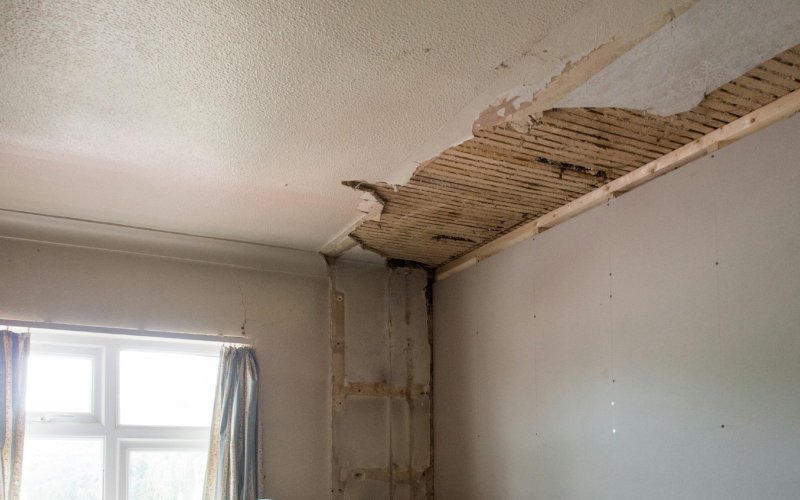
Water damage restoration is the structured process of returning a building to pre-loss condition after a water event. It runs on a published industry standard, ANSI/IICRC S500, Fifth Edition (2021), that defines what crews do at every stage from the first moisture-meter reading to the final dry-out clearance. A typical residential job takes five to seven days of mitigation, costs $1,400 to $6,400 for the average loss, and ends before any drywall goes back up. Reconstruction is a separate contract.
What follows is the actual workflow a certified restoration crew runs: what they assess, what equipment they roll in, why their truck has six air movers and an LGR dehumidifier strapped to a pallet, and when you can skip the call entirely. For deep cost ranges and the contractor-hire negotiation, see our water damage restoration service cost guide .
The seven-step IICRC restoration process
Every reputable restoration company follows roughly the same sequence. SERVPRO publishes their version as eight steps, PuroClean splits it differently, but underneath the marketing the workflow tracks IICRC S500.
- Emergency contact. Crew dispatched after the phone scoping, with an ETA committed. Major franchises target one to two hours from call to on-site for residential losses.
- Inspection and assessment. Tech arrives with moisture meters, a thermo-hygrometer, and an IR camera. Photographs the scene. Determines the water category and damage class. Identifies the source and stops the active flow if it’s still running. Writes the work authorization the homeowner signs.
- Water extraction. Standing water comes out first. A typical truck-mount extractor pulls hundreds to thousands of gallons through a 1.5-inch hose at 400 to 1,200 PSI. Portable extractors top out at 100 to 300 PSI and run on AC power inside the house. Crew chooses based on loss volume plus building access.
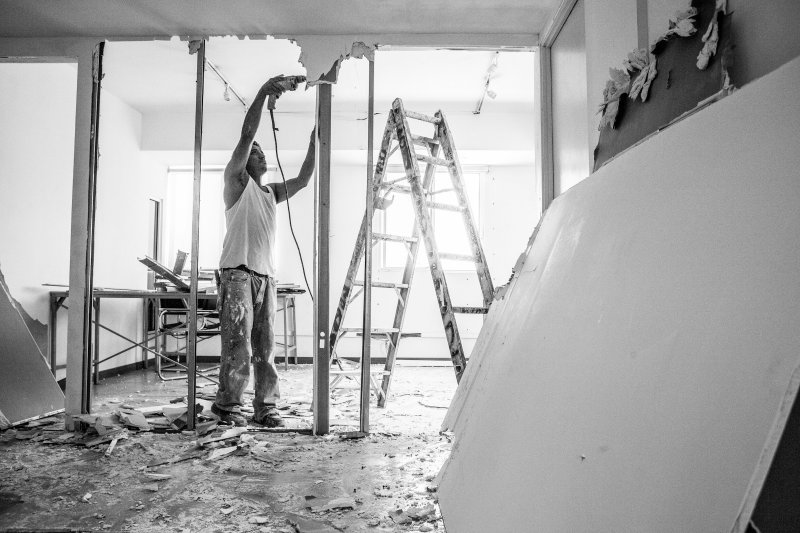
- Damaged-material removal. Carpet pad and saturated drywall come out, along with any wet baseboards. Standard practice: cut drywall 12 inches above the highest moisture-content reading on the wall. Insulation behind that drywall gets bagged and tagged. Hardwood and tile usually stay if the substrate dried fast enough.
- Cleaning and sanitization. Antimicrobial applied to framing and adjacent surfaces, with deodorization on porous materials. HEPA vacuums pull aerosolized particulates before air movement starts (running fans on contaminated surfaces aerosolizes the contamination). Cat 3 sewage scopes get heavier sanitization plus PPE protocols.
- Active drying. Air movers and dehumidifiers run continuously, typically for three to five days. The drying cycle is the longest phase by clock time. Temperatures held between 70 and 90°F to keep evaporation rates up.
- Monitoring and final clearance. Tech revisits daily, logs moisture-content readings, repositions equipment as the wet zones shrink. Final clearance is industry-standard dry: usually under 16% MC on wood framing and room-equilibrium humidity. The mitigation file goes to the insurer at this point.
After clearance, the equipment leaves and the homeowner signs off on mitigation. Repair work covering drywall, paint, trim, flooring, cabinetry starts as a separate scope on a separate contract.
What the categories and classes actually mean
Two classifications drive every downstream decision on the bid: the category of water (how contaminated) and the class of damage (how saturated). Both come from S500. Crews are required to determine them before pricing the job.
Water categories
| Category | Source | What it means for the job |
|---|---|---|
| Cat 1 (clean) | Burst supply line, tub overflow, rainwater, ice melt, toilet tank | Lowest cost per sq ft. Material can usually be saved if dried fast. |
| Cat 2 (gray) | Dishwasher / washer discharge, toilet bowl overflow without feces, aquarium | Moderate sanitization required. Carpet pad almost always replaced. |
| Cat 3 (black) | Sewage backup, ground or river flooding, toilet overflow with feces | Anything saturated must be removed and replaced. Pollution-liability insurance required. |
A Cat 1 loss reverts to Cat 2 in roughly 24 hours at room temperature. A Cat 2 loss reverts to Cat 3 within 48 hours. That degradation curve is why every restoration brand markets a sub-two-hour arrival window — the category determines the per-square-foot rate, and waiting changes the category.
Damage classes
Class 1 is a small leak in part of one room, minimal absorption. The Class 2 scope covers an entire room’s flooring with water wicked less than 24 inches up the walls. Class 3 is what happens when the leak comes from above: a burst pipe in a ceiling soaking everything below. At Class 4, the dryout is specialty work for hardwood, brick, stone, or concrete saturated to the core, which behaves differently from drywall and needs different equipment plus several extra days.
A single loss has both a category and a class — say, a Cat 2 Class 3 from a second-story washing machine that ran all weekend. The combination drives the price. Our service cost guide breaks out the per-square-foot rates by category and the total ranges by class.
Equipment that actually moves the timeline
Restoration is gear-driven. The same loss handled with the right equipment dries in three days; with undersized gear it drags to seven and the moisture content never quite gets there. Here’s what shows up on the truck.
Extraction
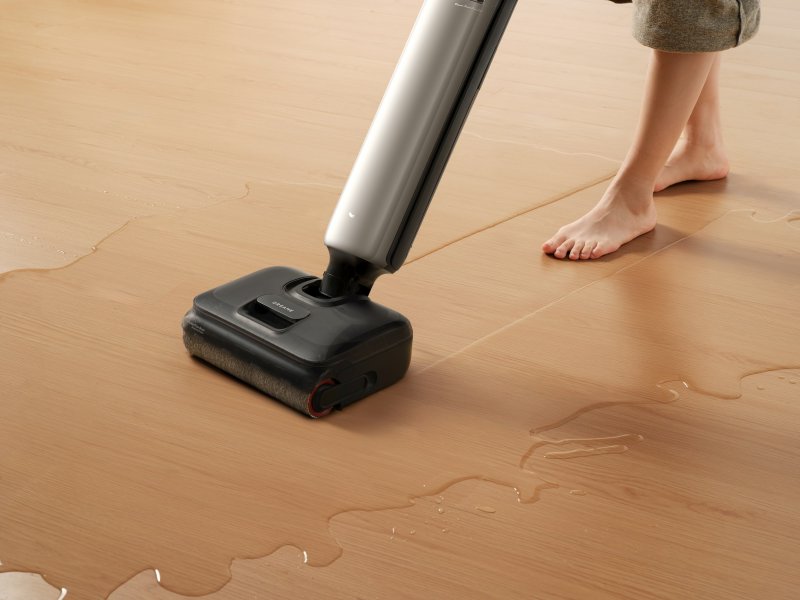
Truck-mount extractors ride in the company’s box truck and pull water through a long hose at 400 to 1,200 PSI. They run 2–4× faster than portable units on volume work and handle hundreds to thousands of gallons in a single visit. The trade-off: hoses get unwieldy in multi-story buildings, and some commercial sites won’t allow them. Portable extractors roll inside on wheels, plug into a household outlet, and top out around 100 to 300 PSI. Crews carry both and choose by access.
Air movement
Axial air movers (large fan, big airflow) push 2,500 to 5,400 CFM each and cover open floor area. Centrifugal “snout-nose” air movers focus a tighter stream at wall-floor junctions where water wicks up the bottom 24 inches of drywall. Industry practice: seven to eight air movers per XL dehumidifier, daisy-chained on dedicated 20-amp circuits so the breaker doesn’t trip mid-night.
Dehumidification
LGR (Low-Grain Refrigerant) dehumidifiers are the default. Mid-size LGRs pull about 80 pints per day under AHAM conditions; XL units hit 130 pints. LGR works because it can extract moisture down to 30–40 grain depression where standard refrigerant dehumidifiers stall out. Desiccant dehumidifiers appear on Class 4 specialty drying when humidity has to go below what LGR can reach, usually trailer-mounted on commercial losses. Plain refrigerant dehumidifiers show up on small Class 1 jobs.
Air filtration and HEPA
HEPA air scrubbers (also called air filtration devices, AFDs) like the Dri-Eaz DefendAir HEPA 700 run during cleaning and demo to capture airborne mold spores and particulates. Standard sizing: one 500-CFM AFD per dehumidifier setup. HEPA vacuums (Pullman-Holt 45 HEPAD, ProTeam LineVacer) come out before air movers fire up. Running fans on a contaminated surface without HEPA capture spreads spores everywhere.
Measurement
The instruments are unglamorous but determine when the job is actually done.
- Pin moisture meters (Delmhorst BD-10) read MC% by puncturing the substrate with two metal probes
- Pinless moisture meters (Protimeter SurveyMaster, Tramex ME5) read MC% capacitively without leaving holes in finished surfaces
- Thermo-hygrometers (Vaisala HM40, Delmhorst HT4000) read temperature, RH, dew point, GPP
- Infrared cameras at the entry-level $400 to $500 tier find hidden cold spots that map to wet cavities behind walls
A drying log without daily MC readings and dew-point math is a billing log, not a drying log. If the contractor’s final report doesn’t include those numbers, the insurer’s Xactimate auditor will spot it.
DIY versus calling a professional
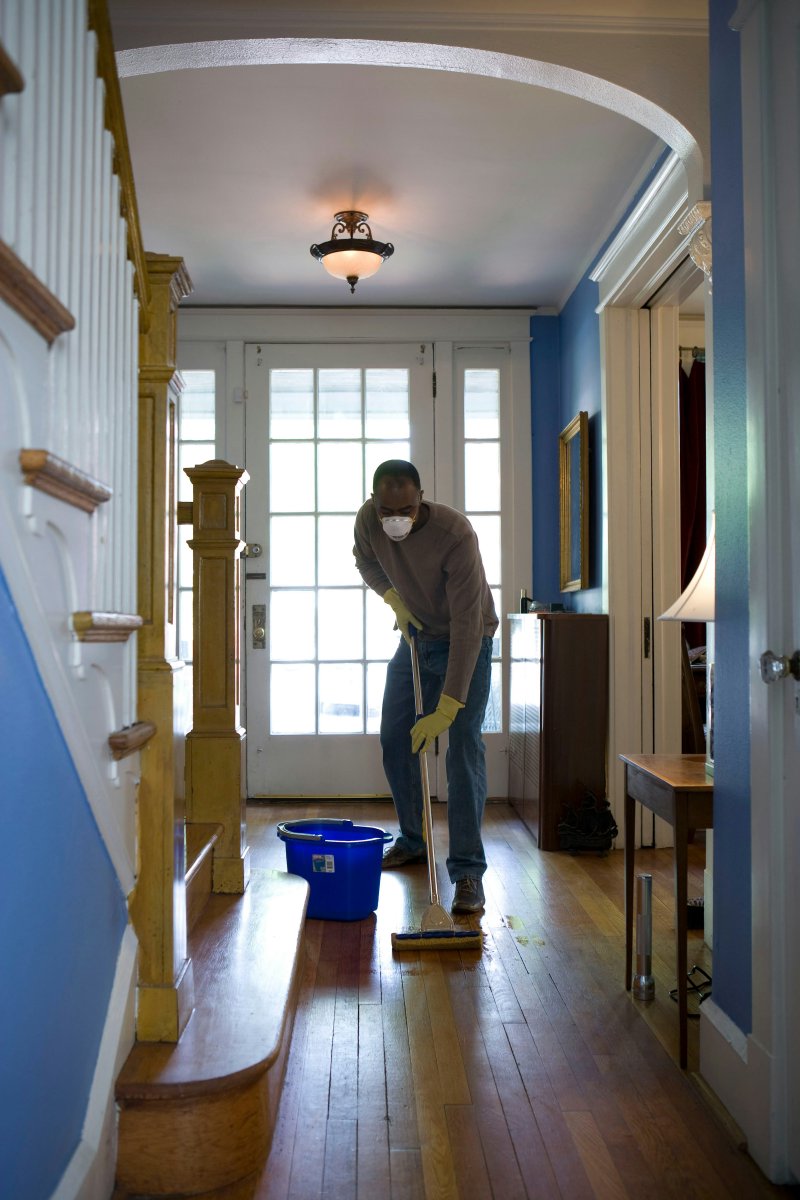
A meaningful slice of small water losses can be handled by the homeowner. The EPA’s mold cleanup guidance draws the cleanest line: “If the moldy area is less than about 10 square feet (less than roughly a 3 ft. by 3 ft. patch), in most cases, you can handle the job yourself.”
That same threshold applies upstream to the water event itself. A clean-water spill under 10 square feet on a non-porous surface, dried within 24 hours, is genuinely a homeowner job. Above that — or in any of the EPA’s no-DIY conditions below — call a pro:
- More than 10 square feet of affected area
- Any sewage or other contaminated water source (Cat 3 black water)
- Any indication water reached the HVAC system
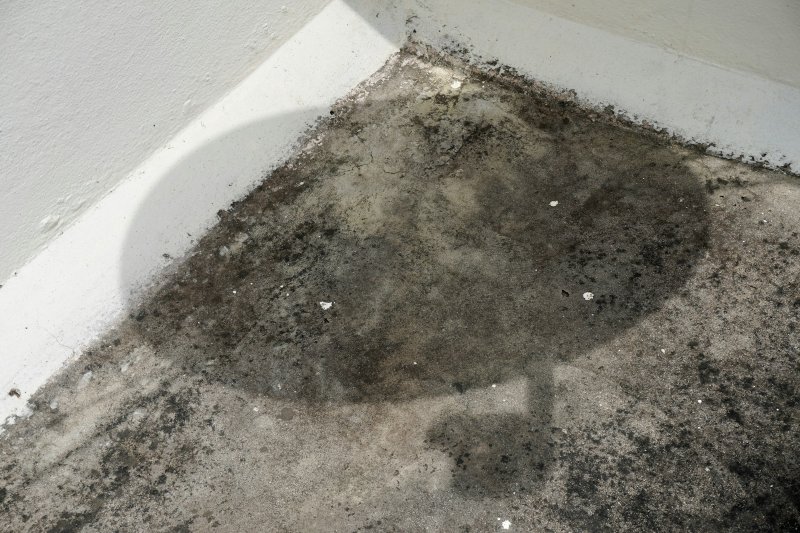
- Suspected mold of any species, particularly in framing cavities
- Any household health concern, especially asthma or immunocompromise
For an in-scope DIY job, rent a wet-dry vacuum plus a basic dehumidifier (50–70 pints) and two box fans from a local hardware store. Pull the wet, dry the cavity, watch the wall for 14 days. The visible part is easy. What homeowners get wrong is leaving carpet pad in place (“the carpet looks fine on top”). Wet pad grows mold within 48 hours regardless of what the carpet face looks like. Pull the pad. Dry the slab. Replace the pad later.
A loss that crosses any of the EPA carve-outs needs an IICRC-certified crew within hours, not the next morning. The mold-onset window is 24 to 48 hours from exposure. Past that, the cleanup contract turns into a remediation contract, and remediation is where the mold damage cost guide numbers live.
National franchise versus local independent
Most homeowners default to whichever billboard or insurance-portal recommendation surfaces first. The choice between a franchise and a local independent has real trade-offs.
SERVPRO runs 2,380+ franchise locations and reaches roughly 97% of U.S. ZIP codes within two hours of a call. Direct insurance billing is built into the workflow, the dispatch system is 24/7, and adjusters at major insurers know how SERVPRO writes a bid. The downside: technician quality varies by individual franchise. The crew that shows up to your house works for the local owner, not corporate.
PuroClean is the second-largest franchise network, present in 44 states plus DC. Their proprietary “QuickDry” workflow gets marketed as faster than baseline. Same franchise quality-variance caveat applies. A logo above the door does not guarantee the certification on the lead tech inside.
Local independents are everything else: family-owned shops, multi-truck regional outfits, single-trailer operators. The good ones know the local adjusters by name, write tighter scopes on Cat 3 jobs because they’ve negotiated similar losses fifty times in your zip code, and don’t carry the franchise’s volume-discount agreement with the insurer. The bad ones disappear after the check clears with no insurance and no certification on file.
What matters is the lead technician’s credentials, not the franchise label. Ask for the IICRC Water Damage Restoration Technician number, look it up on iicrc.org’s registry , and verify the certification is current (it expires every four years). Our service cost guide covers the four-check verification protocol in detail; an active WRT number on the lead tech is the single signal worth checking before signing.
What the homeowner actually does during the job
Most of the work happens without the homeowner home, but a few things only you can do:
- Photograph the loss before any equipment runs. Phone camera is fine; date-stamped photos document the scope for the insurer.
- Save the plumber’s receipt for the source repair. The mitigation crew won’t fix the burst pipe; that’s a separate trade billing $75–$130/hr typical.
- Don’t move wet contents to “dry rooms.” That spreads contamination and bills more.
- Keep the equipment running. Crews leave fans and dehumidifiers in place for a reason. Shutting them off overnight to save on the electric bill extends the drying cycle, and the contractor will document it.
- Read the work authorization before signing. The mitigation scope and the repair scope should be separate line items, not bundled into one number.
A water loss runs on a clock with a hard biological deadline. Mold doesn’t wait. Within 48 hours of the leak, either the structure is dry or you have a second problem on top of the first. The restoration process is what stands between those two outcomes.