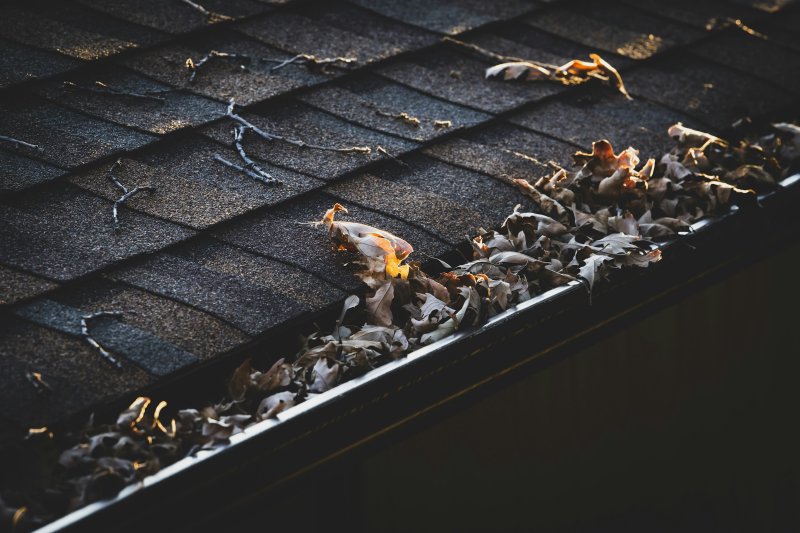
A rain gutter cleaning service costs $145 to $250 for a single-story home in 2026, $180 to $360 for two-story, and $210 to $450 for three-story. Per linear foot the math lands at $0.70 to $1.30 on a one-story and $1.25 to $2.50 on a two-story. The national average sits at $360 per appointment per This Old House, with most homeowners paying between $191 and $529.
The cheap-quote trap is real on this trade. A neighborhood handyman with a ladder will quote $90 to clean a single-story 1,800 sq ft home, and that’s exactly what you’ll get: leaves out, no inspection, no downspout flush, no mention of the 1/2-inch sag in the back run that’s slowly rotting your fascia. This guide is about what a real cleaning includes, when guards make sense, and what the brand systems are actually selling you.
What you’re paying for (versus what cheap quotes skip)
A competent residential cleaning visit takes 60 to 90 minutes on a single-story home. The crew sets the ladder, scoops debris into a bag (no leaving it in your beds), flushes each downspout from the top with a hose to confirm flow, and walks each run looking for sag, separation at miters, and soft fascia behind the gutter back. Roughly 70 percent of your bill is labor per This Old House. The truck, ladder, and trash hauling are minor.
Skim two quotes side by side. The $90 handyman bid covers debris removal only. The $185 service quote covers debris, downspout flush, written sag/leak report, and (on most contracts) a small repair allowance like resealing one miter or replacing one section of strap hanger. Same crew time, very different value.
A clean job leaves your gutter dry within ten seconds of pouring a five-gallon bucket at the high end of each run. Ask for the bucket test on the first visit. Crews that skip it are the same ones who leave a half-pound of compost in the downspout elbow.
Cost by home size and story height
Story count drives price more than gutter footage does. The ladder math gets harder above 12 feet, and most cleaners price the whole job, not the linear foot, on residential work.
| Configuration | Typical service cost | Per linear foot |
|---|---|---|
| Single-story, ~125 lf | $145–$250 | $0.70–$1.30 |
| Single-story, ~200 lf | $175–$285 | $0.95–$1.25 |
| Two-story, ~150 lf | $180–$300 | $1.25–$2.00 |
| Two-story, ~200 lf | $255–$360 | $1.25–$2.50 |
| Three-story or 4,000+ sq ft | $300–$450 | $1.50–$2.50+ |
Steep roof pitch (anything over 7/12) adds 15%. Landscaping that forces ladder placement away from the gutter line tacks on 5–10%. Severely clogged gutters where debris has compressed into peat-grade mat run 10–50% over base, sometimes a flat $500. State variance is wider than most price guides admit: Georgia averages $150–$450 per visit, California $263–$694, with the rest of the country tracking the national midpoint.
How often, by tree type and climate
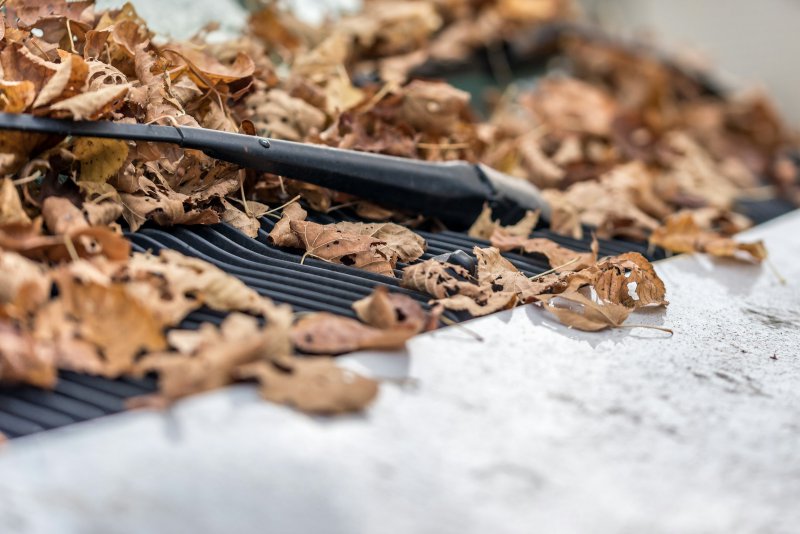
The “twice a year” rule covers maybe half of U.S. homes. Reality depends on what’s overhead.
- No overhanging trees, asphalt shingle roof: once a year, late fall.
- Deciduous trees within 30 ft (oak, maple, sycamore): twice, spring after pollen and fall after leaf drop. This is the default.
- Pine, spruce, hemlock, or any needle-shedder: four times a year. Needles drop year-round, weave through screens, and pack into downspouts.
- Mixed cover plus a flat or low-slope roof: three times a year. Debris doesn’t shed cleanly off shallow pitches, so it migrates into gutters faster than a steep roof would push it.
- Cold climates with ice damming: plus one late-November flush before freeze. Frozen debris is a downspout split waiting to happen.
Skipping a cleaning isn’t free. Hardened, wet, year-old leaf mat takes 2-3× the time to clear. Crews price that as the “neglected gutters” upcharge: anywhere from 10% to 50% over base. On bad cases (full mat with embedded shingle grit and seedlings), expect a $500 add-on to the base service.
Cleaning methods compared
Hand-clear with a ladder is still the dominant method on single and two-story homes. Other approaches show up in specific situations.
| Method | Typical use | What you trade off |
|---|---|---|
| Hand-clear and bag (ladder) | Default residential | Slow on tall homes; best for inspection |
| Ladderless vacuum (SkyVac Interceptor, Mighty Atom) | Three-story, steep pitch, busy weeks | Fast and safe; operator cannot feel fascia from the ground |
| Roof-blower (gas or 80V cordless from above) | Light dry leaves, walkable pitch | Blows debris into landscape; needs follow-up pickup pass |
| Pressure flush | Final step of any service | $50–$100 deep-clean add-on if downspouts partially blocked |
| Robot (iRobot Looj, Gutterbot) | DIY only | No bagging, no inspection, jams on wet mat |
Hand-clear remains the gold standard because the cleaner can push lightly behind each gutter section to test fascia, lift hangers to check spike pull-out, and clear pine-needle nests by hand where a vacuum would just push them deeper. Ground-based vacuum systems like the SkyVac Interceptor (Honda-engine professional unit, reaches 40 feet) and Mighty Atom (carbon-fiber poles, lighter for residential crews) have made multi-story work safer, but they trade tactile inspection for speed. If you’re hiring vacuum-only on a three-story, ask whether the crew will send a tech up afterward for a 5-minute pitch and fascia check.
Skip the robots: the Looj and Gutterbot brush debris ahead of them, jam on wet mat, bag nothing, and don’t belong on any pro quote.
Insider problems to flag while the cleaner is up there
The cleaner is on a ladder anyway. A good one will tell you about four things while up there. Ask about each one even if they don’t volunteer it.
- Pitch. Standard slope is 1/4 inch per 10 feet of run, dropping toward the downspout. A level laid on the gutter bottom shows it instantly. If a 20-foot run is dead level or back-pitched, you’ve got a hanger that’s worked loose or a sagging fascia behind the gutter. Re-hanging that section runs $50–$150 if the cleaner does it on the same trip.
- Fascia rot. Push lightly behind the back lip of each gutter section. Soft, spongy, or punky wood means rot. Replacement is $5–$15 per foot for primed pine, more for cedar, and the gutter has to come off to do it. Catching it during a $200 cleaning instead of after a $4,000 fascia, soffit, and gutter rebuild is the highest-leverage 30 seconds in this trade.
- Downspout discharge. Where does the water actually land? It needs to be at least 5 feet from the foundation, ideally 6–10 feet, and the further the better on flat or sandy soil. A $5 flexible extension or a $20 downspout sleeve solves most foundation-water problems. Most cleaners carry both on the truck.
- Miter and end-cap seals. Every inside and outside corner is a hand-cut miter sealed with butyl gutter sealant. Hairline cracks at miters drip onto the fascia behind them, hidden from below. A 30-second tube of sealant ($8 at any hardware store) reseals a cracked miter and pays for itself the first storm.
Hidden hangers spaced every 24 to 36 inches are the modern standard. Older homes still on spike-and-ferrule (a long nail with a sleeve, hammered through the gutter into the fascia) usually have at least one loose spike per 50 feet. Re-hanging those is part of a real cleaning service contract; it shouldn’t cost extra unless it’s more than two or three.
Gutter guards: when they’re worth bundling with cleaning
Bundling guard install with a cleaning visit saves you the second mobilization fee, $150 to $300 typical, because the same crew uses the same ladder for the same truck-roll. If you’re going to install guards within the next 12 months, do it on the cleaning visit.
The category breaks into five tiers. Pricing is installed cost per linear foot, 2026.
| Type | Cost / foot | Best for |
|---|---|---|
| Foam inserts | $0.30–$1.50 | DIY only; saturate, freeze, and fail in 2–4 years |
| Vinyl screens | $1–$3 | Sectional gutters, low budget; sag in 5–8 years |
| Brush inserts (Gutterbrush) | $3–$5 | Light leaf load, but traps pine needles and seeds |
| Aluminum / steel screens | $4–$10 | Solid mid-tier, locally installed, replaceable per section |
| Generic stainless micromesh | $6–$12 | Most homes; stops about 95% of debris |
| Reverse-curve / surface tension | $10–$25 | Steep pitches, heavy leaf load |
| LeafFilter (micromesh, 275-micron stainless) | $18–$45 (avg $22.66) | Lifetime transferable warranty matters at resale |
| LeafGuard (one-piece, replaces gutters) | $22–$38 most pay ($20–$70 range) | Whole-system replacement with no-clog guarantee |
| Gutter Helmet (reverse-curve) | $25–$60 | Brand installer lock-in; lifetime warranty |
Brand-name micromesh systems are not technically better than locally installed generic stainless micromesh of comparable mesh density. They’re better at marketing, transferable warranty paperwork at home sale, and no-questions-asked service callbacks. If you’re staying in the home 10+ years and you’ve got pines, the LeafFilter premium can pay back. If you’re moving in 5 years or have light leaf load, $6–$12/ft generic micromesh from a local cleaner-installer covers 90% of the use case.
The pine needle exception is real. Anything with mesh openings wider than 1mm (vinyl screens, brush, most aluminum screens) lets pine needles thread through and pack into downspouts. Stainless micromesh at 275 microns or finer (the category LeafFilter and comparable generics fall in) is the only type that stops them. Live under pines, spec micromesh; this isn’t optional.
Questions that filter bad operators
A few specific questions filter most of the bad operators out before they ever see your driveway.
- “Is this your W-2 employee or a sub?” The lead-aggregator sites (Angi, HomeAdvisor, Networx) sell your contact to 3–5 contractors who race to call. The winner usually subs the actual labor to the cheapest available crew. Direct-hire shops with W-2 employees show up in NextDoor and county Facebook groups, not in lead-gen ads.
- “Do you bag debris and haul it, or leave it in the beds?” This filters the day-rate lawn services who pretend to do gutters. Real cleaners haul.
- “Will you flush each downspout from the top and pour a bucket test?” This filters the operators who scoop visible debris and leave compressed mat in the elbows. The bucket test should empty within 10 seconds at the discharge end.
- “Will you walk the perimeter with me afterward?” A two-minute walkaround at the end is where the cleaner shows you the soft fascia spot, the back-pitched section, the loose miter. Operators who scoop and disappear without a walk are the ones who skip half the job.
Get two quotes minimum on cleanings over $200 and three on guard installs over $1,500. Compare line items not totals. The crew that flags the soft fascia behind the kitchen window and itemizes a pitch-correction allowance is the one to hire, even if they’re $40 higher than the next bid.
For broader cost framing on the gutter system itself, see the seamless gutter installation cost guide and the roofing cost guides hub as more guides publish. The SMACNA Architectural Sheet Metal Manual is the industry reference reputable installers use for downspout drainage design and gutter sizing. It’s useful background if you’re spec’ing 6-inch gutters or troubleshooting a chronic overflow.
DIY versus pro
A single-story home with no overhanging trees, easy ladder access, and a young homeowner with a Saturday is genuinely DIY territory. Bag, scoop, flush, done. Total cost: a $30 gutter scoop tool and a Saturday.
The DIY math breaks on three conditions. Two-story or higher: ladder safety risk dwarfs the $200 you’d save. Steep roof pitch: even working from a ladder, leaning to reach the gutter under a 9/12 pitch is how people fall. Suspected fascia rot: you don’t know what you’re looking at. Pay the $200, get the inspection, hear the truth about the back run.
About a third of home falls happen on or from ladders. The cost guide pays for itself the first time the cleaner says “you’ve got rot starting on the southwest corner” and you fix it for $300 instead of waiting until a section drops in the next storm and rebuilds at $4,000.