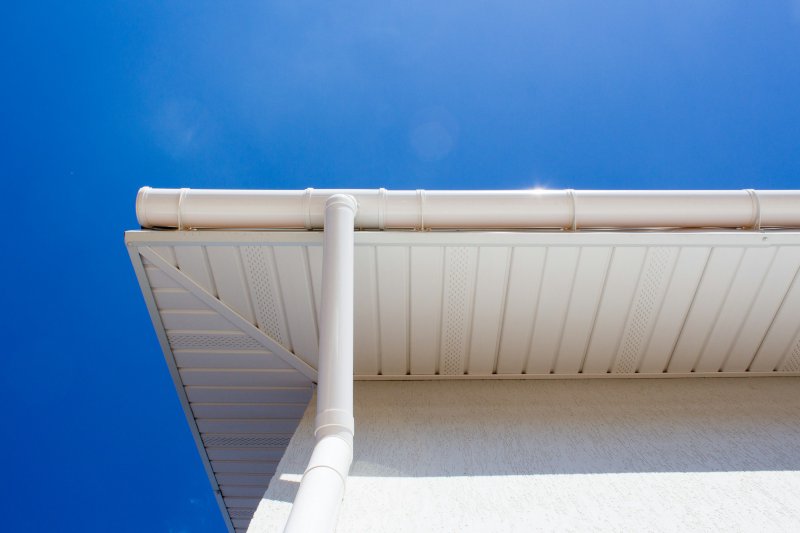
Seamless gutter installation costs $6 to $12 per linear foot for aluminum in 2026. Galvanized steel runs $8 to $15. Copper runs $25 to $50. Most single-family homes need 150 to 250 linear feet, so the typical aluminum project lands at $1,200 to $2,400 installed before extras. A full replacement averages $4,000 nationally including tear-off, downspouts, plus basic flashing repair.
The catch with searching “seamless gutter installation near me” is that local pricing varies more than the SERP averages suggest. A coastal Connecticut quote and a rural Tennessee quote for the same 200 feet of aluminum gutters can differ by $1,500 on the same material, same crew size, same install day. This guide unpacks why, what local quotes should actually include, and how to spot underbidders before they renegotiate at install.
What seamless actually means (and why it costs more than the box store)
A seamless gutter is run on-site from a single coil (typically aluminum, sometimes copper or steel) fed through a portable roll-forming machine. The machine sits on the installer’s truck. Coil goes in one end, finished K-style or half-round gutter comes out the other, cut to your fascia length within an eighth of an inch.
Sectional gutters are the alternative: 10-foot pieces from Home Depot or Lowe’s, joined by sealed connectors every 10 feet. Every connector is a future leak. A 100-foot run has zero seams as seamless and ten as sectional.
You cannot DIY seamless gutters without renting or buying the machine. New 5-inch portable roll-formers run $9,000 to $18,000. That’s the structural reason local installers exist for this trade: the equipment cost gates entry, and the truck has to come to your house.
The corner miters and the downspout drops are the only seams in a seamless system. Hand-cut miters at every inside and outside corner, sealed with butyl-based gutter sealant, are the leak point to inspect at install. A house with eight outside corners and four inside corners has twelve miters. Each one is a 5- to 10-minute hand fabrication and adds real cost that a vague “lump-sum” quote hides.
Cost per linear foot, by material
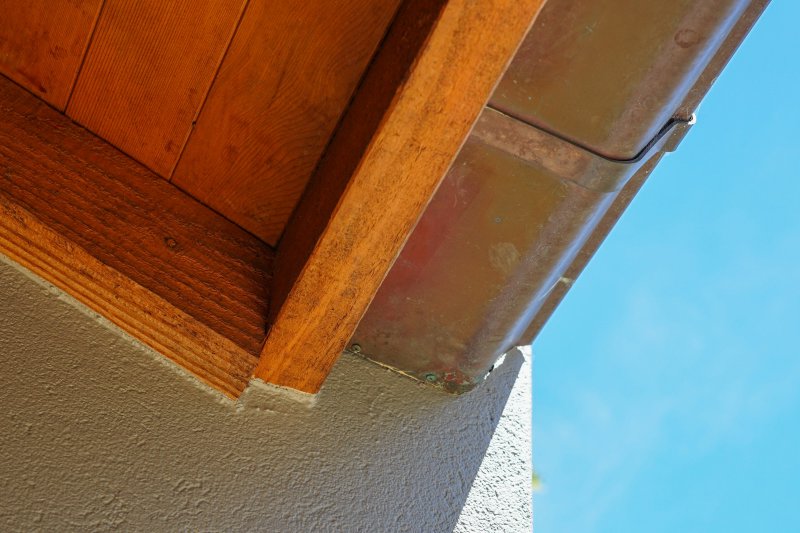
Aluminum dominates because it doesn’t rust, takes baked-on color, and costs a third of copper. Galvanized steel is regional, common in the Midwest, rare on the West Coast. Copper is architectural, mostly bought for visible front elevations on $1M+ homes or historic restorations.
| Material | Installed cost / linear foot | Typical lifespan | Best for |
|---|---|---|---|
| Aluminum (.027 standard gauge) | $6–$10 | 20–30 years | Most U.S. homes |
| Aluminum (.032 thicker gauge) | $7–$12 | 25–35 years | High snow load, ladder traffic |
| Galvanized steel | $8–$15 | 20–30 years | Strong winds, ladder dent risk |
| Copper | $25–$50 | 50–100 years | Historic, premium, visible runs |
| Zinc | $35–$45 | 60–80 years | Architectural specs only |
Coil gauge is the line item most homeowners don’t know to ask about. Aluminum coil ships in two thicknesses: .027 inch (budget, dents under a dropped ladder) and .032 inch (industry standard for residential per most installer norms). The .032 upcharge is roughly $0.50 to $1.50 per foot installed but doubles your dent resistance. If a quote doesn’t specify, assume .027 and ask. Big-box installers default to .027; reputable independents default to .032.
Copper is sold by weight and pricing tracks the commodities market. Quotes drift week to week. Get copper bids written within a 30-day expiration. Theft is a real factor in some metros (Detroit, Cleveland, parts of St. Louis), where copper downspouts disappear within weeks of install. Steel-lined or painted-aluminum hybrids exist for this reason.
Total project cost by home size
The per-foot number is useful for comparing quotes. The total dollar figure is what you actually budget. Below assumes single-story aluminum with one tear-off cycle and standard 2x3 downspouts.
| Home size | Linear feet | Aluminum installed | With tear-off | With basic gutter guards |
|---|---|---|---|---|
| 1,000 sq ft footprint | ~120 ft | $720–$1,440 | $840–$1,680 | $1,200–$2,640 |
| 1,500 sq ft | ~160 ft | $960–$1,920 | $1,120–$2,240 | $1,600–$3,520 |
| 2,000 sq ft | ~200 ft | $1,200–$2,400 | $1,400–$2,800 | $2,000–$4,400 |
| 2,500 sq ft | ~250 ft | $1,500–$3,000 | $1,750–$3,500 | $2,500–$5,500 |
| 3,500+ sq ft | ~350 ft | $2,100–$4,200 | $2,450–$4,900 | $3,500–$7,700 |
Two-story homes add $1 to $3 per foot across the board. Three-story or homes with cut-up rooflines, multiple dormers, plus steep pitch can push the upcharge to $10 per foot when scaffolding or a lift is required. Get the contractor to walk the perimeter before the quote. Phone-only estimates almost always miss the access challenge and renegotiate on install day.
Regional cost variance
The “near me” search query exists because gutter pricing is more local than most exterior trades. Coil cost barely varies; labor and overhead do.
- Northeast (NY, NJ, MA, CT): typically 15–25% above national averages per installer surveys. Permit complexity, parking logistics in dense areas, union labor in some markets.
- Pacific West (CA, OR, WA): typically 15–25% above. Driven by labor cost and wildfire-zone aluminum spec requirements.
- South (TX, FL, GA, NC): at or 5% below national average. Heavy competition, easier yard access.
- Midwest (OH, IN, MI, IL): national average, with steel more common than coastal markets.
- Mountain / High Plains: national average for material, +10% for snow-country labor windows.
Coastal markets within 5 miles of saltwater push aluminum gauge up to .032 minimum and exclude steel. Cold climates often add ice cables ($5–$15 per foot material plus electrician), which most cost calculators omit.
What a real quote includes (and what underbidders leave out)
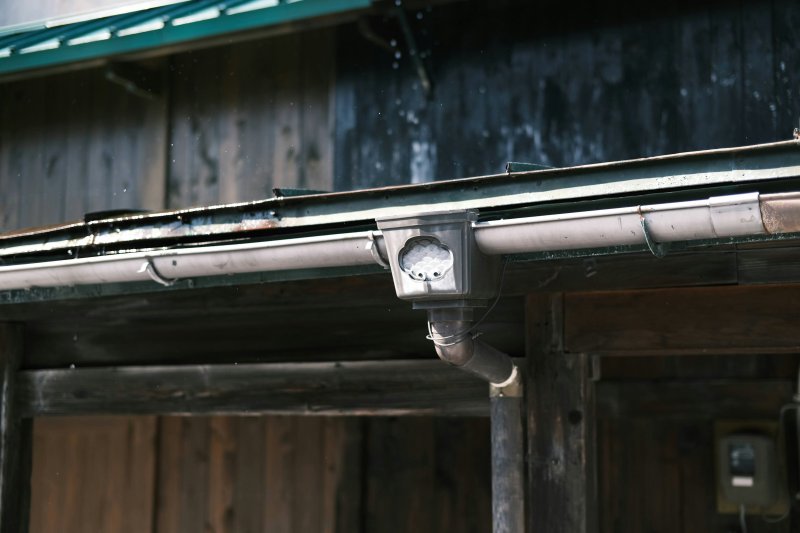
This is where local installer selection actually matters. Two quotes for the same house at $2,400 and $1,950 look like a $450 win until you read line items.
Insist on these line items in writing:
- Material gauge for aluminum (.027 or .032) and exact color code
- Gutter size (5-inch or 6-inch K-style) with rationale for the choice
- Downspout count, plus locations and extension length past the foundation
- Inside and outside miter counts (a 12-miter house is a different job from a 4-miter house)
- Hanger type and spacing (hidden hangers at 24"–36"; spike-and-ferrule is dated)
- Tear-off and haul-away as a separate dollar line, not buried in “preparation”
- Fascia inspection and any rotted-board replacement priced at standard wood rates
Downspouts deserve their own conversation. SMACNA guidelines and standard installer practice put one downspout per 20 to 25 feet of gutter run. A 200-foot system needs 8 to 10 downspouts. Quotes promising 6 downspouts on a 200-foot run will overflow during heavy rain and erode the foundation. Each downspout adds $30 to $75 installed, plus extensions ($5–$8 per linear foot) to throw water 5+ feet from the foundation.
Some red flags are harder to spot than missing line items. Watch for:
- Phone-only estimates with no site visit — they miss the gable ladders, the satellite dish in the way, the rotted fascia behind the soffit. The renegotiation happens on install day.
- “Lifetime warranty” with no transferability clause. A non-transferable warranty is worthless if you sell within five years.
- Subcontractor language buried in fine print. Many companies book the job and assign the cheapest available crew. Ask whether the bidding company’s W-2 employees do the install.
- Sectional and seamless quoted at the same price. If the spread is under 10%, one of the two is mispriced.
- Vague gutter guard pricing. “Includes leaf protection” can mean $0.30/ft foam inserts or $25/ft micromesh, a $5,000 swing on a typical house.
Gutter guards: bundle or skip?
Gutter guard upsells run from honest $4-per-foot aluminum screens to $45-per-foot brand-name micromesh. The decision matters because guards can double a project budget.
| System | Installed cost / foot | Warranty notes |
|---|---|---|
| Foam inserts | $0.30–$1.50 | DIY-grade; saturate and freeze |
| Vinyl screens | $1–$3 | Sag in 5–8 years |
| Aluminum screens | $4–$10 | Solid mid-tier, locally installed |
| Generic micromesh | $6–$12 | Stainless mesh; works for most leaf load |
| LeafFilter (micromesh) | $18–$45 (avg ~$23) | Lifetime transferable |
| Gutter Helmet (reverse-curve) | $25–$60 | Lifetime; brand-installer lock-in |
| LeafGuard (one-piece system) | $20–$70 | Replaces existing gutters entirely |
The brand systems are not technically better than reputable generic micromesh; they’re better at marketing and at warranty transfer paperwork at home sale. If you’re staying 10+ years and want zero gutter cleaning, brand systems pay back. If you’re staying under 7 years or have light leaf load, locally installed aluminum screens at $4–$10 per foot do 90% of the job for a fifth of the cost.
Pine needle territory is the exception. Long needles thread through any screen with holes wider than 1mm. Micromesh (45-micron mesh) is the only category that handles them. Live under pines, spec micromesh.
How to find and vet local installers
The literal “near me” search returns lead-aggregator sites first (Angi, HomeAdvisor, Networx). These resell your contact to 3–5 contractors who pay per lead, then race to call you. The contractors winning that race aren’t necessarily the best installers; they’re the ones with the marketing budget for lead-gen subscriptions.
Better paths to a real local installer:
- Manufacturer locator pages. ABC Seamless, Englert, Spectra Metals, Amerimax all list independent dealers by ZIP. Dealers running these machines are full-time gutter shops, not roofing companies that occasionally do gutters.
- Local roofing contractors with in-house gutter crews. They’re often cheaper than dedicated gutter shops because gutters are a margin add-on, not their primary revenue.
- NextDoor and county-specific Facebook groups. Word-of-mouth in your specific neighborhood beats any review aggregator.
- State contractor license lookup. Verify the license number on the quote against your state’s registrar database. Most states fine unlicensed gutter work and void homeowner insurance claims that involve unlicensed installers.
Get three quotes minimum, walk all three contractors around the house personally, and compare line items not totals. The contractor who measures with a laser, flags the soft fascia behind the kitchen window, and itemizes 10 downspouts on your 220-foot system is the one to hire, even if their quote is $400 higher than the company that gave you a number over the phone.
Installation day: what to expect
A competent two-person crew arrives between 7 and 9 a.m. with the truck-mounted gutter machine, ladders, scaffolding for any second-story sections, fasteners, sealant, and the coil. Sequence:
- Tear-off. Old gutters come down. Hangers and spikes get pulled. Allow 1 to 3 hours.
- Fascia inspection. Soft or rotted boards get flagged. Replacement is a separate line item, typically $5–$15 per linear foot for primed pine, more for cedar.
- Run new gutters. The machine extrudes each section to length right at the curb, the crew climbs and hangs immediately. Hidden hangers go in at 24"–36" intervals, screwed into the rafter tails or fascia structure.
- Miter and end caps. Hand-cut at corners, sealed with butyl-based gutter sealant. This is the single most important workmanship step — bad miters leak within two seasons.
- Downspouts and extensions. Plumbed from outlet to ground, secured to the wall every 8–10 feet, extended at least 5 feet from the foundation.
- Cleanup and water test. A garden hose at the high end of each run is the basic acceptance test. Walk the perimeter with the crew lead and check every miter and outlet under flow.
A 200-foot single-story job wraps in one day. Two-story or cut-up rooflines go two days. Pay 30–50% deposit, balance on completion after the water test. Never pay 100% upfront. That’s a tell for a fly-by-night operator who’ll skip the test and disappear.
For broader context on roof systems and how gutters integrate with roof drainage, see our roof inspection cost guide and the roofing cost guides hub as more articles publish.
When DIY makes sense
Almost never for seamless. You can’t run seamless gutters without the machine, and renting one (where rentable) costs $200–$400 a day plus a coil deposit. By the time you’ve factored machine rental, coil at retail markup, ladder rental plus the sealant and miter tools, your DIY budget approaches the contractor quote without the warranty.
DIY makes sense for sectional aluminum from Home Depot on a small, single-story rectangular ranch with no second-story access issues and no fascia rot. Material runs $3–$5 per foot, you’ll spend a Saturday, and you’ll be replacing them in 12–15 years instead of 25. For most homes, the math favors paying the contractor.
The standard gutter sizing and expansion-joint placement followed by professional installers comes from the SMACNA Architectural Sheet Metal Manual , which most reputable independents reference for downspout drainage design and metal-expansion tolerances. The sizing logic for 5-inch vs 6-inch capacity is the one technical decision a homeowner should make personally rather than delegate to the salesperson. Six-inch is right more often than installers default to, because the upcharge is small and the capacity gain is large.