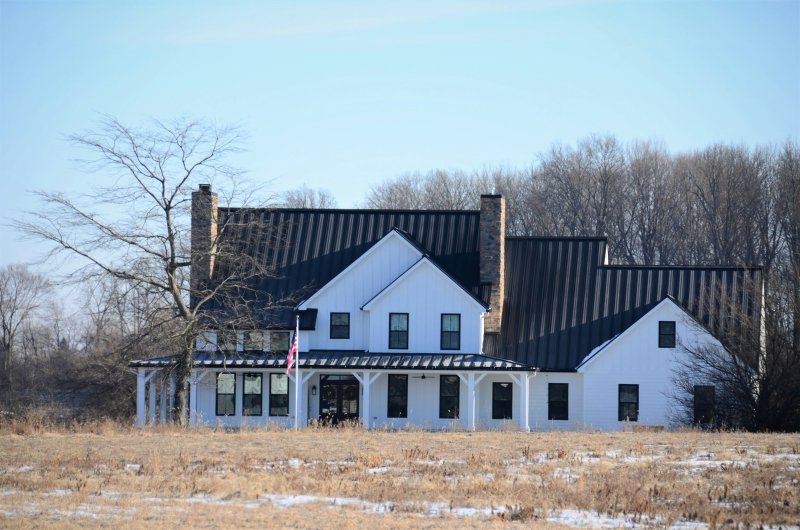
A metal roof in 2026 costs $7 to $17 per square foot installed for the systems most homeowners actually buy. Corrugated steel runs $7–$12. Stone-coated steel sits at $7–$13. Standing seam steel, the system contractors will try hardest to sell you, lands at $10–$16. Aluminum and zinc push higher; copper is its own conversation. For a 2,000 sq ft home in standing seam, expect $20,000–$36,000 all-in.
That’s roughly twice what you’d pay for architectural asphalt shingles, which is why most of the “is metal worth it” articles online avoid answering the question. The honest version: the upfront premium pays back if you stay in the house 25+ years, live somewhere with hail or wildfire risk, or care about not re-roofing in retirement. Otherwise it’s a luxury purchase. The numbers below are for picking the right system if you’ve already decided.
Cost by panel type
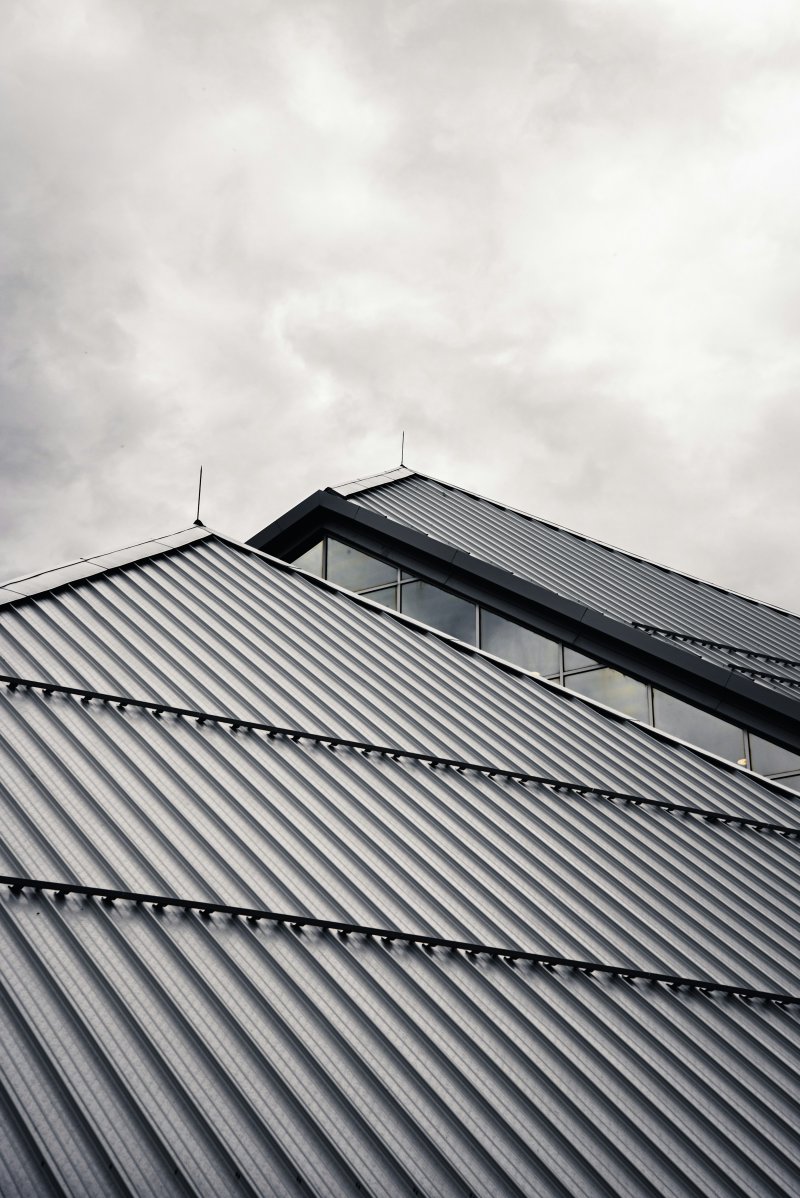
Five systems cover almost every residential metal install in the U.S. They are not interchangeable.
| System | Installed cost (2026) | Best for |
|---|---|---|
| Corrugated steel (through-fastened) | $7–$12/sq ft | Sheds, barns, simple ranches, budget jobs |
| Stone-coated steel (Decra, Boral) | $7–$13/sq ft | Homes wanting tile or shake aesthetics on a budget |
| Standing seam steel | $10–$16/sq ft | Most quality residential installs |
| Standing seam aluminum | $11–$17/sq ft | Coastal homes, salt exposure |
| Standing seam copper or zinc | $20–$30+/sq ft | Heritage homes, statement architecture |
The 30%–40% jump from corrugated to standing seam buys you concealed fasteners and engineered thermal movement. Through-fastened panels rely on hundreds of screws driven directly through the metal into the deck, each with a rubber washer that compresses the panel down. Standing seam uses hidden clips under the seams that let the panels slide as they expand and contract with temperature. On a 30-foot roof run, that movement can total half an inch between January and August.
This is the reason most reputable metal roofers won’t sell through-fastened panels longer than 20 feet for a residential roof. Past that length the screws wallow out their own holes from thermal cycling, and you get leaks at every fastener around year 15. Corrugated has a place. It works on outbuildings and small simple roofs. Contractors selling 30-foot screw-down panels on a residence are gambling with your roof.
Stone-coated steel is the underrated middle option. Companies like Decra and Boral press a steel substrate, dip it in a stone-aggregate coating, and produce panels that mimic clay tile or wood shake at a fraction of the weight and cost. They’re harder to install (most roofers don’t know the system), but they hit Class 4 hail rating, last 50+ years, and carry the visual style of premium materials.
Gauge, coating, and the levers that move the quote
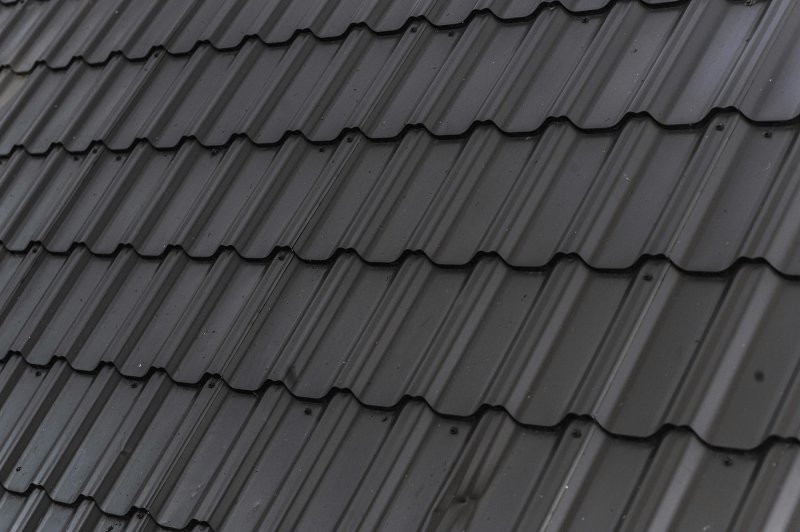
Square footage and panel type set the ballpark. Three other levers move the quote $1–$3 per square foot in either direction, and the salesperson rarely volunteers all of them.
Gauge. Metal roof gauge runs counterintuitive: lower number means thicker steel. Four numbers come up on residential quotes:
- 22-gauge (0.030" thick) is heavy commercial spec. You’ll see it on premium standing seam over very long runs or in extreme wind country. Most homes don’t need it.
- 24-gauge (0.023"–0.024") is the standing seam residential standard. Resists oil canning on long panel runs, handles hail well, holds up to snow load. Sheffield Metals notes 24-gauge Galvalume is the standard thickness for standing seam systems and the gauge engineering specs are written for.
- 26-gauge (0.018") is the residential economy option. Saves $1–$2/sq ft. Fine on a small, sheltered roof; visibly waves on long flat planes; less hail tolerance.
- 29-gauge (0.014") belongs on agricultural buildings. Several contractors will quote it on residential to win a bid. Walk away. The cost savings are real but you’re buying a roof with the impact resistance of a soda can.
If a quote doesn’t list the gauge, ask. If the contractor doesn’t know, find another contractor.
Coating. Painted metal roofs use one of two paint systems, and the difference shows up at year 8 in a way that’s easy to see from the curb.
PVDF (sold as Kynar 500 or Hylar 5000) is the premium finish: minimum 70% PVDF resin by weight and a 30-year fade-and-chalk warranty per Best Buy Metals, with roughly one shade of color shift expected across 30 years. McElroy publishes a real-world example of a Kynar 500 building constructed in two phases nine years apart with no visible color difference between the halves. SMP (silicone-modified polyester) is the budget paint. McElroy classifies it as mid-level price and mid-level performance, with better fade and chalk resistance than basic polyester but visibly inferior to PVDF over time. SMP can also micro-fracture during panel forming, exposing base metal to corrosion.
Expect to pay $1–$2 more per square foot for PVDF. On a roof you plan to keep 20+ years, the upgrade is the right call. On a flip or a short-term holding plan, SMP works.
Coastal salt and chemistry. Within 1,500 feet of saltwater, switch to aluminum standing seam. That’s the line where Galvalume substrate warranties stop covering the panels — the same boundary McElroy and Sheffield Metals cite — because salt aerosol attacks the zinc in the Galvalume coating and accelerates corrosion. Aluminum doesn’t rust at all, which is why it’s the standard coastal spec. The $1/sq ft material upcharge is cheap insurance against pinhole corrosion that won’t show up until year 15.
Lifespan and the through-fastened trap
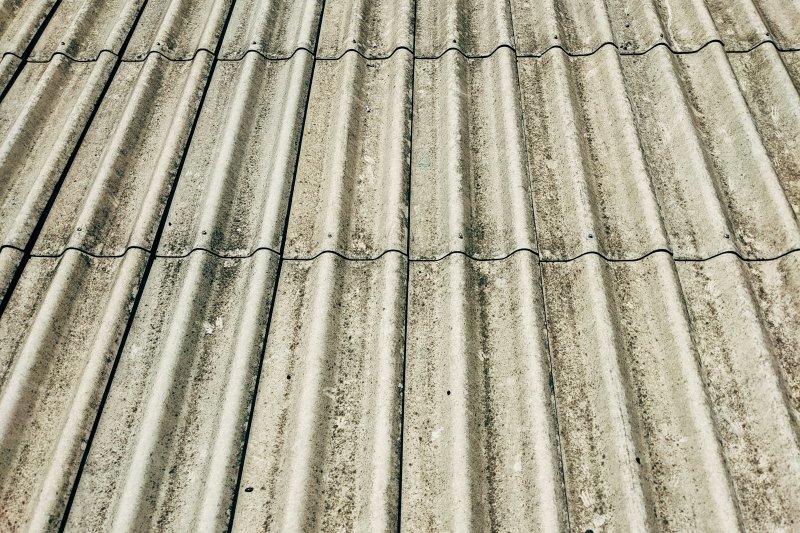
Industry sources put metal roof lifespan at 40–70 years for steel and aluminum, 100+ for copper and zinc. That’s accurate for standing seam. It’s also wildly optimistic for through-fastened panels, and the difference is the part nobody volunteers.
Standing seam fails on the panel itself: the paint chalks, the metal eventually pinholes near saltwater, and after 50–70 years it’s tired. Through-fastened fails at the fasteners. Every screw goes through the panel into wood, sealed by a neoprene washer that gets compressed against the metal. The washer hardens. It cracks. Water gets past around year 15–25. Unless you rebed every screw, you eventually get a roof that’s structurally fine but leaks at 200 individual locations.
Reputable contractors quote a fastener service visit on through-fastened roofs at year 15. Most homeowners never hear about it during the sales conversation.
The hail and insurance angle
If you’re in the hail belt (Texas, Oklahoma, Colorado, Kansas, Nebraska, the Dakotas, parts of Missouri), UL 2218 Class 4 impact rating is the line item that matters. Class 4 panels survive 2-inch steel balls dropped from progressive heights without cracking. The Texas Department of Insurance recognizes UL 2218 ratings for windstorm and hail premium credits but leaves the actual discount amount to each carrier; industry data from manufacturers like Western States Metal Roofing shows discounts running 5%–35%, with 35% reported in Texas regions that average 6+ hail events a year.
On a $3,000 annual premium, that’s $150–$1,050 a year. Over a 25-year hold it pays back the metal-vs-shingle premium for many homeowners.
The catch is the cosmetic waiver. To get the discount, your insurer requires you to sign a document acknowledging that hail can dent a metal roof and they won’t pay for dent-only repair as long as the roof still sheds water. This trips people up after their first golf-ball hailstorm. The panels are pockmarked but functionally fine, and the carrier denies the cosmetic claim because of the waiver they signed at issuance. If looks matter to you, factor that in. Most owners decide a dimpled roof beats a $4,000 deductible plus a premium hike.
Verify the Class 4 rating in writing. Manufacturer marketing often implies impact resistance without specifying UL 2218 testing. Get the actual test certification on a panel-and-substrate basis from your installer.
Energy savings: real but situational
Metal roofs run cooler than dark asphalt because they reflect more solar radiation. Per Lawrence Berkeley National Lab data referenced by DOE’s cool roof guidance , a clean white roof reflecting 80% of sunlight stays around 50°F cooler than a gray roof reflecting 20%. Translated to bills: 7%–15% cooling savings on most homes, up to 40% in hot sunny climates with bad attic insulation.
Two practical caveats. First, the savings concentrate in the cooling season; in northern climates the heating-season penalty (slightly less solar gain) eats some of the win. Second, the ENERGY STAR roofing label was retired in June 2022. The current authority for cool-roof certification is the Cool Roof Rating Council directory. Most painted metal panels are listed there with their Solar Reflectance Index measured.
If your utility offers a cool-roof rebate (some Sun Belt utilities still do), the rebate paperwork will reference CRRC numbers rather than the retired ENERGY STAR label. Federal tax credits for residential roofing don’t currently apply. Section 25C never covered metal roofing under the IRA, and the credit itself was repealed effective Dec 31, 2025 by the One Big Beautiful Bill Act. Skip any sales pitch that promises a federal write-off on the panels themselves.
Five questions to ask the contractor
These separate a real metal-roofing contractor from a generalist who’ll subcontract your job.
- What gauge and what panel system, exactly? “24-gauge Galvalume standing seam with snap-lock seams” is a real answer. “Premium steel” is not.
- PVDF or SMP coating, and what’s the written fade-and-chalk warranty length? Get the manufacturer warranty document, not the contractor’s promise.
- Concealed clips at what spacing? 24" on center is standard residential; 12"–16" in high-wind zones. Floating clips on any panel run over 20 feet, no exceptions.
- What’s the underlayment, and is it ice-and-water-shield or just synthetic? Metal panels conduct temperature faster than asphalt — without a vapor-permeable underlayment, condensation forms on the panel underside and quietly rots the deck. Self-adhered ice-and-water belongs in eaves and valleys at minimum; synthetic vapor-open underlayment elsewhere. Standing seam over plain felt is a leak waiting to happen.
- UL 2218 Class 4: yes or no, and can you produce the test cert? Either the panel-and-substrate combo is rated or it isn’t. There’s no in-between.
Crews that install metal full-time will answer these instinctively. Crews that mostly do asphalt and dabble in metal will fumble two or three.
Before committing to metal, have the deck inspected. A roof inspection runs $175–$275 for a basic walk-on assessment and catches rot or soft spots before new panels go down. Deck repairs are far cheaper pre-install than after. See all roofing cost guides for the full system comparison if you’re still weighing options.
Bottom line
If you’re convinced metal makes sense, get three quotes from contractors who specialize, not generalists who add metal to their lineup. Compare gauge, coating, clip system, and the panel manufacturer side by side rather than just the bottom-line price. The $3,000 difference between two standing seam quotes is usually 26-gauge SMP versus 24-gauge PVDF, and that’s a 15-year decision dressed up as a price spread.
If the math doesn’t work for you (short hold, mild climate, no hail), architectural asphalt at $4–$8/sq ft will serve you well for 25 years. The metal roof premium is a real cost, and not every house is the right house for it.