A residential roofing contractor charges $150 to $300 per roofing square for labor on architectural asphalt, which lands at $3,500 to $7,000 of labor on a typical 2,000 sq ft home. Premium materials push labor to $400 to $700 per square because slate and clay tile demand slower, specialized crews and copper panels are slower still. For all-in pricing and the per-square material breakdown by shingle and metal grade, see new roof cost .
This article covers the part most cost guides skip: how to hire one. Which credentials gate which warranty. What your contractor’s certificate of insurance must show. How to read an insurance claim payout when half your roof is in the yard after a hailstorm. And the contract clauses that decide whether your $13,000 reroof comes with a 25-year workmanship warranty or a one-year handshake.
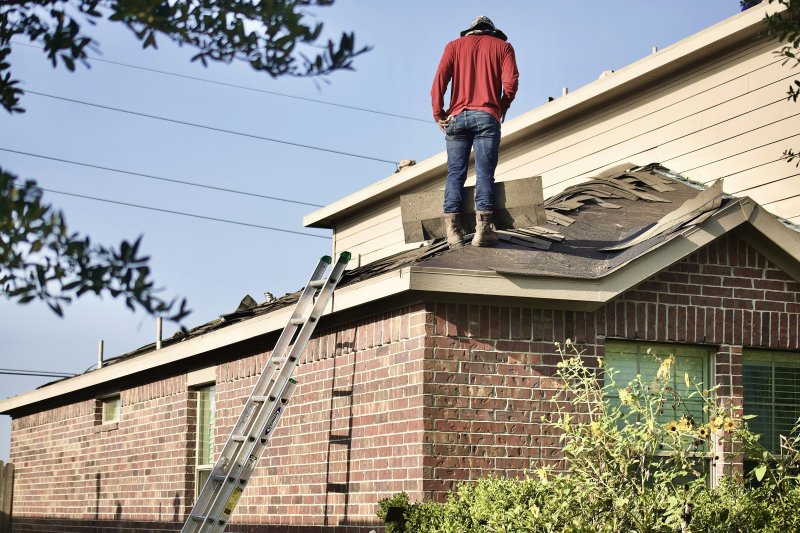
What roofing contractors actually charge for
Labor runs 50%–65% of total project cost on a residential asphalt reroof. This Old House’s 2026 homeowner survey found 70% of respondents named labor as the largest line in their bid, ahead of materials. The hiring question that follows from that share: what does the contractor’s labor portion buy you? On the bid sheet it’s hours of crew time; in practice it’s also warranty access, permit handling, COI-backed liability, and the workmanship guarantee.
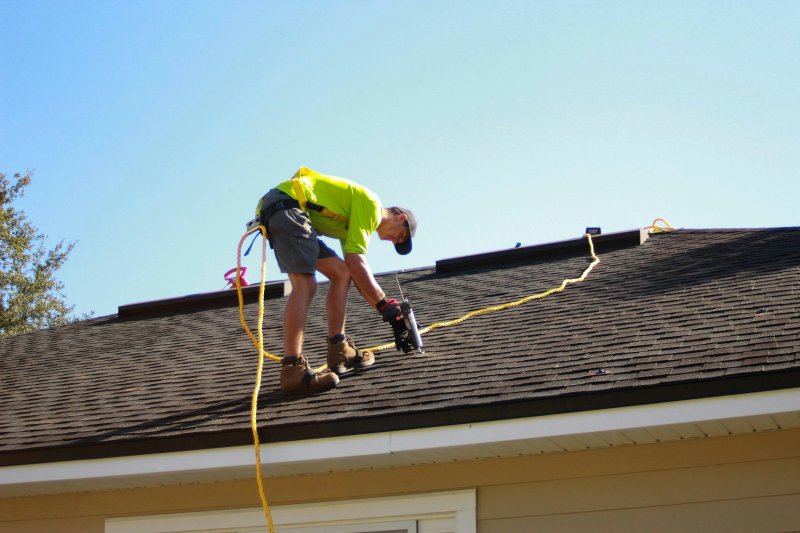
Per roofing square (100 sq ft of roof area, not floor area), residential asphalt labor lands at $150 to $300. A 2,000 sq ft single-story home with a 6/12 pitch has roughly 24–26 squares of roof, so labor alone runs $3,600 to $7,800. The all-in per-square math (labor plus shingles plus accessories) sits around $400 to $700 on the mid-market — material breakdown lives in new roof cost by material tier . The hiring tell: a contractor quoting under $400/sq on architectural asphalt is almost always leaving line items out, which is the exact mechanism behind the install-day renegotiation.
Premium materials change the labor math sharply. Standing seam metal pushes labor to $400 to $600 per square because the panel work is slower. Natural slate and clay tile go higher still at $500 to $700 because the material breaks easily and needs hand-fitting at every penetration. Copper flashing on a high-end home can hit $700+ per square just for the labor portion.
Licensing: the state-by-state patchwork
Roofing licensing in the US is fragmented. There is no federal license. Some states require a separate roofing license; some require only a general contractor license; some require nothing at the state level and leave it to cities.
| State | License required | Threshold | Issuer |
|---|---|---|---|
| California | Yes (C-39 specialty) | All work | CSLB; 4 years experience, $25K bond, workers’ comp |
| Florida | Yes (certified or registered) | Statewide vs local | DBPR; 14 hrs continuing ed per renewal |
| North Carolina | Yes | Jobs ≥ $30,000 | NC Licensing Board for General Contractors |
| Texas | No state license | None statewide | Voluntary RCAT registration; some cities require local registration |
| Colorado | No state license | None statewide | County or city-level |
Texas in particular catches homeowners off guard. Anyone with a truck and a ladder can advertise as a roofer in most of the state. Austin and San Antonio have local registration ordinances; the rest of the state effectively delegates vetting to the customer. The other side of that coin: Florida’s DBPR is one of the strictest licensing boards in the country, with continuing-education requirements and a public license-lookup database the homeowner can check before signing.
Always pull the license number from the proposal and verify it on the issuing board’s public lookup. A fake license number will fail the database check. An expired or suspended license fails the same way. Worth checking too: a license registered under a different person’s name than the one signing your contract is a tell that you’re dealing with a “license rental,” common in storm-chasing operations.
Manufacturer credentials and what they unlock
This is the part most homeowners get wrong. The shingle warranty you think you’re getting depends on whether the contractor is credentialed by the shingle’s manufacturer. A standard manufacturer warranty covers materials only. If a defective shingle delaminates in year 12, you get free shingles and a $1,500 labor bill to remove and replace them. Premium credentialed warranties roll labor into the same coverage.
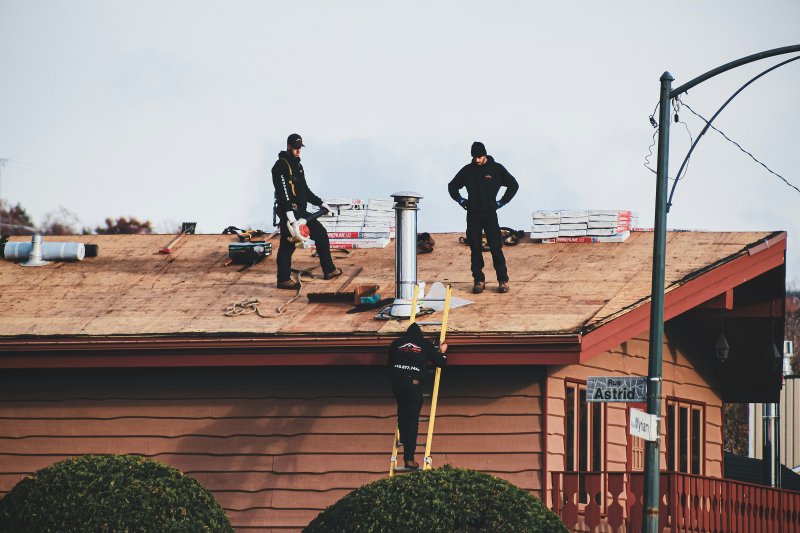
Four credentials matter on the residential asphalt market:
- GAF Master Elite. Held by roughly 2% of US roofers. Requires 7+ years in business, current state license, comprehensive insurance, ongoing annual training. Unlocks the Golden Pledge warranty: 50-year material plus 25-year workmanship.
- CertainTeed Select ShingleMaster. Tighter than the base ShingleMaster credential. Requires 5+ years in business, at least 50% of installers certified as Master Shingle Applicators, the owner passes a Business Fiscal Responsibility exam, plus a $2 million liability minimum. Unlocks the 5-Star Warranty: 50-year material plus 25-year workmanship, transferable to the next homeowner during the first 15 years.
- Owens Corning Platinum Preferred. Industry estimate roughly 1% of US roofers. Unlocks the Platinum Protection warranty: 50-year material plus lifetime workmanship.
- Atlas Pro Plus / Pinnacle. Smaller program but worth checking if Atlas shingles are quoted; the top tier extends material coverage to 50 years and adds a workmanship rider through the contractor.
A contractor without any of these credentials can still install brand-name shingles from GAF or CertainTeed; they just cannot register the premium warranty package. Whatever shingle warranty you sign up for, the registration paperwork must be filed within 30 to 60 days of completion, and most premium warranties require deck inspection documented at install. Any contractor who skips the warranty registration on a premium product is leaving thousands of dollars of coverage on the table; the smart move is to confirm the warranty form and registration timeline in writing before signing.
A standalone manufacturer warranty without the credentialed package is worth less than most homeowners assume. Shingle defects rarely show up in the first 15 years, which is when workmanship issues surface instead. Premium credentialed warranties cover both surfaces under one claim.
What the certificate of insurance must show
Ask for a certificate of insurance (COI) issued directly from the carrier to you as the certificate holder, not a photocopy the contractor hands you. Photocopies can be doctored or pulled from a policy that was canceled the next month. The COI must show:
- General liability at $1,000,000 minimum per occurrence. This is what pays out when fire from a torch-down repair takes a section of the house, or when a slipped tool punches through the truck windshield next door.
- Workers’ compensation at $500,000 minimum per incident; reputable contractors carry $1,000,000. Without it, an injured worker on your property can sue you personally.
- Effective and termination dates that cover the entire project window. NRCA’s selection guide is explicit: “Do not let your roofing contractor render services if the insurance has lapsed.” Crews finish past planned end dates routinely; verify the termination date sits at least 30 days past the latest scheduled completion.
- The contractor’s full legal business name matching the proposal. No DBA mismatch and no sister-company name swap.
A contractor who can’t produce a current COI inside 24 hours either doesn’t carry one, let it lapse, or is operating under someone else’s policy. None of those situations protect you when something goes wrong.
The insurance claim path: RCV vs ACV
If a hailstorm or windstorm took out part of your roof, the claim path determines what you net. The two policy types do very different math.
RCV (Replacement Cost Value) pays the full cost to replace the damaged property minus your deductible. ACV (Actual Cash Value) pays the depreciated value minus your deductible, which is a much smaller number on a roof past mid-life. The NAIC’s consumer alert walks through a clean worked example: two identical homes, both with $15,000 in damage and $1,000 deductibles, one on RCV and one on ACV.
| Coverage | Initial check | After completion + receipts | Total to homeowner |
|---|---|---|---|
| RCV (no holdback) | $14,000 | $0 | $14,000 |
| RCV with recoverable depreciation | $4,000 (ACV portion) | $10,000 (depreciation released) | $14,000 |
| ACV | $4,000 | none | $4,000 |
The ACV homeowner is short $10,000 on the same physical damage. That gap is the cost of the cheaper policy. Recoverable depreciation is the wrinkle most homeowners miss: even with RCV, many carriers pay the ACV portion first and hold the depreciation back until you submit a paid contractor invoice or a completion certificate. If you sign a contract for $14,000 and the carrier issues you $4,000, that’s normal. Finish the work, send proof, the rest releases.
Roof age is the next trap. Insurers are increasingly capping RCV eligibility to roofs under 15 years old. A 17-year-old asphalt roof on an RCV policy may default to ACV settlement at claim time regardless of what your declarations page promised at policy purchase. Read the roof endorsement before the storm, not after.
Deductible waiver is fraud (28+ states)
A storm-chaser line common in any post-hail neighborhood: an offer to “cover your deductible” or fold it into an inflated estimate. It is illegal in at least 28 US states for a roofing contractor to waive, rebate, or absorb a homeowner’s deductible. Texas, Colorado, Minnesota, Iowa, Tennessee, Kentucky, Alabama, and Florida have all prosecuted both sides — the contractor for insurance fraud, the homeowner for participating.
The Texas Department of Insurance is blunt: “It’s illegal for contractors to waive your deductible or help you avoid paying it. Contractors who illegally waive deductibles could be fined or go to jail.” The mechanism is simple. The contractor inflates the estimate to the carrier by the deductible amount, the carrier overpays, the contractor pockets the spread. Both parties have committed fraud.
If a contractor offers the waiver outright, walk away that day. Indirect suggestions about “working something out on the deductible” warrant the same response.
Storm chasers: what the door-knock looks like
Storm chasers (also called hail chasers in industry literature) follow severe weather into damaged neighborhoods and pressure homeowners into reroofing before insurance carriers can adjust the loss. NICB and NRCA both track this pattern. Common tells:
- Out-of-state license plates and no permanent local office. Trace the address; storm chasers often list a UPS Store mailbox.
- Unannounced door knock with “free inspection” pitch. Nobody noticed your roof from the curb. They drove there.
- Manufactured damage. Crews have been documented using golf balls or hammers to add hail-pattern dimples to undamaged shingles. NICB’s investigative reports cover multiple cases.
- 24- to 72-hour pricing windows. “This price is good through Friday.” Honest pricing isn’t perishable.
- Targeting roofs in the 18–25 year age band, where some weathering can be reframed as storm damage to the carrier.
- Cash-only or full-payment-up-front demands.
- Offers to “handle the entire claim,” including signing as your insurance representative. That setup is the on-ramp to the deductible-waiver scheme above.
The defense is boring and effective. File the claim through your carrier directly. Request the carrier’s own adjuster inspection. Get three quotes from local contractors with permanent business addresses, then verify both the license and COI before signing anything; manufacturer credential checks come next. A pre-purchase roof inspection at $175–$275 from an independent inspector also separates real damage from manufactured damage before the claim opens.
Payment schedule and lien protection

Industry norm in 2026 sits at roughly 30% / 35% / 35%: deposit at signing, progress at a verifiable milestone, final on completion. Variations are common; the rules are about ratios and triggers, not exact splits.
- Deposit: 25%–33%. Anything above 30% is a yellow flag, anything above 50% is a red flag. The deposit covers the material order. A reputable supplier extends net-30 to credentialed contractors anyway, so a contractor demanding 50% “to buy the materials” is signaling cash-flow trouble.
- Progress: 30%–40% tied to a verifiable, photographable milestone. Typical triggers: after tear-off plus dry-in (synthetic underlayment down, ice-and-water shield at eaves and valleys), or after the first half of shingle field is set. Progress payments tied to calendar dates instead of milestones invert the risk.
- Final: 30%–35% on completion, post-walk-through, post-permit-final inspection, post-final lien-waiver collection.
- No retainage in residential. Commercial roofing contracts hold back 5%–10% past completion as quality reserve; residential almost never does. If a roofer pushes for retainage on a home, that signals a commercial-style contract that benefits the contractor’s bonding company more than the homeowner.
Mechanic’s lien risk is the part of the contract conversation that gets the least attention and matters the most when it goes wrong. A mechanic’s lien is a legal hold on your property recorded with the county recorder. If filed and not satisfied, it can force a foreclosure sale. Lien rights extend not just to your contractor but also to every subcontractor and material supplier on the job in nearly every state.
The trap most homeowners don’t see: even if you paid the general contractor in full, the GC’s subcontractor or shingle supplier can still lien your house if the GC didn’t pay them. Florida and a handful of other states protect homeowners who paid the GC fully; California and Texas do not. The defense is signed lien waivers. Conditional waivers go with progress payments (acknowledging payment “conditional on funds clearing”); unconditional waivers go after each check actually clears. Get one from the GC plus one from every sub or supplier who served you a “Notice to Owner” / “Preliminary Notice” form during the job.
When in doubt, ask the contractor for a list of every sub and supplier on the job before final payment. If the list is short and you have signed unconditional waivers from each, you’re protected. If the contractor refuses to produce the list, hold the final check until they do.
When to fire a contractor mid-job
It happens, and it’s expensive in either direction. Triggers that justify firing:
- Crew shows up day two as different people with different equipment, no English-speaking supervisor, and the bidding company can’t explain why. Mid-job subcontractor swap is a contract breach in most written agreements.
- Tear-off reveals deck damage and the contractor proposes shingling over it instead of repair. This voids every premium warranty on the market and almost guarantees leaks within 24 months.
- Demands for additional payment beyond the original scope without a written change order. Verbal change orders are unenforceable; insist on signed scope changes before any extra work begins.
- Job stalls mid-tear-off (“waiting on materials”) for more than 48 hours with the deck exposed. Tarps fail. Decks rot. The contractor’s cash flow becomes your problem.
Firing requires written notice citing the breach, photo documentation of the work state, immediate hire of a replacement contractor to dry-in the deck, and a small-claims or arbitration filing for any deposit refund. Your homeowners insurance does not cover damage from a stalled reroof. That sits on contractor liability, which is exactly why the COI and the workers’ comp matter from day one.
Bottom line
Hiring a roofing contractor turns on credentials and contract structure more than dollar-per-square. The contractors who quote cheapest are usually the ones leaving line items out, skipping the COI, dodging the licensing question, or trading deductible waivers for cash flow. The contractors who quote at the top of the market typically hold a Master Elite or Select ShingleMaster credential, carry $1M+ liability with valid workers’ comp, work to a 30/35/35 payment structure tied to milestones, and put the warranty registration in writing.
Asphalt material pricing by tier sits in the new roof cost guide . Metal-specific contractor selection — gauge, panel system, coating — lives in the metal roof cost guide . The inspection step that should run before any reroof signing is covered in roof inspection cost . And before final payment, collect the lien waivers from every sub plus every supplier, in writing.