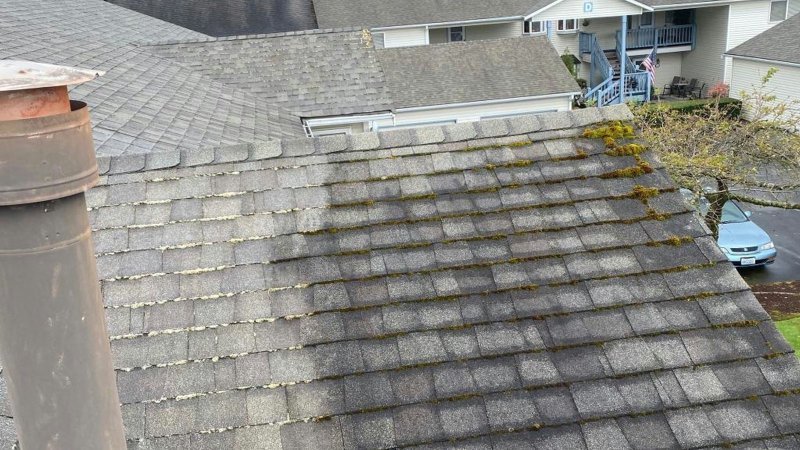
The fastest answer: shingle repair runs $150 to $1,500 for most homeowners in 2026, with a $150–$300 service-call minimum, $350–$1,500 typical for a leak fix, and $400–$900 for a 10×10 patch. Anything beyond $6,000 in repair work on an aging roof should push the conversation toward replacement instead. Storm and hail damage often shifts the math entirely — once insurance enters the picture, the deductible and policy type decide more than the contractor’s quote does.
What you’ll actually pay by repair scope
Pricing depends almost entirely on how many shingles need to come off and whether the deck underneath is still sound. Service-call minimums set the floor: most contractors won’t roll a truck for less than $150–$300 even on a job that takes 20 minutes.
| Scope | Typical 2026 cost | Notes |
|---|---|---|
| Service-call minimum | $150–$300 | Floor on any visit |
| 1–10 missing or damaged shingles | $150–$400 | Often the same as the minimum |
| 100 sq ft patch (small section) | $400–$900 | Wind-lifted slope, single hail strike |
| Full square (100 sq ft) replacement | $500–$1,500 | If matching shingles still available |
| Pipe boot (vent stack gasket) | $250–$500 | Most common single-source leak |
| Step or wall flashing | $200–$500 | Where the roof meets a wall |
| Chimney flashing | $300–$1,500 | Tear-off around masonry adds labor |
| Skylight flashing | $300–$800 | Glass stays; rubber and metal go |
| Ridge cap replacement | $250–$750 | $6–$10 per linear foot |
| Storm-damage scope (multiple slopes) | $4–$8 per sq ft | Insurance work, post-claim |
| Emergency tarp + repair | $300–$1,000 | Same-day after a storm |
The Angi 2026 contractor data puts the national average at $960, with most repairs landing between $360 and $1,750. HomeGuide shows a national average of $800 with a range of $350–$1,500. Both sources confirm extensive damage can reach $5,800+ once you’re replacing multiple slopes or rebuilding a chimney cricket.
Labor runs $30–$80 per hour in most markets and $50–$100 in HCOL metros. Emergency, weekend, or steep-pitch work above 6/12 adds 25%–50% on top of the base rate.
The 50% rule: when repair stops making sense
Roofers carry a quiet rule of thumb: if the repair quote exceeds half the cost of a full replacement, you’re throwing good money after bad. A typical asphalt reroof on a 2,000 sq ft single-story home runs $8,000–$16,000 in 2026. Half of that is $4,000–$8,000. Once a single repair invoice approaches that floor, replacement gives you a fresh 25–30 year warranty instead of a patched roof with 5–10 years left.
The math gets sharper when you weigh per-year cost. Spending $1,500 on a 22-year-old roof to buy two more years costs you $750/year. Spending $12,000 on a new architectural roof that lasts 28 years costs $429/year — the repair looks cheap on the invoice and expensive on the spreadsheet.
Four signals it’s already past repair:
- More than three slopes show damage from a single wind or hail event
- Multiple leaks tracking back to different penetrations (chimney, pipe boots, valleys)
- Decking under repaired sections feels spongy when the contractor walks it
- Granule loss has progressed past 30% of the field area on the sun-facing slope
The third signal is the kicker. Once decking rots, every repair pulls more sheathing than it shingles. At $2–$6 per sq ft installed for new decking, a “repair” turns into a partial reroof that won’t carry warranty and won’t pass a future home inspection.
Storm and hail damage: how the insurance side actually works
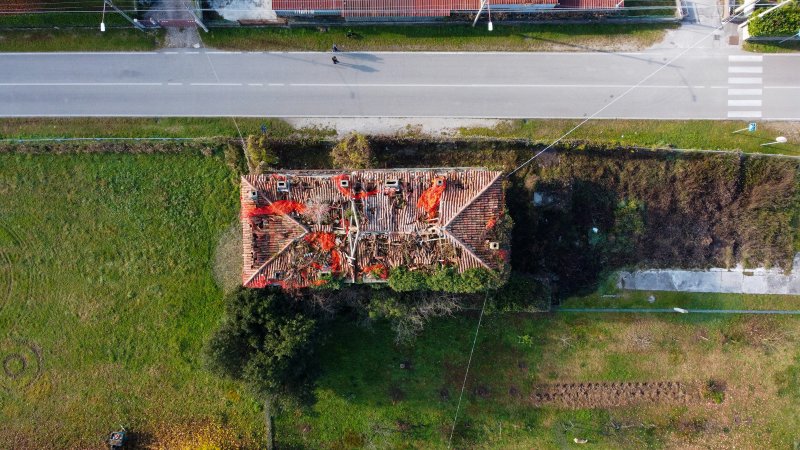
Hail damage is covered under standard homeowners policies as “sudden and accidental,” but the deductible math guts the payout for many homeowners. Most carriers in hail-belt states (TX, OK, KS, NE, CO, WY, MO, IA, MN, IL, IN) now write percentage-based wind and hail deductibles of 1%–2% of insured value. On a $300,000 home, that’s $3,000–$6,000 out of pocket before insurance pays anything. The Texas Department of Insurance confirms the percentage-based deductible structure and the matching-or-replace decision tree carriers use after a covered storm.
Two deadlines kill claims faster than damage does. Most policies require notification within 60 days of the storm event and filing within 6 months. Both windows run from the storm date, not the day you noticed the leak. By the time water shows up on the ceiling, you may already be outside the notification window.
Before any storm hits, check the policy for two things:
- ACV vs RCV. Actual Cash Value pays the depreciated value of an aging roof. A 15-year-old asphalt roof might recover only 50% of replacement cost. Replacement Cost Value pays the full replacement cost minus deductible. ACV policies are common in hail-belt states because carriers know what’s coming.
- Cosmetic damage exclusion. Some carriers exclude dent-only damage that doesn’t affect water-shedding. Common on metal roofs but increasingly written into asphalt policies too.
The post-storm sequence that maximizes payout: photograph all damage immediately, get a pre-claim roof inspection at $175–$275 from an independent inspector — not the contractor handling the repair — then file with the carrier and get repair quotes once an adjuster has assigned a scope. Calling a “free roof inspection” contractor first and letting them file the claim is how homeowners end up with denied claims and inflated repair quotes.
The matching trap most homeowners walk into
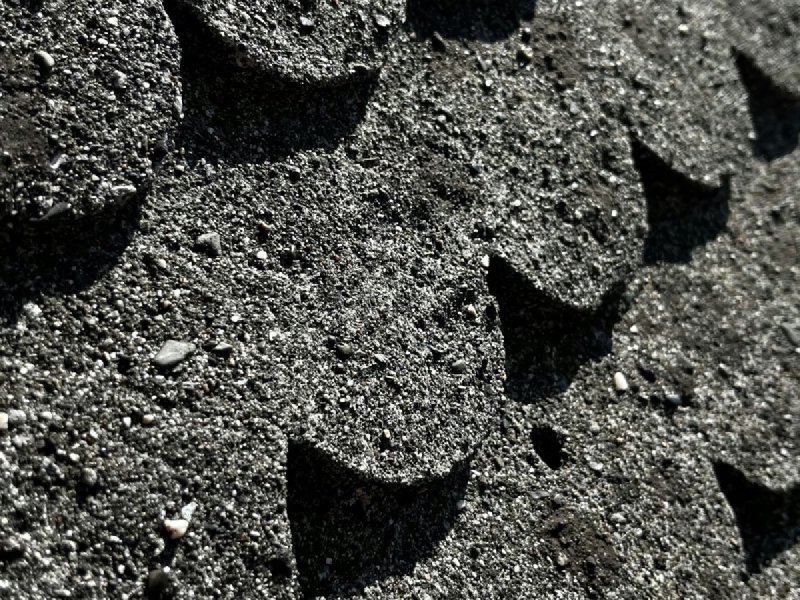
Sun fade is permanent. After 5 years of UV exposure, asphalt shingles shift color enough that no new shingle (even from the same manufacturer in the same color SKU) will match. Granule lots change annually, so a 2026 batch of “Charcoal” looks visibly different from a 2018 batch of “Charcoal” right out of the wrapper, before fade is even a factor.
This matters because insurance carriers routinely try to pay for spot repairs only when matching is impossible. About a dozen states have matching statutes that force the carrier to replace the entire roof (or full slope, depending on the law) when replaced shingles can’t be matched to the existing color. Iowa, Kentucky, Minnesota, Nebraska, New Mexico, Oklahoma, Rhode Island, South Carolina, and West Virginia all have matching regulations on the books, with several other states applying similar rules through administrative guidance. The fine print most homeowners miss: matching rules generally apply only to replacement cost (RCV) policies. ACV policies are not protected by the same regulations, and Kentucky’s Department of Insurance has explicitly rejected the “line-of-sight” carve-out carriers prefer — interpreting “area” as the entire roof.
If you’re in a non-matching state, the adjuster’s first move is usually a partial slope replacement at the lowest scope they can defend. Pushing back requires either a public adjuster (10%–15% of the claim) or a roofing attorney — the math only works on claims north of $15,000.
The contractors who know this game will quote one price for a best-effort match repair and a second price for replacing the whole slope so it lines up cleanly. Anyone who quotes only the cheap option without flagging the visual mismatch is either inexperienced or counting on you not to notice until the next sunny afternoon.
Why timing crushes leak repair budgets
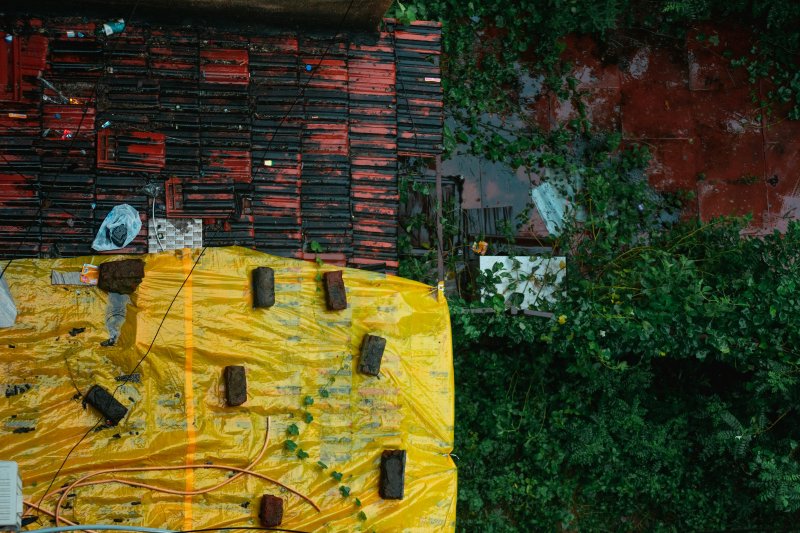
A leak fixed within a week of discovery stays in the $150–$500 range for most single-source problems. A leak left a month begins rotting the deck and adds $400–$1,200 in sheathing replacement. At three months, you’re typically looking at $2,000–$8,000+ once interior drywall and insulation replacement enter the scope, plus possible mold remediation.
The time-cost curve is exponential, not linear. Water doesn’t drip straight down through the deck. It follows rafters, soaks insulation in directions you can’t predict, and reaches the drywall ten feet from where the actual roof penetration is. By the time the brown stain appears on the ceiling, the path of damage above it has been wet for weeks.
If you can’t get a contractor on-site within 48 hours of finding a fresh leak, tarp the area yourself or pay $300–$1,000 for an emergency tarp service — the tarp buys time without adding to the structural damage clock.
Vetting the contractor: questions that filter out the bad ones
Five questions to ask any roofer who shows up for a repair quote:
- Will you commit to a written scope before any work starts? A real repair contractor writes the scope on paper. A vague “let’s see when the crew gets up there” answer is fine for the first 15 minutes, not after the diagnostic.
- What’s your minimum service charge, and does it apply to additional small fixes? Knowing the floor lets you bundle other small jobs (gutter cleaning, vent boot replacement) into the same truck roll.
- Are you proposing to match existing shingles or to replace a full slope? This is the matching question dressed in everyday language. Their answer reveals whether they understand sun fade.
- Do you carry workers’ comp and general liability, and can the homeowner see proof? Get certificate of insurance numbers and verify them with the carrier directly, not just an emailed PDF.
- What’s your callback policy if the repair doesn’t hold? A 1-year workmanship warranty on the specific repair is standard. Less than 6 months is a red flag.
One specific tell separates the storm-chasers from the actual repair contractors: a “free roof inspection” pitch after a regional storm event, followed immediately by the verdict that the whole roof needs to come off. Their incentive structure runs entirely against your interest in a $1,500 repair. A contractor who quotes a fair repair scope first, and only escalates if the inspection genuinely warrants it, is almost always the better long-term choice.
When replacement starts to win the math
A few situations push the conversation past the 50% rule into “just replace it” territory regardless of repair-quote dollars:
- The roof is already 80%+ through its expected lifespan (architectural asphalt: 25–30 years).
- Multiple repair callbacks within 24 months, with water finding new paths each time.
- A storm event qualifies the roof for an insurance-funded replacement under matching law, total loss, or RCV-policy depreciation refund.
- You’re considering a material upgrade , and repairing a tired asphalt roof when you’d rather have standing seam metal anyway just delays the inevitable.
- Combined scope makes sense: if the gutters are also failing, bundling seamless gutter replacement into a new roof saves the second mobilization fee.
If three or more apply, the repair contractor will tell you the same thing the replacement contractor would. The honest ones say it without first trying to sell you the patch.